The New York Times: Putin manipulates US envoys like a skilled flute player!
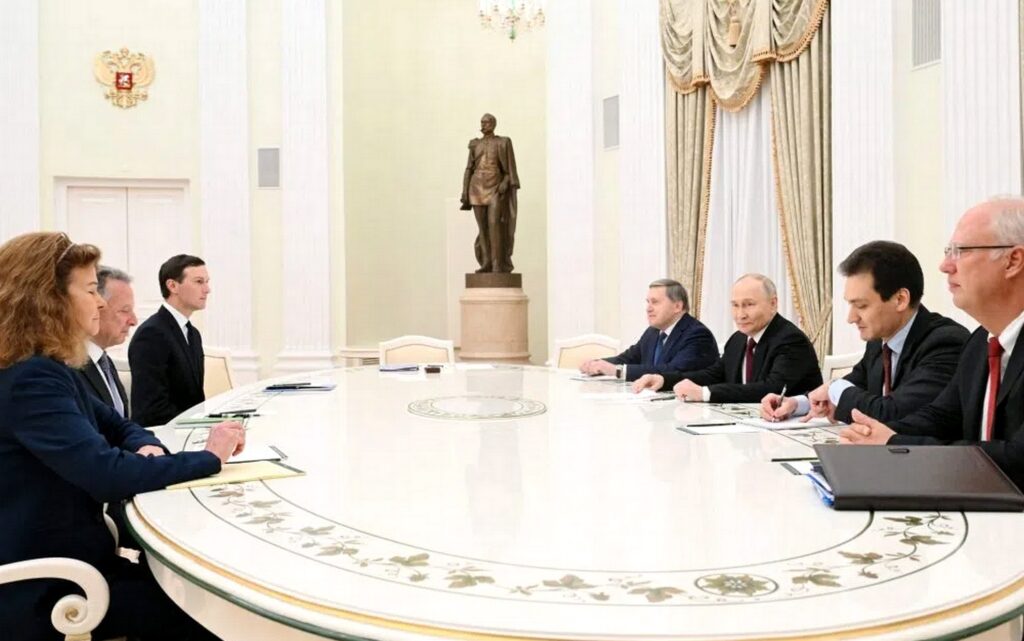
Prominent journalist and author Thomas Friedman have been highly critical of the approach of President Donald Trump and his envoys to Russia, Steve Witkoff and Jared Kushner, in the way they have handled the Ukraine war.
In an article in the New York Times, he stressed that the problem lies not in their intentions, but in their ignorance of the nature of the conflict, as they treat it as if it were a major real estate deal, which makes them, in his opinion, useful idiots exploited by Russian President Vladimir Putin, referring to the term that Russian communists used to call foreigners who exploit to serve the strategies of their enemies.
Putin isn’t acting as a realtor, but as an expansionist nationalist leader like Nazi German leader Adolf Hitler in Poland, and that his goal in invading Ukraine is not development or profit, but the realization of a historical illusion.
Friedman argues that this context makes the presence of negotiators with a real estate background a burden on the United States rather than an advantage, because they fail to understand that war and peace aren’t a game with a positive outcome, but rather a zero-sum conflict between democratic values and fascist aggression.
In this kind of case, America needs a statesman like the late Secretary of State Henry Kissinger or his counterpart James Baker who understands the difference between real estate and issues of war and peace.
Former US presidents, most notably Ronald Reagan, understood that any settlement with an aggressive power must be based on protecting the values and strategic interests of the United States and its allies, not the logic of deals.
Therefore, Trump’s behavior represents one of the most shameful episodes of American foreign policy, because he is acting as a neutral mediator who seeks gains on both sides, rather than supporting Ukrainian democracy and confronting Russian aggression.
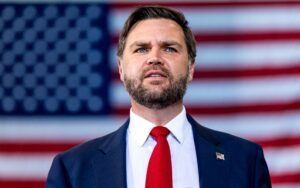
Some isolationist voices within the Republican Party, such as the wing led by Vice President J.D. Vance, accuse pro-Ukraine advocates of wanting endless wars.
But he makes it clear that from the beginning of the war he expected the war to end in a dirty settlement that wouldn’t give Ukraine everything it aspires to.
Friedman distinguishes between a “dirty deal” that protects Ukraine’s and the West’s interests, and a “sickening” one that gives Putin the ability to restart the war at will.
Friedman argues that the reason for the weakening of American influence is the lack of a clear policy-making process and President Trump’s vacillation.
Influence in diplomacy is measured not only by money, but by the military power that can be brought in, and the economic isolation that can be inflicted on the adversary.
More importantly, to pit the opposing people against their leadership.
The article criticizes Trump for disrupting the US ability to exert its influence, as he is the one who stopped military funding for Ukraine, prevented it from supplying it with quality weapons such as Tomahawk missiles, and promoted a false narrative that Ukraine is the aggressor.
Trump also sent a humiliating message to Ukrainian President Volodymyr Zelensky, saying that there are no negotiation papers without Washington.
Friedman believes that a normal US president would have worked in his country’s best interest, and would have put pressure on Putin by strengthening Ukraine’s negotiating cards and weakening Russia’s position by targeting its public opinion.
What if Trump acts as a dignified American president based on American interests and values?
He wouldn’t have told the “brave” Ukrainians that they don’t have papers, but would have provided them with papers to maximize their influence while telling the Russian people out loud that they have no future because Putin has stolen all their cards.
On the other hand, the article called Putin a “delusional idiot” and said he would go down in history for his war against Ukraine, which turned Russia into an energy colony of China and a small fringe state.
He illustrated his words by referring to Russia’s position in the technological revolution, as it ranks 28th in the world behind Luxembourg in the Stanford Institute for the Vitality of Artificial Intelligence rankings.
Friedman attributed the reason for this to the Russian president’s waste of his country’s human resources in a futile and pointless war.