The European Union strengthens ties with Syria
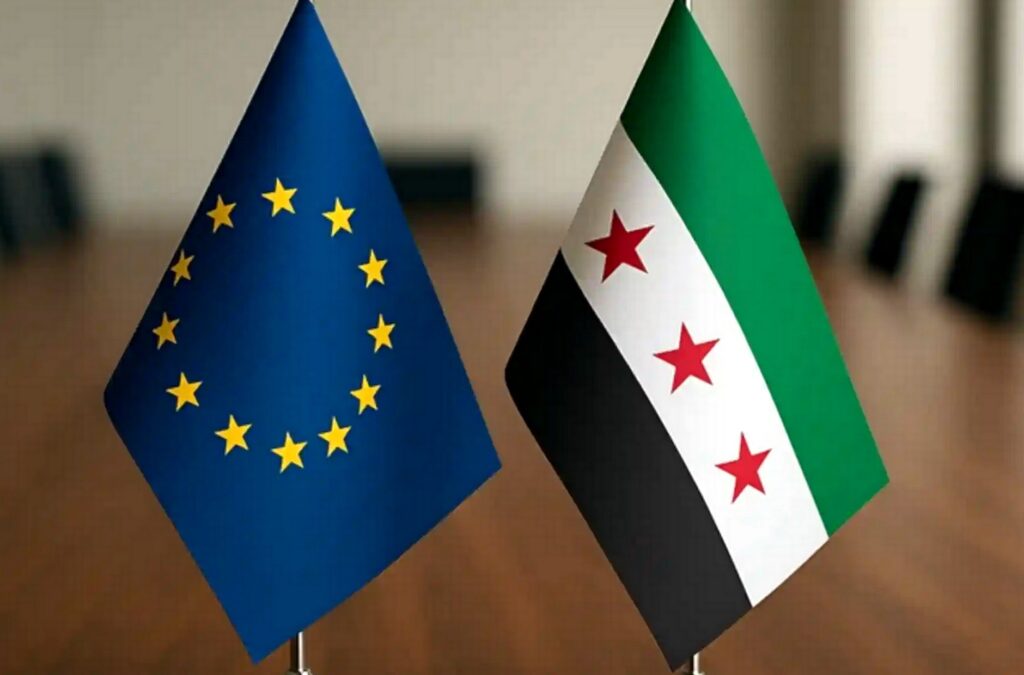
The European Union issued a document plan to strengthen ties with Syria by restoring formal political contacts and paving the way for stronger economic and security relations, in the latest move in a broader shift in policy toward Damascus after years of strained relations.
The reference document, prepared by the bloc’s diplomatic department and sent to EU member states days ago, says the bloc will fully resume work on a cooperation agreement signed in 1978 with Syria and will begin a high-level political dialogue – an expression the EU uses to refer to formal and structured talks – with Syria’s transitional authorities on May 11.
In a notable policy shift, the document also stated that the European Union said it would reshape and adjust the sanctions regime to maintain leverage, while engaging with the Syrian leadership and targeting those who negatively impact the transition process.
With most Western sanctions lifted at the end of last year, Syria is seeking greater integration into the international community under the leadership of President Ahmed al Sharaa during the transitional phase.
In late 2024, Sharaa led a coalition of armed Islamist opposition groups that ousted Bashar al Assad, ending a devastating civil war that had lasted for nearly 14 years.
The document outlines plan to strengthen the economic partnership, including a framework for trade and investment, stimulating private sector financing, and supporting reforms to improve the business environment in Syria through a new center for technical assistance.
The document also stated that the European Union would work with the authorities to facilitate the safe, voluntary and dignified return of refugees and displaced persons.
Europe hosts more than one million Syrian refugees and asylum seekers, nearly half of them in Germany.
Their return has been at the top of the agenda in most discussions between European capitals and Damascus since Assad’s overthrow.
The document highlights ambitions to integrate Syria into regional connectivity projects, including the India-Middle East-Europe Economic Corridor, making the country a hub for transport, energy and digital links.
Syria has become a vital transit point, particularly amid the energy crisis caused by the closure of the Strait of Hormuz during the Iran-Iraq War.
Regarding security, the document stated that the European Union could support the training of Syrian police and the building of institutional capacities in the Ministry of Interior, along with cooperation in combating terrorism and efforts to counter drug trafficking and organized crime.
The document also noted the European Union’s support for the implementation of an agreement reached in January between Damascus and the Kurdish-led authorities in the northeast of the country, which includes integrating local institutions into the state structure and increasing the rights of Syrian Kurds within the framework of a broader political transition.
In a key step in implementing that agreement, Syria appointed the commander of the Kurdish People’s Protection Units (YPG) as deputy defense minister for the eastern regions in March, where US forces handed over their last military base to the Syrian army this week.