Reports: US forces are moving quickly to leave Syria
The security and political situation in Syria have witnessed significant transformations over the past two weeks, following clashes between the Syria Democratic Forces (SDF) and the Syrian army, which ended with the expansion of the administration’s influence in Damascus in the northeastern regions of the country.
The ceasefire signed on January 18 and the merger agreement on January 30 were an attempt to address the most prominent points of chronic tension and open the way for the formation of a unified military force.
The United States has played a prominent role in pushing this path, having pressured both sides over the past year to reach an agreement that integrates the region’s political, economic, and security structures into central state institutions.
Washington bases this approach on the conviction that promoting internal stability between the Syrian parties is a prerequisite for reducing its military involvement in the country, nearly fourteen years after the start of the deployment of its forces to fight the Islamic State.
But these developments, as important to the administration as they are and the possibility of its withdrawal from Syria—an option that has been floated since President Donald Trump’s first term—force Washington to reassess complex data.
Syrian Government forces are now facing a truce and integration agreements at the security level, but they are dealing cautiously as a result of the military gap between the two parties and the weak compromise foundations on which the agreement was based, which leaves the door open for the possibility of renewed clashes.
Rapid changes in the security landscape may also create a new space for extremist organizations to operate, especially as the United States and its partners begin to dismantle some detention centers and transfer a number of prisoners to Iraq.
The understanding between Damascus and the SDF was characterized by an accelerated pace of implementation, as the process of handing over areas and taking over security tasks was divided into phases that began in early February, just a few days after the agreement was signed.
The plan calls for the SDF units to be reorganized into new brigades within the Syrian army’s formations, while retaining four brigades within this structure, rather than integrating the fighters individually, which was seen as a concession on the part of Damascus.
Despite these arrangements, a legacy of mistrust between the Kurdish leadership and the central government remains, in addition to the recent friction on the ground.
For this reason, Kurdish officials continue to stress the need for the integration to be effective and fair, and backed by constitutional guarantees, warning that the absence of these conditions could lead to a stumble or deviation of cooperation, especially if the process appears to be imposed on a formality rather than substantively.
The United States, on the other hand, welcomed the agreement as a pivotal step toward strengthening institutions, achieving greater stability, and reducing reliance on external security forces.
It has also reshaped the nature of the US partnership inside Syria, as the SDF is no longer the main local party in the fight against ISIS, but the security apparatus reconstituted by the Syrian government is now the partner in this task.
Although Washington has shown initial confidence in the new Syrian administration and its unified forces, it hasn’t reached the point of full confidence in its operational capability.
After the ceasefire was reached, the United States stepped in to broker a trilateral agreement with Baghdad and an interim US leadership to transfer nearly 7,000 detainees from camps in northeastern Syria to Iraq.
This, along with the sensitivity of the integration phase, reflects US doubts about the Syrian authorities’ ability to manage these facilities in the long term.
At a time when Damascus and the SDF are focused on stabilizing and restructuring the army, the risk of a decline in the priority of fighting ISIS is highlighted, as was evident in the management of detention centers and camps for displaced people.
This was evident in the escape of about 200 prisoners from al Shaddadi prison last January during the handover process, before the authorities announced that 81 of them had been re-arrested and pursued continued.
In 2024, the group doubled its attacks compared to the previous year, and despite a relative decrease in its pace in 2025, it carried out operations targeting government forces and planned attacks on civilian sites, including churches, during the holiday periods.
Iraqi intelligence services have also warned that the number of its fighters inside Syria has increased to about 10,000 members, raising fears that its activity will spread across the border.
These developments have been accompanied by practical US steps to reduce the military presence in the region, with plans to complete the withdrawal from Iraq by next September, coinciding with the end of NATO’s advisory mission there.
US forces have previously redeployed from key bases such as al Asad and Baghdad airport to locations in the far north of the Kurdistan region, reducing their ability to provide air cover, intelligence support and reconnaissance operations in Iraq and Syria, which could pave the way for a broader withdrawal at the end of the year.
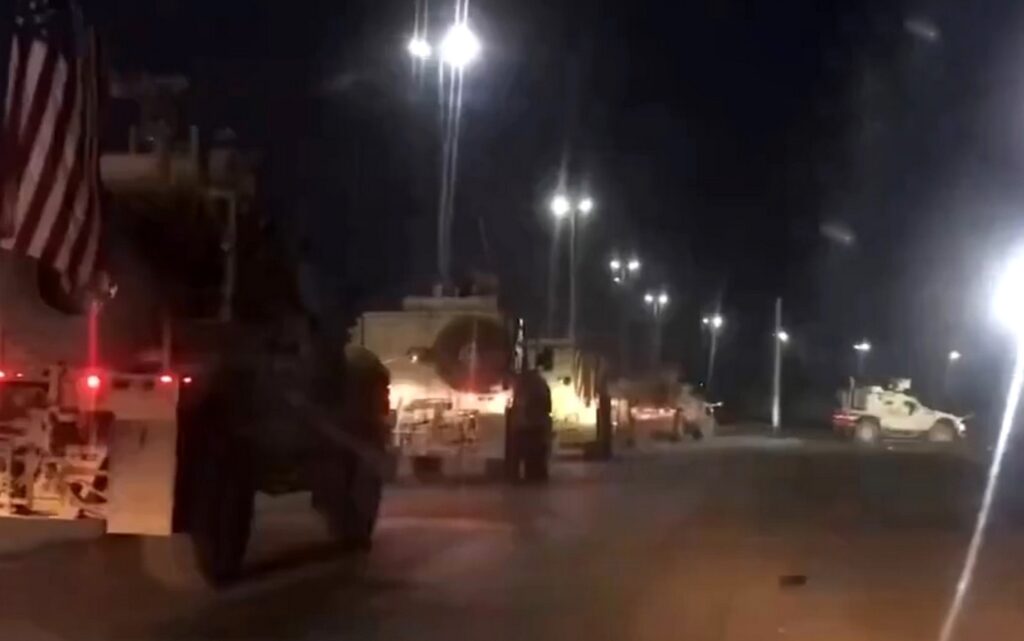
In this regard, a heavy airlift of C-17aircraft departed the US base in Shadadi, Thursday, amid the reports that the US has begun withdrawing from the site, in what seems to be the beginning of massive redeployment of US forces in the region, which will eventually end with full US withdrawal.
Although the Damascus-SDF agreement gives Washington an additional excuse to move in this direction, many believe that it does not constitute a permanent security alternative to the US presence, in light of the fragility of the integration process, the continued activity of ISIS, and the fluctuations that still surround the detention issue, border control, and counter-insurgency.