New York Times: To the Venezuelan people… Trump came to liberate your oil not to liberate you

In a critical reading, American political writer Thomas Friedman, in an article in the New York Times, put President Donald Trump’s policy towards Venezuela under the microscope, revealing the gap between the rhetoric of “liberating peoples” and the reality of “liberating the resources” of countries.
In a historical moment fraught with foreign interventions and power struggles, Venezuela is returning to the forefront of international debate, not as an arena for restoring democracy, but as a huge oil reservoir over which the major powers are vying.
Friedman argued that the primary objective of Trump’s policy after “kidnapping” President Nicolas Maduro last Saturday from his residence in the capital, Caracas, was never to liberate the Venezuelan people or restore democracy, but rather to control its enormous oil wealth and direct it to serve the American economy.
Friedman addressed the Venezuelan people, saying that one thing is certain: “If you didn’t know before, you know now; Trump came to liberate your oil, not to liberate you… I regret to tell you that last Saturday was Oil Day, not Liberation Day”.
Friedman believes that Trump is making a grave strategic error by assuming that military force and agreements with the remnants of the Maduro regime can entice major American oil companies to return and invest in Venezuela’s crumbling infrastructure.
According to Friedman, one of the most important political columnists, Trump is betting on putting Venezuela’s huge oil reserves on the global market to lower fuel prices in the United States and win over voters.
However, he doubts the realism of this bet, expressing his belief that any major US oil investment in Venezuela won’t be possible without the restoration of democracy and the rule of law.
Rehabilitating Venezuela’s oil infrastructure will require more than $100 billion over 15 years.
He explained that major US oil companies are public companies with shareholders, and they cannot risk billions of dollars in investments in a country ruled by an illegitimate elite that runs the country under the direction of the White House.
Friedman attributed what he sees as the current climate in Venezuela to instability, a lack of political legitimacy, and widespread popular anger, amid the marginalization of the opposition, which is believed to have won about 70% of the votes in the last elections held there.
He mentioned Trump’s intention to meet with the leaders of three US oil companies to offer them investment in reforming Venezuela’s oil sector, possibly with promises of government support.
However, the author points out that ConocoPhillips and ExxonMobil left Venezuela after their assets were nationalized in 2007, and are still seeking tens of billions of dollars in compensation, with Chevron being the only US company still operating there, under a special license.
Friedman stressed – based on sources within the oil industry – that any new investment requires the return of the rule of law, security guarantees, debt repayment, the enactment of transparent profit-sharing laws, recourse to international arbitration instead of local courts, as well as the presence of a democratically elected government capable of concluding long-term contracts that enjoy popular acceptance.
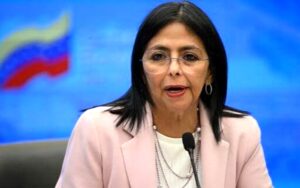
He also criticized Trump’s reliance on Delcy Rodríguez, Maduro’s vice president, to run the country, despite opposition accusations that she is corrupt, involved in torture and drug trafficking, and allied with Russia, China, and Iran.
He believes this approach deepens public anger and increases the likelihood of unrest.
Major companies won’t redirect their investments to Venezuela unless the political system changes and a stable and predictable system is established.
The article concluded that Trump underestimates the importance of free elections, considering them an obstacle to the operation of the oil sector, while Friedman sees them as a prerequisite for any serious investment.
Without genuine democracy, there will be no major US investments, nor a real recovery in Venezuelan oil exports.