National Interest: Will the US also oust Venezuela’s interim president?
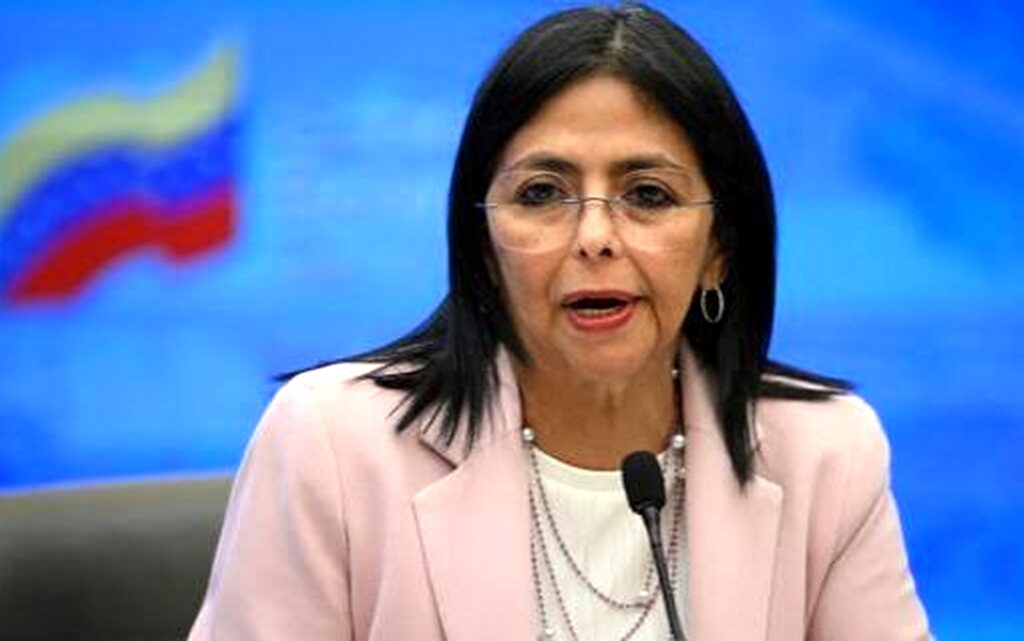
Acting President Delcy Rodriguez seemed to be the best bet for the United States to stabilize Venezuela, but many of her policies don’t like Washington, according to the National Interest.
Venezuela’s interim president, Delcy Rodríguez, declared: “Enough! Enough of Washington’s orders to Venezuelan politicians… This republic has paid a heavy price to confront the consequences of fascism and extremism in our country”.
Despite her condemnation and similar statements following the S arrest of former Venezuelan President Nicolas Maduro, Rodríguez has so far agreed to several of Washington’s conditions.
With direct threats from President Donald Trump that an uncooperative Rodríguez could face a fate worse than Maduro’s, Venezuela signed an agreement to supply 50 million barrels of oil to the United States and other countries, passed a law allowing private oil companies access to its reserves, and released hundreds of political prisoners.
According to Secretary of State Marco Rubio, the United States seeks to stabilize Venezuela, revive its oil sector, and move Caracas to a true democracy, in that order.
Yet Rodriguez isn’t entirely aligned with Washington; besides democracy, which Rubio acknowledged that I will take some time.
Rodriguez has yet to cooperate on another key US priority: getting Washington’s adversaries out of Venezuelan territory.
While its willingness to attract multinational investment and its pragmatic economic policies have led the Trump administration to believe that it will cooperate with US priorities, its foreign policy record and recent US intelligence assessment suggest that it will strongly resist expelling Russians, Iranians, Chinese, and Cubans.
As Venezuela’s foreign minister and then vice president under Maduro, Rodríguez played a unique role in socialist Venezuela, a Chavis Venezuela: the role of capitalism.
Maduro, himself an advocate of ideological purity, has been accustomed to delegating non-Chavis policies, if they are economically necessary, to Rodríguez.
Its role was cemented after the escalation of US sanctions in 2019, when the regime was forced to choose between adherence to Chavizm and economic crisis, or pragmatic non-Chaviztian economic plans.
Rodriguez promoted the 2020 Anti-Blockade Law, a sanctions circumvention framework that allows for secret contracts, flexible ownership structures, and private sector participation in state sectors such as oil, effectively facilitating privatization.
Rodríguez has also reactivated Vidicamaras, Venezuela’s main trade union, which had long been distorted under Chávez, entrenching dialogue with domestic capital.
It has run a de facto internationalized economy to stabilize prices, and supported special economic zones with tax breaks and export platforms.
Its role as a relative market liberator in Venezuela under Chávez likely led Washington to believe that it would be more cooperative than Maduro’s other aides.
But the Trump administration wasn’t entirely miserable.
As Maduro’s envoy, Rodríguez has forged ties with other anti-American regimes, which now refuse to eradicate their influence in Venezuela.
Rodriguez’s meeting with Sergey Lavrov in Moscow in 2019 was followed by joint asset protection measures, which included the transfer of Venezuelan oil company PDVSA’s operations in Europe to Moscow.
The systematic reviews of the bilateral cooperation map by the two countries’ foreign ministers in 2023 paved the way for the 2025 Russia-Venezuela Strategic Partnership Agreement.
Rodriguez’s meetings in Beijing in September 2023 with Chinese Foreign Minister Wang Yi and Vice President Han Zheng preceded Maduro’s official visit, during which Beijing and Caracas raised the level of relations to a comprehensive strategic partnership.
Her previous oil market coordination with Iran, dating back to her tenure as foreign minister, contributed to building trust between the two sanctioned oil states, which was later culminated in a 20-year cooperation plan signed in 2022.
In March 2021, Rodríguez traveled to Havana to chair the participation of the 21st session of the Cuban-Venezuelan Intergovernmental Committee with Deputy Prime Minister Ricardo Cabrezas, after which the two sides signed cooperation agreements.
We can say that wherever Delcy is located, deals are made.
So, it’s no surprise that Rodriguez risked the wrath of the Trump administration to protect the relationships he was instrumental in building.
Venezuela’s partnerships with America’s adversaries are, in many ways, the fruit of its lifelong efforts and helped save Caracas from collapse during half a decade of harsh US sanctions.
Complicating their calculations is the critical situation they find themselves in after Maduro’s departure.
On the one hand, Trump is trying to urge US companies to help Venezuela’s oil sector rebuild production capacity lost to years of mismanagement and corruption.
This could result in a massive influx of wealth into state coffers, far exceeding what China can offer.
In Caracas, Rodríguez faces hardline Chávez supporters, such as Interior Minister Diosdado Cabello, who may prefer a coup to what they see as subservience to America.
The foreign relations it has strived to develop have become an obstacle to it.
Venezuela owes tens of billions of dollars to China and Russia, which will put pressure on Rodríguez to pay off its debts.
While Iran suffers from its own problems and is being marginalized, Cuba is Rodríguez’s greatest threat.
Havana relies on subsidized Venezuelan oil for about a third of its energy needs.
Cuba is also deeply integrated into Venezuela’s security forces, with many of Maduro’s bodyguards being Cuban.
They could remove Rodríguez by force if it threatens Havana’s fragile energy pipeline, which is already under enormous pressure from the Trump administration’s blockade of Venezuelan oil sales to Cuba.
Maduro is said to have been aware of the possibility of facing this fate before his arrest.
Rodriguez may try to balance these conflicting pressures, but in the end, she is forced to choose a side.
To achieve the Trump administration’s goals set by Rubio, it must maintain as much stability in Venezuela as possible while reducing the influence of the opposition in Caracas.
Although the Trump administration has stated that Rodríguez will not be Venezuela’s long-term leader, it’s likely that her personal interests make her the closest confidant to Maduro, likely contributing to Washington’s agenda.
Rodriguez has proven willing to respond to several US demands.
If it replaced by a hardliner or, worse, a civil war, Washington’s nascent efforts to rebuild Venezuela will collapse.
Washington has several options to keep Rodriguez in control and in office, paving the way for free and fair elections in the near future.
The United States should work to limit the influence of ideological hardliners like Diosdado Cabello.
Washington could achieve this by providing more economic aid and protection guarantees to Rodríguez if Caracas disarmed the paramilitary groups he leads, as this would also deter Cuba.
If Havana sees that Capello is best served by its interests, and is forced to do so, it may intervene.
Stripping Caracas of alternatives loyal to Rodríguez would also dissuade Cuba from blocking the current US plan.
Washington should also prioritize revitalizing Venezuela’s oil production to enable Rodríguez to avoid debt to Russia and China.
Washington is walking a tightrope between rebuilding Venezuela and chaos.
Relying on someone like Rodriguez isn’t a comfortable option.
However, briefly cooperating with it may be the most appropriate option to restore the right of Venezuelans to choose their leaders.
If the Trump administration can turn Rodriguez into a reliable leader in the face of this crisis, the Donroe Doctrine will have passed its first real test.