NATO meets to discuss how to strengthen its response to Russian intrusions

NATO defense ministers met in Brussels on Wednesday to discuss ways to strengthen the alliance’s response, following a series of Russian air violations of European airspace that Brussels sees as a new test by the Kremlin of the allies’ capabilities.
“We did what we trained for, and we succeeded, but we need more,” NATO Secretary General Mark Rutte said this week, referring to the alliance’s response.
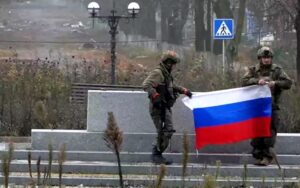
In September, the infiltration of approximately 20 Russian drones into Polish airspace prompted NATO to shoot down three of them, an unprecedented incident since the alliance’s founding in 1949.
A few days later, NATO fighter jets escorted three Russian MiG aircraft out of Estonian airspace after a record 12-minute intrusion.
This rapid response was followed by the launch of Operation Eastern Sentry, with the aim of strengthening surveillance of NATO’s eastern flank.
According to diplomats, several countries believe it is necessary to strengthen the response and provide more resources and capabilities.
NATO intends to modify its rules of engagement by giving its military command more flexibility.
These diplomats explained that the idea is to simplify the rules, which are based on different systems and sometimes limit the ability of the alliance’s military leadership to take the necessary action.
The ministers will also discuss ways to strengthen defense and deterrence capabilities to counter these repeated intrusions by Russian or unidentified drones, as happened in Denmark before a European summit.
The European Union, whose defense ministers will meet Wednesday evening after the NATO meeting, has proposed building an anti-drone wall to counter this.
The NATO Secretary General emphasized that the alliance supports this action, but that it must be carried out through coordination and good understanding.
A diplomat emphasized that NATO must remain the primary responsibility, by guiding the European Union on the steps to be taken.
NATO defense ministers will also meet with their Ukrainian counterpart, Denys Shmygal, during a working lunch and a meeting of the Defense Contact Group on Ukraine.
This will be an opportunity for the Ukrainian minister to emphasize to European NATO members the importance of a Washington-led initiative allowing Kyiv to purchase US weapons with European financing.
“This program is vital, and allies must intensify their efforts and take action to increase pressure on Moscow to come to the negotiating table,” US Ambassador to NATO Matthew Whitaker said Tuesday.
Kyiv has received two aid tranches worth approximately $2 billion, funded by the Netherlands and other Scandinavian countries.
Germany and Canada have pledged to finance two additional tranches, each worth $500 million, and Kyiv hopes to finalize the preparations for the additional tranches soon.
France isn’t participating in this program, but it’s considering ways to provide further support to Ukraine, as its president, Volodymyr Zelensky, is demanding more air defense and missile systems from Paris, he said Sunday during a phone call with his French counterpart, Emmanuel Macron.
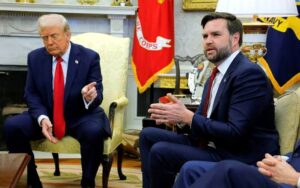
For his part, US President Donald Trump is considering supplying Ukraine with more long-range Tomahawk missiles and is scheduled to meet with Zelensky on Friday.
No announcement on this matter is expected on Wednesday, but “the possibility of deep strikes may force Putin to reconsider his calculations,” as this “threatens… critical energy infrastructure inside Russia,” according to Whitaker.