Merkel advises European politicians to be extremely careful in their dealings with Putin
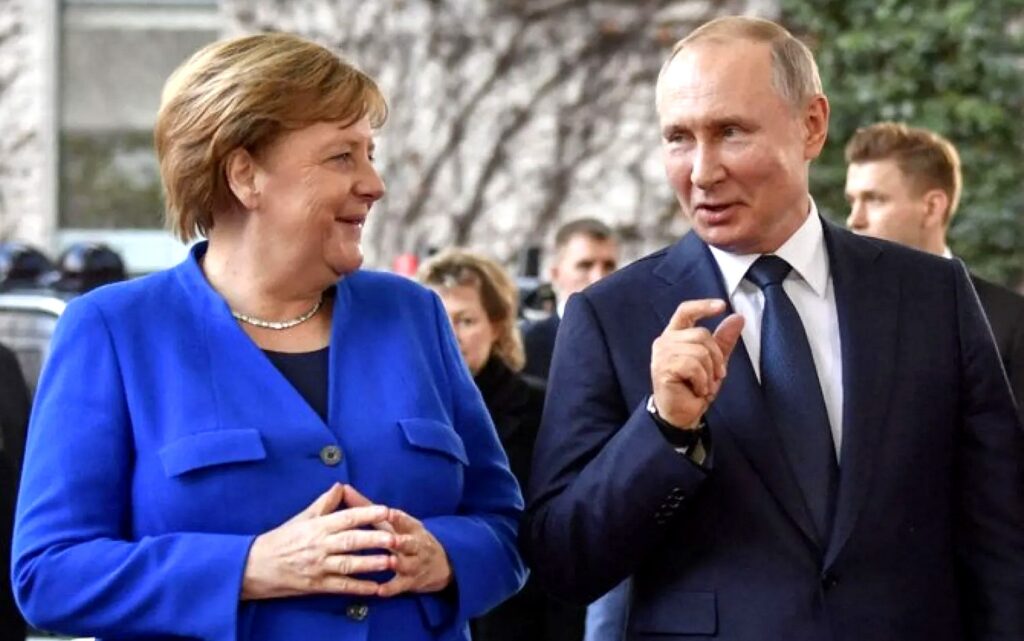
Former German Chancellor Angela Merkel urged European leaders and politicians to be extremely careful in their dealings with Russian President Vladimir Putin, warning that underestimating or belittling him could be one of the most serious mistakes they could make.
Speaking at a forum hosted by German broadcaster WDR, Merkel said, “I’d always say that underestimating Putin would be a grave mistake”.
When she was asked whether her view of the Russian president had changed over the years, she added, “My opinion today is the same as it was in the past: not taking Putin seriously enough is a mistake that must not be made”.
Merkel’s warning came just days after President Putin himself expressed his personal opinion that former German Chancellor Gerhard Schröder was the figure closest to him as a potential negotiator between Russia and Europe.
However, Putin emphasized that Europeans are free to choose their representative and that they should select a leader they trust, and he didn’t make any disparaging remarks about Russia.
Putin stressed that it was Europe that refused to enter into negotiations with Russia, not the other way around.
In contrast, Stephan Cornelius, the German government spokesperson, declined to assess Schröder’s suitability as a mediator between Russia and the European Union, and also refused to suggest alternative names for potential mediators.
However, he simultaneously announced the readiness of the “European troika” (France, Britain, and Germany) to sit down at the negotiating table with Russia, alongside the United States.
Amidst a tense backdrop and the Ukrainian crisis, Merkel’s warning came not in a routine context, but at a time of unprecedented tension in relations between Moscow and the West, stemming from the war in Ukraine and successive Western economic sanctions against Russia.
It also comes against a backdrop of sharp criticism directed at Gerhard Schröder within Germany, due to his positions in Russian energy companies and his perceived soft stance on the conflict, leading many to view him more as a controversial figure than a neutral mediator.