Haaretz: Israel abandoned the ceasefire negotiations in Gaza and began implementing the gradual annexation phase of the Gaza Strip
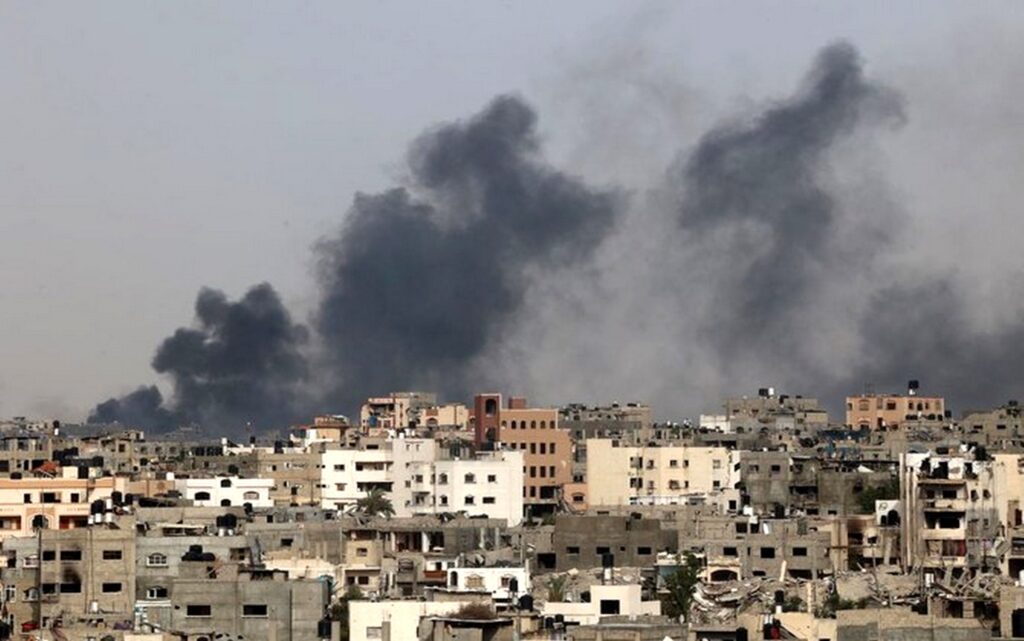
Senior officials in the Israeli security establishment believe that Benjamin Netanyahu’s government is moving towards a gradual annexation of large parts of the Gaza Strip, with secondary attention given to the prisoner exchange deal with Hamas, according to Haaretz newspaper.
These officials believe that the possibility of reaching an agreement has become almost non-existent, especially since international talks on the issue have stopped.
In addition, the government hasn’t held any discussions with senior security officials on the prisoners’ file for a long time.
Field officers who spoke to Haaretz confirmed that the decision to launch a new ground operation in the northern Gaza Strip was taken without deep discussion, and it seems that its aim is to pressure the residents of Gaza, whom the Israeli army is demanding to move again from their areas towards the coast as winter approaches.
These officers don’t rule out that this step is a prelude to implementing the siege and starvation plan proposed by retired General Giora Eiland, which requires the evacuation of all residents of the northern Gaza Strip to humanitarian areas in the south, and whoever chooses to remain in the north will be considered a Hamas member and can be targeted.
According to the plan, “while Israel will allow humanitarian aid to reach the southern part of the Strip, residents of the north will face starvation if they decide to stay there”.
Officials stressed that the Eiland plan isn’t in line with international law, and the likelihood of the United States and the international community supporting this plan is very slim, and it could harm the legitimacy of the continuation of the war on Gaza.
Haaretz pointed out that the Israeli army was preparing for a large-scale incursion into the northern Gaza Strip after the failure of the talks on the deal, with the aim of pressuring Hamas to return to the negotiating table.
But in the end, it was decided to shift the weight of the fighting to the northern front against Hezbollah.
Despite the lack of intelligence information to justify this, the 162nd Division launched a large-scale military operation in Jabaliya, in the northern Gaza Strip.
Haaretz revealed that there was no consensus among senior security officials about launching a ground operation in the northern Gaza Strip, as army and Shin Bet officials believe that this step could endanger the lives of prisoners.
Haaretz quoted informed sources as saying that the soldiers who entered Jabaliya didn’t encounter direct resistance from Hamas fighters.
It pointed out that the person who pushed for the operation was the commander of the southern region, Yaron Finkelman, on the occasion of the first anniversary of the war.
The Israeli army has made it clear to the political leadership in recent weeks, according to Haaretz, that ground operations in the Gaza Strip endanger the lives of prisoners, especially since the discovery of six prisoners killed by Hamas gunfire after forces approached the place where they were being held, and with Hamas confirming that it had issued orders to its members to prevent prisoner rescue operations at all costs, and to act according to their assessments in the event that Israeli forces approach the areas where they are being held.
According to Israeli intelligence estimates, there were about 4,000 Palestinians in the northern Gaza Strip known to be Hamas operatives before the war, and the number is believed to be higher in the southern Gaza Strip.
According to Israeli estimates, although the Rafah Brigade suffered severe blows and disintegrated as a military force, many of its fighters left the combat zones before the IDF entered.
It’s also estimated that there are additional Hamas elements operating in camps in the central Gaza Strip, where Israel has not yet conducted any ground operations.
Senior Israeli security officials believe there is an urgent need for an international body to take responsibility for the civilian aspects of the Gaza Strip, which they believe Hamas tightly controls, but the political leadership has so far rejected all proposals made by senior security officials in this regard.
Haaretz claimed though that Hamas has established a police unit called the ‘Arrow Force’, which includes hundreds of members and works against anyone who tries to undermine Hamas’s control in Gaza, and considered that the greatest pressure that Hamas leadership may face is the difficult civilian situation in the Strip, which could lead to a rebellion by the population.
However, after a year of war, many Palestinians in Gaza believe that Hamas will continue to control even after the war ends, and therefore they are afraid to speak out against it publicly.
Senior Israeli security officials believe that Hamas is trying to prevent residents from obeying the evacuation instructions and orders issued by the Israeli army, and despite Hamas’s demands, most civilians are leaving out of fear for their lives.
However, after being displaced from their homes several times over the past year, more residents are willing to take the risk and remain in combat zones.
Israeli security officials see Hamas’ civilian control of the Gaza Strip as a more complex challenge than its military wing,” senior Israeli security officials assert.
“Despite the severe blows that the military wing has suffered, Hamas remains the sole authority in the civilian sphere,” they say.
“The population’s dependence on Hamas has increased, in part because it’s responsible for distributing humanitarian aid to the population, and because many Gazans are now willing to work for the organization to earn a living, even if they don’t believe in or support its ideology”.