Erdogan will face a new and different opponent in the upcoming presidential elections
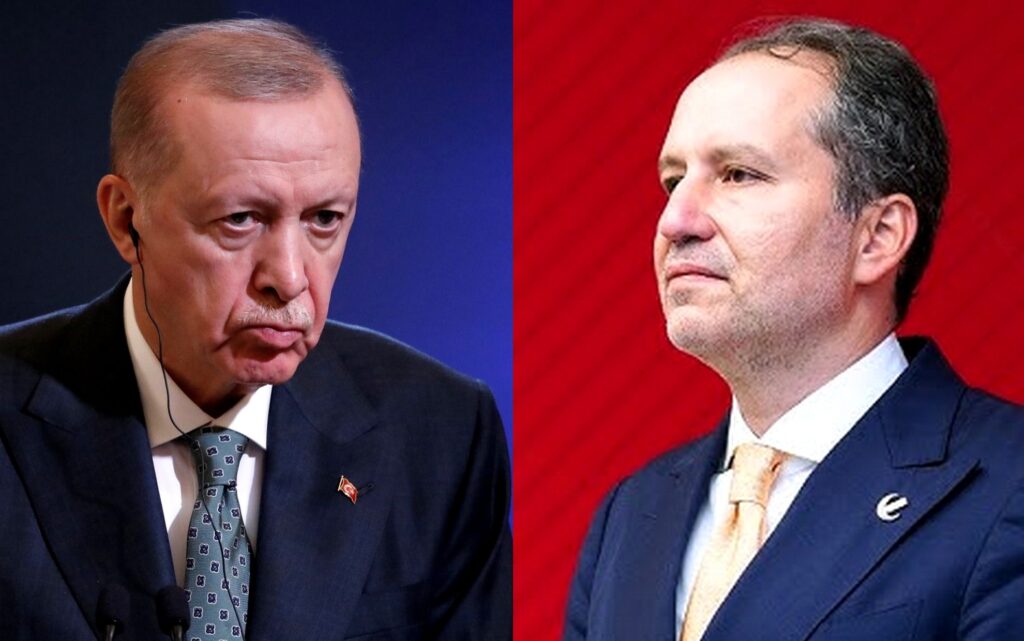
While Turkish President Recep Tayyip Erdogan has thrown his fiercest rival, Istanbul Mayor Ekrem İmamoğlu, in jail over a never-ending series of cases, the leader of the New Welfare Party, Dr. Fatih Erbakan, is preparing to form a coalition of parties affiliated with the National Vision movement founded by his late father, Necmettin Erbakan.
The formation of this alliance comes after Erbakan announced his intention to run in the presidential elections scheduled for 2028, which is a departure from the usual context of competition in Türkiye, which is limited to the ruling Justice and Development Party (AKP) and the opposition Republican People’s Party (CHP).
For his part, Dr. Erbakan said that he believes that the concerted parties affiliated with the National Vision will enable them to provide a serious alternative through their work in harmony, and stressed the quest to form a coalition of these conservative parties, saying that they can constitute a third path that society is looking for.
The base that Erbakan wants to target is the base of the hesitants voters, who according to him make up 30 or 35%.
Recent polls indicate a gradual rise in support for Erbakan’s Welfare Party, with its approval rating reaching around 5%, amid the continued decline of the ruling Justice and Development Party (AKP), but polls also confirm the continued dominance of the opposition Republican People’s Party (CHP), led by Özgür Özil, since winning the last local elections on March 31, 2024.
President Erdogan, this time, will face Erbakan, as Erbakan withdrew from the presidential elections held in May 2023, and announced his support for President Erdogan in the runoff he ran against the opposition candidate, former Republican People’s Party (CHP) leader Kemal Kilicdaroglu, which contributed to tipping Erdogan’s favor.
To win, Erbakan is betting on the economic factors that shake the Turkish voter’s confidence in the current president and his ruling party, as well as the factor of the AKP obtaining the 50 +1% needed for his candidate to win the presidential elections, even with the support of his current ally the Nationalist Movement Party (MHP).
Most importantly, the background of Erbakan’s “New Welfare Party is conservative, not secular, meaning it appeals to the same electorate as the ruling Justice and Development Party (AKP).
Questions are being raised about whether Türkiye will hold early elections, as President Erdogan isn’t eligible to run for a third term unless early elections are held in accordance with the constitution, or the constitution is amended.
Erbakan has already called for early elections, suggesting spring 2026 as the most suitable date instead of waiting until 2028.
However, Erdogan has affirmed on several occasions (most recently in July 2025) that the elections will be held on their scheduled date in 2028, rejecting the opposition’s calls for early elections.
Thus, Türkiye will have three contenders for the presidency:
The ruling Justice and Development Party (AKP) has confirmed its intention to nominate President Erdogan for a new term in 2028, and the name of the current Turkish Foreign Minister Hakan Fidan is also emerging as a possible alternative in the event that Erdogan doesn’t run.
Opposition (Republican People’s Party): The party has officially insisted on the candidacy of the imprisoned Ekrem İmamoğlu (mayor of Istanbul) for the presidential race.
The “Third Way” Alliance: Fatih Erbakan, the leader of the New Welfare Party, has announced his intention to run for the presidency and seeks to form a conservative alliance that includes parties such as “Happiness”, “Future”, and “Democracy and Progress” to compete with the two traditional poles.
It’s worth mentioning that Recep Tayyip Erdogan has been ruling Türkiye for more than two decades, starting as prime minister in 2003, then moving to the position of president of the republic in 2014 and until now (2026), his reign exceeded 23 years, and it is considered the longest period of rule in Turkey’s modern history.
The economic situation and its improvement for the Turkish people is among the most important issues for the Turkish voter and will be decisive in any upcoming elections, noting that Türkiye’s inflation rate is still above 30%, and the government is seeking to keep it below 10%.