Donald Trump talks about a 15-point deal with Iran
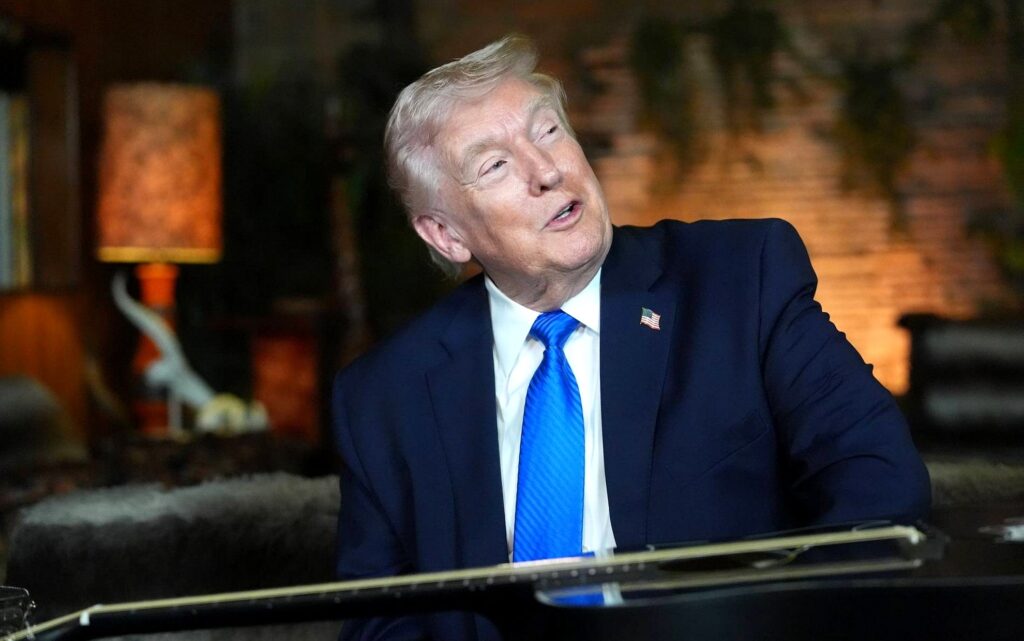
US President Donald Trump announced on Monday that Washington has held fruitful talks with Iran over the past two days, with the aim of reaching a comprehensive settlement to end the ongoing war between the two sides, stressing that Israel will be very happy with the expected results.
The announcement came hours after Trump threatened to bomb Iranian power plants if Tehran didn’t open the Strait of Hormuz within 48 hours.
However, the US president backtracked on the threat, announcing a five-day suspension of strikes to make way for negotiations.
Trump told reporters in Florida before boarding the presidential plane that negotiations were conducted by US envoy Steve Witkoff and the president’s son-in-law Jared Kushner with an unnamed senior Iranian official.
He added that the talks took place on Saturday and Sunday, and that there were key points of agreement reached on the issues.
According to Trump, the potential deal includes Iran giving up its nuclear weapons possession and halting uranium enrichment, with the United States seizing Iran’s stockpile of enriched material.
He also pointed out that the strait will be managed jointly between the two parties.
“If this agreement is made, it will be a long-term and guaranteed peace for Israel… We’ve spoken with the Israelis and I think they will be very happy,” Trump said.
Iran, on the other hand, categorically denied holding any talks with the US side.
Iran’s Fars News Agency, citing an unnamed source, reported that there has been no direct or indirect contact with the United States.
Iranian Foreign Ministry spokesman Esmail Baghaei said Tehran had received messages from friendly countries stating a US request for talks aimed at ending the war, but denied any negotiations or talks with the United States during the past 24 days of the imposed war.
For his part, the speaker of Iran’s parliament, Mohammad Baqer Qalibaf, who Israeli reports indicated is leading the Iranian side in the negotiations, denied that there were any talks.
“No negotiations have been held with the United States, and fake news is being used to manipulate financial and oil markets and to escape the quagmire in which the US and Israel are stuck,” he wrote on X.
In response to Tehran’s denials, Trump said that disruption in Iran’s communications systems may be the reason why the information didn’t reach Iranian officials.
“They have to bring in better PR officers… Their communications were completely destroyed”.
Trump also noted that the side he is negotiating with is the most respected and most commanding person, stressing that he isn’t the new Supreme Leader Mojtaba Khamenei, who he said is unavailable and no one knows if he is still alive.
Media reports, citing informed sources, revealed that Egypt, Pakistan and Türkiye played a mediating role between the two sides over the weekend, with their foreign ministers relaying messages between Tehran and Washington in an attempt to buy time before Trump’s deadline.
The sources reported that the mediation is continuing and making progress.
Despite Trump’s announcement of the suspension of strikes on Iran’s energy facilities, Israeli Prime Minister Benjamin Netanyahu has confirmed that attacks on Iran will continue.
In a short video in Hebrew, Netanyahu said he had spoken with Trump, who believes there is a chance of reaching a deal, but stressed that the attacks on Iran and Lebanon continue, referring to the assassination of two Iranian nuclear scientists a few days ago.
For its part, the US Central Command announced that US forces launched new raids on Iranian Revolutionary Guard positions while the Israeli army continued to bomb sites in Tehran.
Trump’s announcement of an imminent deal led to a sharp decline in oil prices, with benchmark Brent crude falling 13% below $100 per barrel, before rising slightly back to around $101.8.
In a dramatic development, the US president is adopting a narrative of advanced negotiations with Iran to reach an agreement that would end the war, with concessions to Tehran related to the nuclear file and the Strait of Hormuz, in exchange for Iran’s categorical denial of any talks.
With five days left for diplomacy, questions remain open about the reality of these negotiations and the possibility of reaching an agreement that would end the war that has been going on for about a month.