German Intelligence Chief: The increase of Muslim Brotherhood influence in politics and society
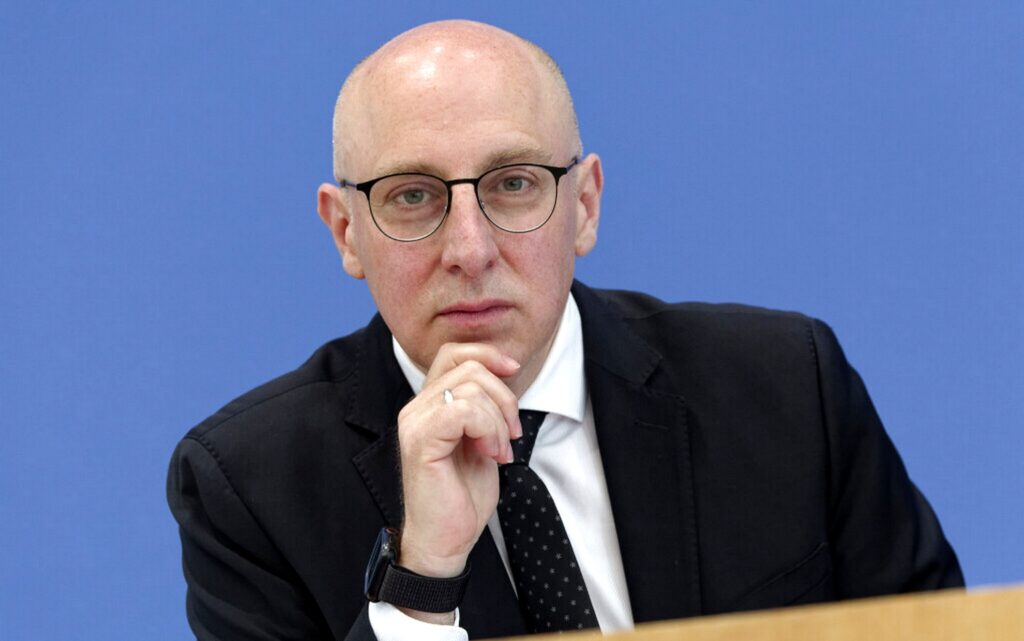
A report published by the German news and opinion website Tichys Einblick has revealed that the head of Germany’s Federal Office for the Protection of the Constitution (BfV), Sinan Selen, warned members of the German Bundestag during a closed-door meeting about the growing influence of the Muslim Brotherhood and networks associated with what is commonly referred to as political Islam within German society and political institutions.
According to the report, the intelligence chief emphasized that the concern doesn’t primarily revolve around violent extremism, but rather around long-term efforts to gain influence through legal and institutional channels.
The article states that organizations linked to the Muslim Brotherhood are believed to pursue their objectives by establishing a presence within civil society organizations, educational institutions, charities, cultural associations, and political networks, allowing them to shape public discourse and decision-making processes over time.
The report highlights that German security authorities increasingly view such activities as a challenge because they are often conducted within the framework of democratic freedoms and legal political participation.
This, according to the article, makes it more difficult to identify and counter potential influence operations compared to traditional security threats based on violence or terrorism.
The article further notes that a broader debate has emerged in Germany regarding the role of organizations receiving public funding and participating in government-supported integration, social, and educational programs.
Critics have questioned whether some of these organizations maintain ideological or personal links to networks associated with political Islam, including individuals alleged to have connections to the Muslim Brotherhood.
At the political level, the report points to growing criticism from some commentators and policymakers who argue that certain political parties and civil society actors have become increasingly willing to cooperate with associations and activists whose backgrounds or affiliations have generated concern among security experts.
Supporters of such cooperation, however, argue that engagement with a wide range of community organizations remains essential for social cohesion and integration.
The article draws heavily on the book Unterwanderung (Infiltration) by German investigative journalist Sascha Adamek.
In his work, Adamek examines what he describes as long-term efforts by Islamist-oriented networks to establish influence within democratic institutions and public life in Germany.
The book explores the methods, structures, and strategies allegedly used by such organizations to expand their social and political reach.
The discussion comes amid a wider European debate on the distinction between religious freedom, political activism, and security concerns related to ideological movements.
Several European countries have in recent years intensified scrutiny of organizations accused of promoting Islamist political agendas while operating within legal frameworks.
It’s important to note that the article reflects the analysis and interpretation of its author and the sources cited therein.
The information presented is not an official public statement issued by the German federal government or the Federal Office for the Protection of the Constitution.
Rather, it’s based on reports of remarks allegedly made during a confidential parliamentary briefing, the details of which have not been fully disclosed to the public.
As the debate continues, questions surrounding political Islam, integration policies, civil society engagement, and democratic resilience are likely to remain prominent topics in Germany’s domestic political and security discussions.