Ankara is moving towards a defense agreement with Moscow and Beijing!
Tensions between Recep Tayyip Erdogan and Benjamin Netanyahu have escalated into one of the most severe crises in relations between Ankara and Tel Aviv.
The dispute intensified after Erdogan accused Netanyahu of adopting Nazi-like policies and likened him to Adolf Hitler.
In parallel, Turkish Foreign Minister Hakan Fidan warned that Israel’s strategic behavior relies on perpetually identifying new adversaries, suggesting that Türkiye could become its next target following Iran.
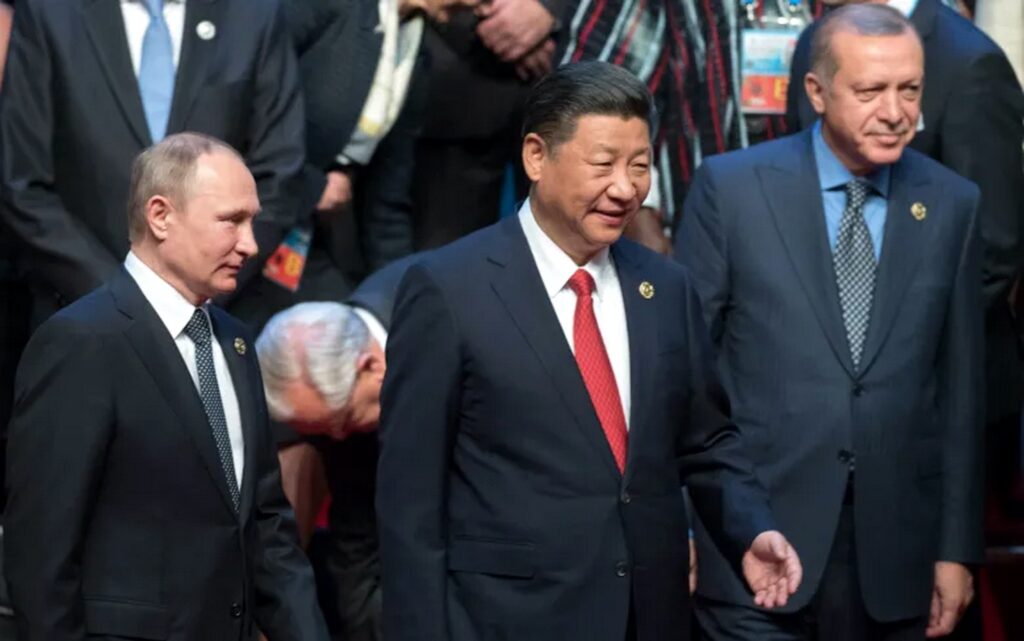
Amid this backdrop, Devlet Bahçeli, a key political ally of Erdogan, has been promoting the idea of a new strategic alignment linking Ankara with Moscow and Beijing.
Reports from Turkish and Israeli media indicate that discussions have gained traction within decision-making circles in Ankara and could signal a significant shift in Turkish foreign policy.
This initiative reportedly accelerated after a visit to Moscow by Ilyas Topsakal, deputy chairman of the Nationalist Movement Party, who traveled under Bahçeli’s directive to explore deeper cooperation with Russian officials.
The proposal centers on long-term coordination between Turkish and Russian spheres of influence, along with broader integration with Eastern-led international frameworks, particularly in light of rising geopolitical tensions.
The timing is closely tied to regional instability, including the confrontation involving the United States, Israel, and Iran, as well as concerns over shifting American commitments to NATO under Donald Trump.
Strategic circles in Ankara increasingly fear that in any direct conflict with Israel, Washington would firmly support Tel Aviv, leaving Türkiye exposed and prompting the need for alternative alliances.
Bahçeli has framed the Western bloc as a hostile coalition dominated by the United States and Israel.
However, opposition figures have strongly rejected the pivot eastward. Critics argue that aligning too closely with Russia and China risks undermining Türkiye’s independence and long-standing geopolitical orientation.
Meanwhile, rhetorical exchanges between Ankara and Tel Aviv have intensified, and Israeli officials, including Netanyahu and Defense Minister Israel Katz, have sharply criticized Erdogan’s statements, while Fidan accused Israel of deliberately portraying Türkiye as a new adversary to serve internal political needs.
The dispute has also extended into legal and diplomatic arenas, as Turkish prosecutors have issued accusations against multiple Israeli officials over incidents such as the interception of aid flotillas bound for Gaza.
In response, Turkish officials, including communications director Burhanettin Duran, have described Netanyahu as a destabilizing figure whose policies are driving the region toward further conflict.
Overall, the situation reflects a deepening geopolitical divide, with Türkiye reassessing its alliances while tensions with Israel continue to escalate across political, military, and diplomatic fronts.