The Iranian President sets 3 conditions for accepting a cessation of war
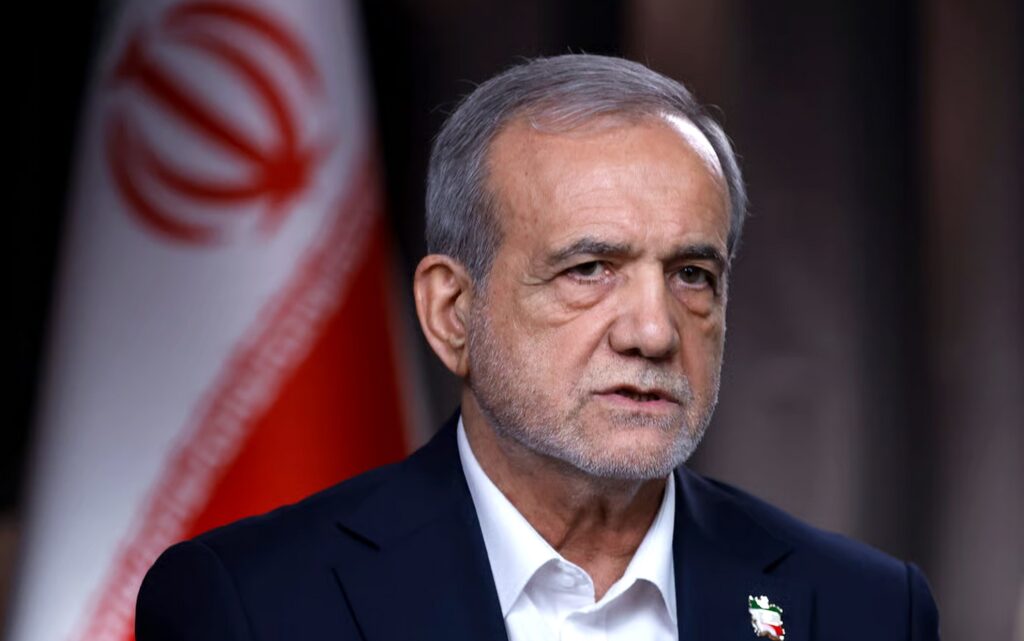
Iranian President Masoud Pezeshkian stressed that the only way to end the ongoing war in the region is to recognize Iran’s rights, pay compensation and provide international guarantees to prevent the recurrence of any attack on it in the future.
In a post on X, Pezeshkian said that during his talks with the leaders of Russia and Pakistan, he stressed his country’s commitment to peace and stability in the Middle East.
The Iranian President added in his X post that ending the conflict that the United States and Israel have ignited, as he described it, can only be achieved by recognizing Iran’s legitimate rights, compensating it for the damage it has suffered, and providing strong international guarantees against any new aggression.
Pezeshkian accused the United States and Israel of igniting the confrontation and said that any diplomatic effort aimed at ending the conflict must acknowledge Iran’s legitimate rights.
While he didn’t specify the exact legal framework for these rights, Iranian officials frequently refer to issues such as sovereignty, security guarantees, and the country’s nuclear and regional policies when raising such demands.
The Iranian president also stressed that compensation should be provided for the economic and material damage that Iran claims to have suffered as a result of the hostilities.
According to Iranian officials, infrastructure damage, economic losses, and the broader impact of sanctions and military pressure are among the factors Tehran believes should be addressed through reparations.
In addition to compensation, Pezeshkian called for what he described as strong and credible international guarantees.
These guarantees, he said, would be necessary to ensure that similar attacks don’t occur again in the future.
Analysts note that such guarantees would likely involve international mediation or monitoring mechanisms and could require the involvement of major global powers or multilateral institutions.
The statement comes amid heightened diplomatic activity in the region, with several countries attempting to prevent further escalation.
Russia and Pakistan have both maintained dialogue with Tehran in recent months, positioning themselves as potential intermediaries in broader regional discussions aimed at de-escalation.
Pezeshkian concluded that Iran remains open to political solutions but insisted that any agreement to end the war must address Tehran’s security concerns and include clear commitments from the international community to prevent renewed conflict.