New York Times: Iran is renovating its missile sites and fortifying its underground nuclear facilities
On Saturday, the Iranian capital Tehran witnessed a display of heavy weapons, including ballistic missiles and drones.
The parade was held on the occasion of what Tehran calls “Sacred Defense Week”, which it organizes to commemorate the Iraqi-Iranian war that began in 1980 and lasted for 8 years.
During the event in Tehran, Iranian heavy weapons were displayed, including ballistic missiles, air defense systems and drones.
The weapons were displayed in Baharestan Square near Iran’s parliament, with a poster of Supreme Leader Ali Khamenei next to them.
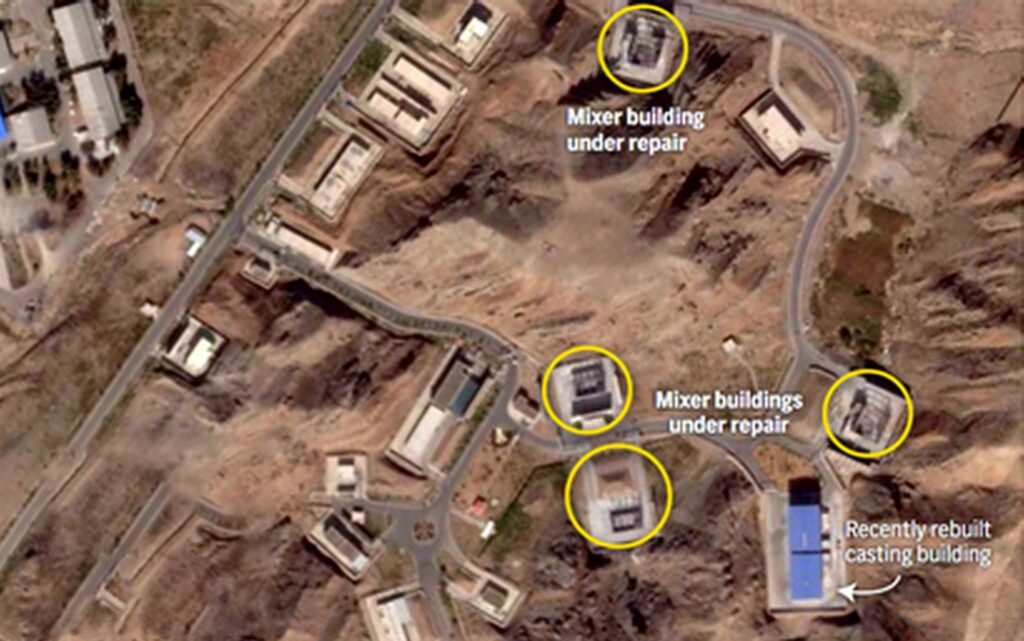
Analyses of recent satellite imagery show that Iran has begun accelerated repairs and repairs at several ballistic missile facilities that were damaged by Israeli and US strikes last year, while work at key nuclear sites continues to move slower.
This discrepancy between the speed of repair, restoration and reconstruction reveals Tehran’s military priorities as the United States builds up its forces in the region and President Donald Trump threatens new military actions, according to a report by the New York Times.
The boosting missile capabilities is Iran’s main deterrent tool to protect its nuclear facilities from any future attacks.
According to the analysis of some 24 sites targeted during the June 2025 conflict, construction has taken place at more than half of these sites, including the Shahrood missile testing facility, which regained operational capabilities within a few months.
On the other hand, the report says that the images show that the major enrichment complexes in Isfahan, Natanz and Fordow still appear to be none operational, despite the monitoring of partial fortification and repair efforts that have accelerated in recent months, as Iranian authorities have begun to build huge white roofs on top of the damaged buildings, which observers see as an attempt to withhold internal activities from aerial surveillance and facilitate the process of recovering nuclear equipment and materials without detection.
The New York Times reported that intelligence reports indicate that highly enriched uranium is still buried at the three sites that were bombed, and there have been no strong indications that these assets have been removed so far.
However, the Institute for Science and International Security has detected an increase in activity at the Isfahan complex that has included burying tunnel entrances with new soil, a measure expert interpret as anticipating imminent strikes or an attempt to secure materials of high strategic value.
According to the New York Times, a remarkable development has emerged at the Parchin military complex with the construction of a massive 150-foot-long cylindrical chamber, a facility that experts point to as strategically important despite the unclear end of purpose, especially since the site has previously seen tests of explosives linked to nuclear warhead triggers.
Iran is racing against time to fortify its most vital underground facilities, such as the area near Natanz site, which has seen its tunnel entrances strengthened recently.
It’s estimated that Iran’s nuclear program, despite being hit hard by the White House’s assessments, still has the basic assets that enable it to re-emerge, leaving the scene open to all possibilities in the absence of a comprehensive political agreement that ends the existing state of tension.