National Interest: Don’t wish for the fall of the Iranian regime!
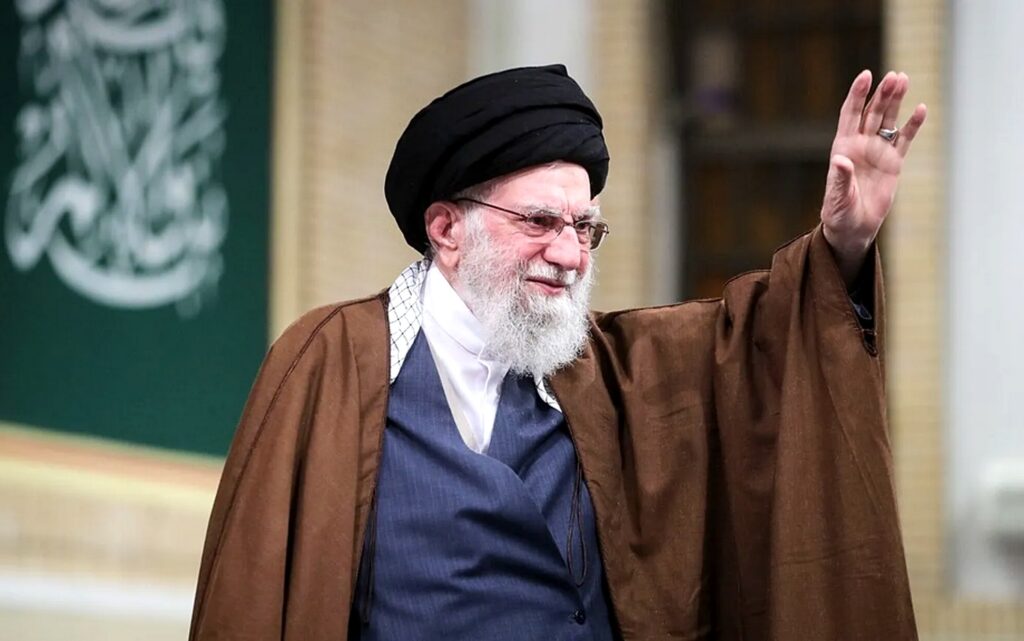
The fall of the current Iranian regime will create a series of seismic repercussions in the Middle East.
Scenes of recent clashes between Iranian protesters and security forces are recurring, and there are fears of growing internal pressure that could threaten the fall of the regime.
With a population of more than 92 million, Iran’s collapse will be a resounding earthquake whose impact extends far beyond Iran.
Those who herald the fall of the Islamic Republic should think twice before wishing to do so.
If the regime falls, can the United States and its allies in the Middle East manage the regional fallout?
Iran’s complex demographic fabric is both a source of strength and a major challenge.
The Kurds in the northwest, the Baluch in the southeast, the Ahwazi in Khuzestan, and the Azeris in the north all have distinct identities and aspirations.
In the event of the fall of the regime, these societies may seize the opportunity to demand autonomy, or even independence.
On the other hand, if opposition factions, such as Maryam Rajavi’s National Council of Resistance of Iran (NCRI) and Crown Prince Reza Pahlavi’s National Council of Iran (NCRI), linked to Crown Prince Reza Pahlavi, can unite around a credible transitional authority, it could help reduce fragmentation and stabilize the country.
But the prospects for such a rapprochement remain uncertain.
Both the National Council of Resistance of Iran (NCRI) and the National Council of Iran offer different visions for Iran’s future, and their narratives often fail to convincingly address minority rights and political representation.
The lack of trust among minorities towards both camps is real.
In the absence of credible guarantees and inclusive governance, separatism may gain momentum, further complicating the post-regime landscape.
The geopolitical repercussions will be far-reaching.
Türkiye, which has long been sensitive to Kurdish nationalism, will keep a close eye on the Iranian Kurdish movement.
The situation could encourage cross-border Kurdish demands, increasing tensions in southeastern Türkiye and along its border with Iran.
The GCC countries will focus on Khuzestan, which has a large Arab community with a history of grievances related to discrimination and economic marginalization.
Any opportunity for autonomy or secession can be both an opportunity and a challenge.
Pakistan will also feel the repercussions of these events.
The Baloch population stretches between Iran and Pakistan, and regime change in Tehran could revitalize Baloch nationalism.
Islamabad is already facing an ongoing insurgency in Baluchistan; major cross-border shifts could exacerbate its domestic security challenges.
Azerbaijan may also seek to expand its influence, given the presence of a large Azeri community in northern Iran.
Unmanaged or opportunistic external transitions could fuel ethnic tensions and destabilize both sides of the border.
For Israel, the repercussions will be significant: Iran’s Jewish community, one of the oldest in the world, reflects the country’s deep historical pluralism.
But a sudden power vacuum could create uncertainty among minorities, especially if extremist factions compete for influence.
Moreover, Israel’s broader concern is whether a post-regime Iran will become a fragmented arena in which anti-Israel militantism prevails.
The collapse of the Iranian regime will upset the regional balance of the major powers.
Russia has long treated Iran as a useful counterweight to Western influence, and China will face its own dilemmas: Iran is a central focus of Beijing’s Belt and Road Strategy and in its broader efforts to secure energy routes and strengthen its regional influence.
Iran’s instability will force China to quickly reassess its situation.
Ultimately, the fall of the Iranian regime could lead to a historic reshaping with repercussions beyond Iran’s borders.