The second day of the Gaza war negotiations: prisoner exchanges, discussions on the Israeli withdrawal mechanism, and guarantees could derail the talks
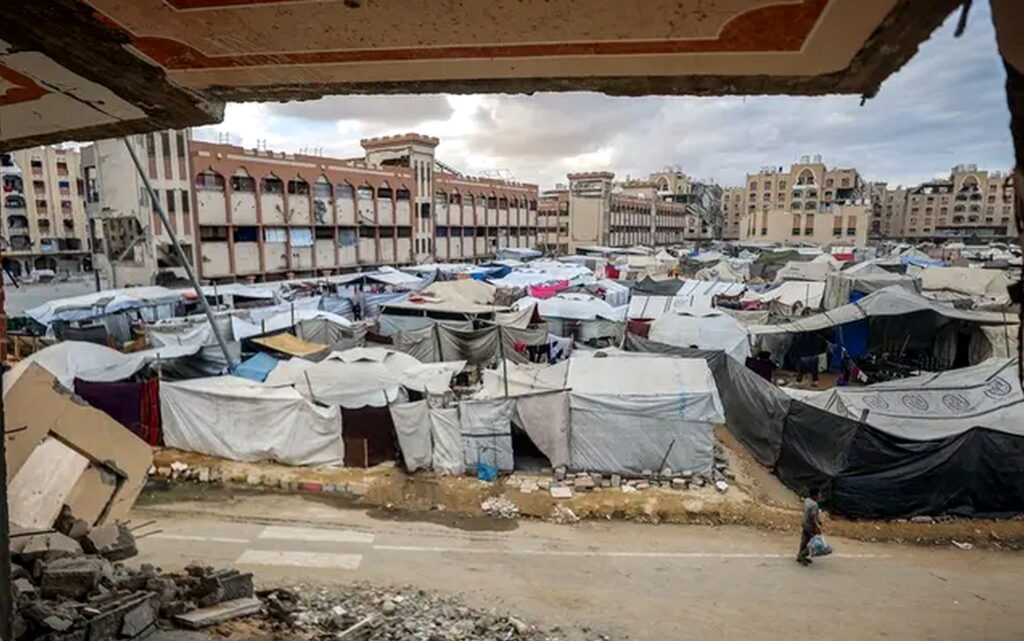
The second day of indirect negotiations between Israel and Hamas in Egypt on Tuesday was marked by the start of discussions on lists of Palestinian prisoners, in addition to examining a mechanism for Israeli withdrawal.
Meanwhile, Hamas has requested clarifications and guarantees regarding the implementation of the plan for the Gaza Strip, particularly an end to the Israeli war of extermination, with Turkey, Qatar, and the United States expected to participate in the negotiations.
Since Monday evening, indirect negotiations have been underway in the Red Sea resort of Sharm el-Sheikh between Israel and Hamas regarding the implementation of US President Donald Trump’s plan for the Gaza Strip.
Al-Qahira News Channel reported, citing unnamed sources, that “Egypt has begun discussing lists of Palestinian prisoners to be released from Israeli prisons under the exchange agreement”.
Tel Aviv estimates that there are 48 Israeli prisoners in Gaza, 20 of whom are still alive. Meanwhile, approximately 11,100 Palestinians are languishing in its prisons, suffering from torture, starvation, and medical neglect.
Many of them have been killed, according to Palestinian and Israeli human rights and media reports.
The official Israeli Broadcasting Authority reported on Tuesday evening that “Hamas demanded that the release of the hostages (Israeli prisoners) be conditional upon a complete withdrawal of the Israeli army from Gaza”.
She added, “The Hamas delegation confirmed that the release of the last kidnapped person will take place in parallel with the completion of Israel’s withdrawal from Gaza”.
The negotiations are scheduled to discuss the names of the Palestinian prisoners to be released, in addition to maps of the withdrawal from Gaza, according to the committee.
For its part, Hamas “demanded clarification of the mechanisms and procedures necessary to implement the Trump plan, and guarantees that Israel would not return to aggression against Gaza,” according to the sources.
On September 29, Trump announced a 20-point plan, including the release of Israeli prisoners in Gaza, a ceasefire, and the disarmament of Hamas.
Hamas leader Fawzi Barhoum said in a statement that the movement’s negotiating delegation “seeks to overcome all obstacles to achieving an agreement that meets the aspirations of our people and our people in Gaza”.
He explained that at the forefront of these aspirations is “a permanent and comprehensive ceasefire and a complete Israeli withdrawal from all areas of the Gaza Strip”.
He continued: “As well as allowing unrestricted humanitarian and relief aid, and ensuring the return of displaced persons to their areas of residence”.
In addition to “the immediate commencement of a comprehensive reconstruction process under the supervision of a Palestinian national body of technocrats, as well as concluding a fair prisoner exchange deal,” according to Barhoum.
He warned of Israeli Prime Minister Benjamin Netanyahu’s attempts to “obstruct and sabotage the current round of negotiations, just as he deliberately sabotaged all previous rounds”.
On November 21, 2024, the International Criminal Court issued an arrest warrant for Netanyahu on charges of war crimes and crimes against humanity against Palestinians in Gaza.
In separate statements on Tuesday, Egyptian Foreign Minister Badr Abdel Aty said that negotiations between the Palestinian and Israeli delegations are exploring a security mechanism to ensure Tel Aviv’s complete withdrawal from Gaza.
Abdel-Ati added that the negotiations “are working to create conditions for the exchange of hostages (prisoners) and the full entry of aid (into Gaza) without any obstacles”.
Since March 2, Israel has closed the crossings into Gaza, preventing any humanitarian aid from entering the territory. This has plunged the Strip into famine, despite the backlog of aid trucks at its borders.
Sometimes Israel allows in very little aid, which does not end the famine, especially since most trucks are robbed by gangs that the Gaza government says Israel protects.
The negotiations also aim to “agree on maps for the redeployment of Israeli forces in preparation for their withdrawal from the Gaza Strip,” according to Abdel-Ati.
He said that US envoy to the Middle East, Steve Witkoff, will travel to Egypt “within the next few hours”.
He stated that he spoke with Witkoff about “the importance of a Security Council resolution adopting the Trump plan and deploying international forces to provide protection for the Palestinian side”.
Abdel-Ati praised the positions and efforts of mediators in Qatar, Egypt, and Turkey, as well as the political and diplomatic support provided by Arab and Islamic countries and the countries of the world friendly to the Palestinians.
On Tuesday, Trump told reporters that a US delegation had traveled to Egypt for talks on a ceasefire in Gaza, and that another delegation had just left.
On Wednesday, Turkish intelligence chief Ibrahim Kalin will head to Sharm el Sheikh to participate in the negotiations.
The sources said that ensuring a ceasefire in Gaza, implementing a prisoner exchange, and delivering humanitarian aid will top the agenda of Kalin’s talks.
Prior to Wednesday’s negotiations, Kalin held bilateral talks with officials from the United States, Egypt, Qatar, and Hamas, according to the sources.
Qatari Foreign Ministry spokesman Majed al Ansari also announced on Tuesday that Qatari Prime Minister and Minister of Foreign Affairs Mohammed bin Abdulrahman Al Thani will travel to Sharm el-Sheikh on Wednesday.
Al-Ansari added, via X, that Ibn Abdul Rahman’s joining the negotiations “confirms the mediators’ determination to reach an agreement that will end the disastrous war in the Gaza Strip”.
Israeli Minister of Strategic Affairs and head of the negotiating delegation, Ron Dermer, will also join the Sharm el-Sheikh negotiations on Wednesday, according to Channel 13, without providing further details.
Earlier on Tuesday, Egyptian media described the atmosphere of the first day of negotiations on Monday as “positive”.
Israel has occupied Palestine and territories in Syria and Lebanon for decades, and refuses to withdraw from these areas and establish an independent Palestinian state with East Jerusalem as its capital, along the pre-1967 borders.