The US Congress extends the Caesar Act for two years
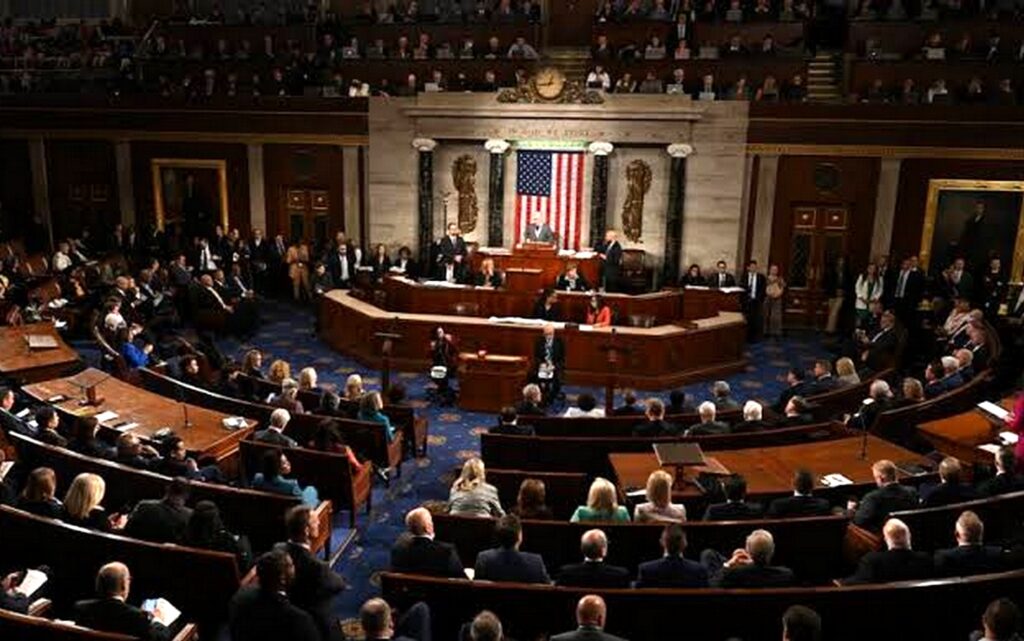
The US House Financial Services Committee approved a new bill to amend certain provisions of the Caesar Syria Civilian Protection Act, by a party-line vote of 31 to 24.
The new bill, titled the “Syria Sanctions Accountability Act of 2025,” was introduced by Republican Representative Michael Lawler and aims to restructure the US sanctions mechanism on the Syrian regime.
The draft amendment focuses on extending the sanctions waiver periods, making them extendable for up to two years instead of the previous maximum of 180 days.
The draft also sets a timeframe for the complete termination of sanctions by December 31, 2029, if the Syrian government adheres to several strict conditions related to human rights, releasing detainees, allowing the entry of humanitarian aid, halting the targeting of civilians, and combating Captagon smuggling.
The bill also proposes additional oversight of the Central Bank of Syria, requires the US Treasury Department to submit periodic reports to Congress on any suspicious financial activities, and requires the US Export-Import Bank to review and assess financial restrictions imposed on Syria.
The bill is scheduled to pass through four legislative stages before entering into force: a vote by the House Foreign Affairs Committee, a full House vote, consideration by the Senate Banking Committee, and finally a Senate vote and the president’s signature.
Discussions within the Financial Services Committee witnessed a clear political divide.
The Republican majority supported the bill as a step to recalibrate the sanctions tool to serve US strategic goals.
In contrast, Democratic figures, including Rashida Tlaib and Maxine Waters, expressed concern about the impact of the sanctions on civilians, calling for amendments to protect the Syrian people from the economic and humanitarian consequences.
Republican Representative Joe Wilson drew attention with his call to repeal the Caesar Act in its entirety, describing the sanctions as “ineffective and hindering the recovery of the Syrian economy,” calling for a new approach that includes support for civil society and funding for reconstruction.
These legislative moves come amid significant developments within Syria, particularly after the killing of a Syrian-American citizen in Sweida Governorate.
This incident prompted some representatives to call for a reassessment of the effectiveness of sanctions and a shift toward a more “flexible and targeted” use of sanctions as a temporary pressure tool rather than permanent ones.
The most prominent provisions of the draft amendment:
- Extension of exemption periods: Instead of temporary exemptions of 180 days, the new bill allows exemptions of up to 24 months, particularly in cases of a humanitarian or investment nature.
- Specific date for ending sanctions: By the end of 2029, sanctions could be lifted if the Syrian government adheres to a set of conditions for two consecutive years, including:
- Stopping the indiscriminate and systematic bombing.
- Ending political detention.
- Ensuring access to humanitarian aid.
- Stopping targeting medical and educational facilities.
- Combating Captagon smuggling and production.
- Ending violations against religious and sectarian minorities.
- Review of the Commercial Bank of Syria’s exceptions: The committee calls on relevant authorities to evaluate the exemptions granted to the bank and their compatibility with US national security interests.
- The role of the International Monetary Fund and the World Bank: The bill directs the Treasury Department to urge international financial institutions to provide technical assistance to Syria and to restore regular monitoring of economic activity.
- Clear conditions for the cancellation of the Caesar Act: The Syrian government must commit to not using airspace to target civilians, ensure the freedom of movement of aid and medical care, allow international organizations access to detention centers, and undertake other measures.