Foreign Affairs: This is the price of Trump’s power politics
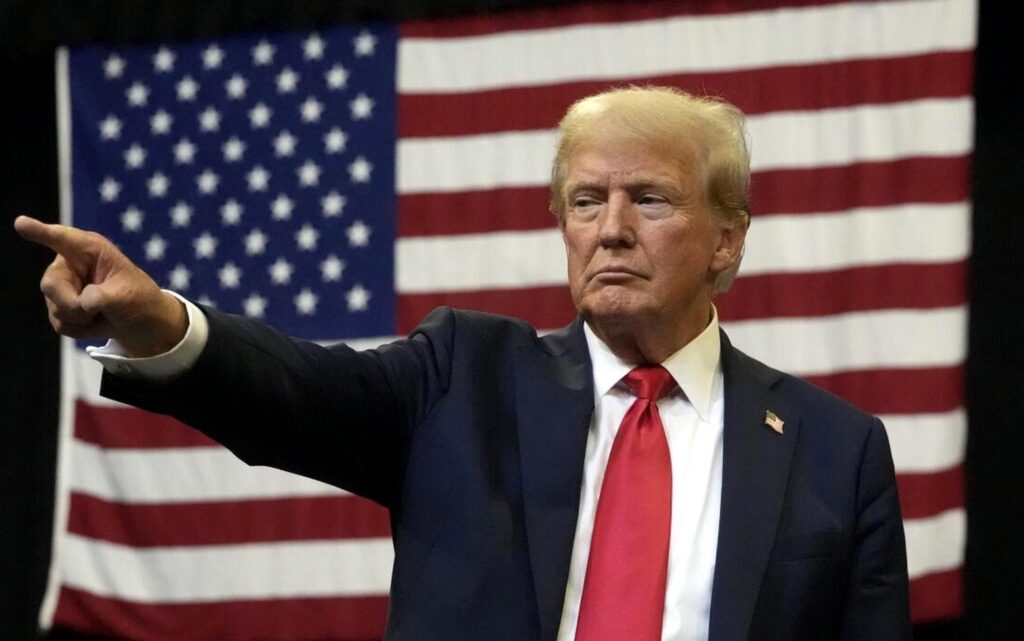
American researchers, Ivo Daalder, CEO of the Chicago Council on Global Affairs and former US ambassador to NATO, and James Lindsay, senior fellow at the Council on Foreign Relations in Washington, wrote an article at the Foreign Affairs magazine, in which they criticize US President Donald Trump’s way of leading the United States and his foreign relations.
They began the article by saying, “The era of Pax Americana, which was born with the Japanese attack on the American fleet anchored at its naval base in Pearl Harbor in Hawaii on December 7, 1941, is over”.
The article argued that the rules-based international order is dead with the inauguration of Donald Trump as president for a second time.
The US president has always stressed that this system has disadvantages that have harmed the United States by burdening it with monitoring the world and enabling its allies to manipulate it and exploit its naivety.
To confirm this conclusion, the article cited an example of a statement by the new US Secretary of State, Marco Rubio, in which he said, “The post-World War II world order is no longer just an outdated system, but has now become a weapon used against us”.
In this context, Daalder and Lindsay point out that Trump’s skepticism and uncertainty about US support for Ukraine and Taiwan, his eagerness to impose tariffs, and his threats to reclaim the Panama Canal, annex Canada, and acquire Greenland all indicate that he wants to return to the power politics and areas of interest that prevailed in the 19th century, even if he doesn’t formulate his foreign policy in those terms.
Trump doesn’t see the United States as having many important interests outside the Western Hemisphere, considers alliances a drain on the US treasury, and believes that Washington should dominate neighboring countries.
This is a worldview based, on the saying of the Greek historian of the Peloponnesian War, Thucydides, that “the strong do what they will, and the weak suffer as much as is imposed upon them”.
While they acknowledge that the Pax Americana achieved extraordinary accomplishments such as the deterrence of communism, unprecedented global prosperity, and relative peace, it also planted the seeds of its own demise long before Trump’s rise.
The American arrogance led to costly and humiliating wars in Afghanistan and Iraq, and the financial crisis of 2008 and 2009 shattered confidence in the competence of the US government and its policy prescriptions.
It’s understandable why some Americans feel their country is better off in a different world in which might makes right.
The United States might appear to have the upper hand in such a system, because it has the largest economy in the world, the most capable military, and arguably the strongest geographical position.
But they add that it suffers from an underappreciated flaw: lack of practice, and the politics of naked power is an arena of activity that is alien to the United States, but familiar to its current rivals.
Chinese President Xi Jinping and Russian President Vladimir Putin have long resented Pax Americana because it limits their geopolitical ambitions, according to the article, which argues that the two leaders have learned to work together to counter US influence, especially in the global South, and are not subject to the same checks and balances as Trump.
The article goes on to draw lessons from past experiences, noting that a US return to the power politics that dominated the 19th century will likely not yield the wealth Trump has promised.
However, the article argued that giving up this advantage would cost the United States dearly.
Not only would its former allies not follow its lead, but many of them might also seek safety by allying more closely with Russia and China instead, and it could face similar setbacks on the trade front.
The article concluded that the only thing Trump understands is power, and if America’s allies work together they can confront him with much of their strength, and if they succeed in mobilizing their resources collectively they may also be able to curb some of his worst impulses and whims in foreign policy.
Thus, the failure of US allies to confront Trump means that a darker era of unbridled power politics awaits us, one that is less prosperous and more dangerous for everyone.