Financial Times: Changing the map of the Middle East is a major challenge for the West
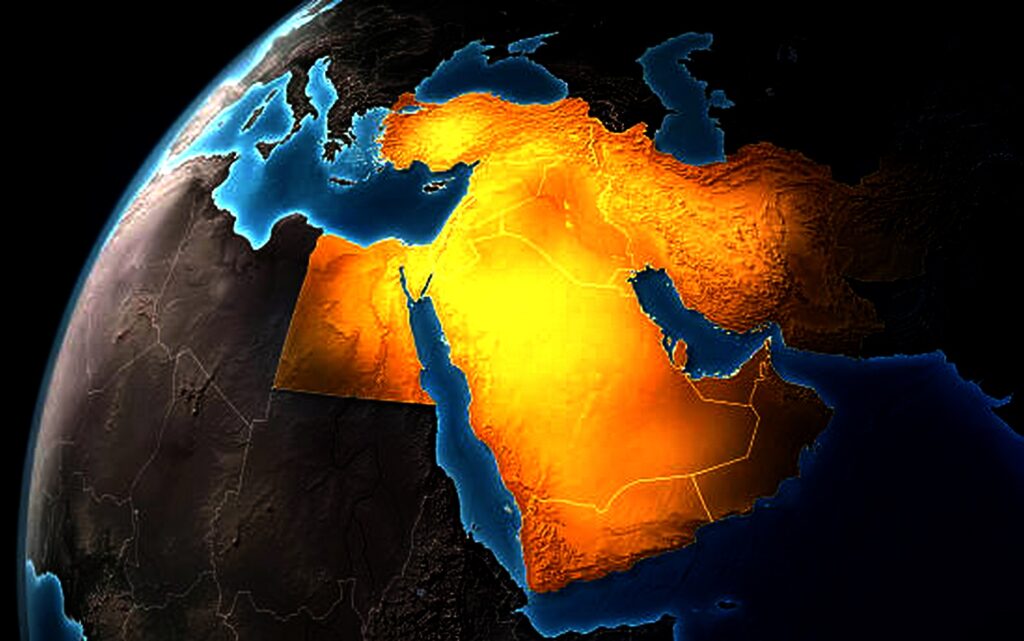
A prominent researcher in international affairs warned the West against being lenient in dealing with the historical transformations in the Middle East, stressing that this poses a great danger.
Emile Hokayem, Director of Regional Security at the International Institute for Strategic Studies, based in the British capital, London, stressed that the successive developments that began in the region since October 7, 2023, were amazing due to the combination of tragic and strategic events that will take time to subside, because what happened will undoubtedly have long-term repercussions.
He added, in his article in the British Financial Times, that societies in the Arab East are diverse and fragile and are undergoing radical historical transformations, and are unlikely to receive assistance from abroad, given the hesitation of their countries and the world’s lack of enthusiasm alike.
The process of reorganizing the region, according to Hokayem, is accompanied by severe violence and renewed disputes, as the Palestinians are suffering in an unprecedented manner in the Gaza Strip at the hands of the Israeli army.
Hakaim claimed that Hamas’ failed bet, and the inability of its partners to rescue it, is a reminder that the only path to establishing a Palestinian state lies in internationalizing the issue and reaching a solution through negotiation.
The two-state solution alliance, espoused by Arab and European countries, has emerged as the most likely means of achieving that goal.
He continued by saying that the Palestinians must be convinced that this is more than just a symbolic diplomatic party, but they must prove that they own it, an outcome that will only be achieved through long-awaited reform of the Palestinian Authority.
In parallel, the Israelis went from severe shock – referring to the October 7, 2023 attack – to “military victory” in just one year.
This, in his view, Hokayem reinforced the belief that Israel can only rely on its military strength and that expansion into Gaza, the occupied West Bank and now southern Syria isn’t only justified but necessary.
He added that the unconditional support Israel receives from the United States and many European countries has allowed it to ignore the need to reach a just peace that would provide security for all.
But Israel’s security-only mindset will have dire consequences.
In Hakayem’s view, it’s costly, increases dependence on the United States, and alienates current and potential partners in the neighborhood, who fear that Israel will expand the conflict by striking Iran’s leadership and nuclear facilities.
He pointed out that Israel’s loss of reputation as a result of its war on Gaza is enormous and entails legal obligations, but the situation of the Lebanese is different, as Hezbollah must take into account the collapse of its military strategy, the fall of its ideological narrative, and the decline of its credibility.
Syrians are tasting freedom for the first time in decades, says Hakayem, who attributes the rapid collapse of Bashar al Assad’s regime to its corruption.
He praises the new administration in Damascus for showing restraint and some wisdom.
However, he believes that establishing peace requires great feats of nobility, chivalry and dedication to establishing inclusive rule despite the vandals at home and abroad.
He explained that in order to reach reconciliation between Arabs and Kurds, this requires moderation and centrism on the part of Türkiye, and diplomacy on the part of the United States, considering this vital.
He said that the Gulf states could help neutralize the influence of Iran, which he considered the biggest loser in what is happening.
He concluded that many in Western capitals will find solace in the fact that these historic shifts have so far been surprisingly contained.