The World Bank reveal its forecast regarding rebuilding the Collapsed Syrian Economy
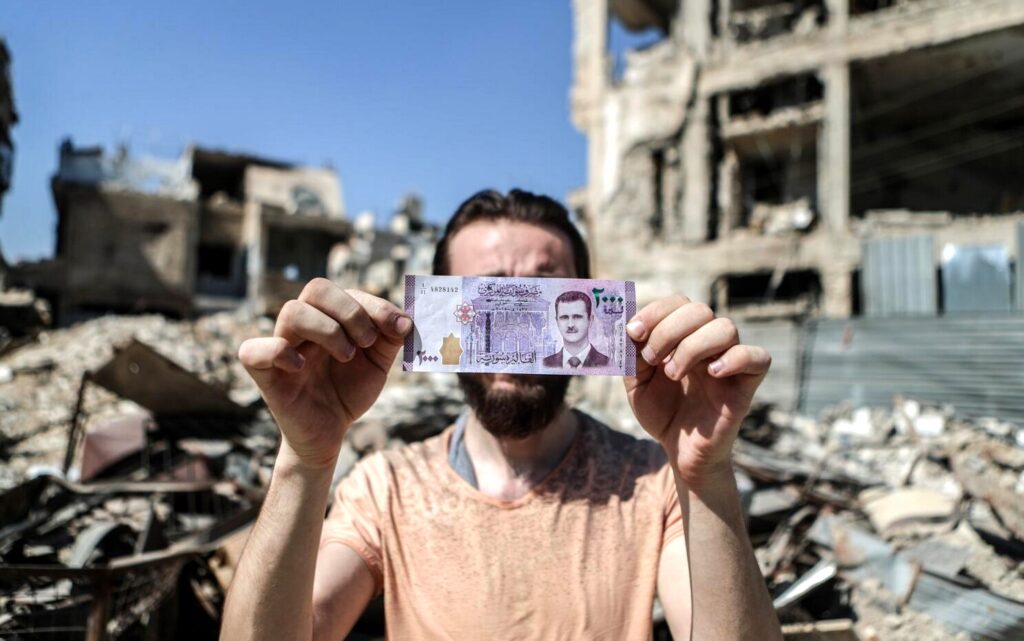
After more than fourteen years of crisis that swept Syria, the World Bank announced that the Syrian economy has lost about 90% of its strength due to the ongoing conflict and the failed and destructive economic policies adopted by the former Syrian regime in dealing with the basic pillars of the local economy.
Currently, after the fall of the Assad regime, Syrians are living in a state of cautious optimism about the possibility of a gradual recovery of the national economy.
However, everyone realizes that this recovery can only be achieved with comprehensive political stability in the country.
According to World Bank statistics, Syria’s GDP in 2009 was around $67 billion, which was more than the combined GDP of Lebanon and Jordan at the time.
However, this figure has collapsed dramatically, reaching only around $8.2 billion in 2021.
Projections indicate that the GDP in 2023 may fall to around $6.2 billion, which is roughly equivalent to 13% of Jordan’s GDP.
If the 2024 estimates are confirmed, Syria’s GDP will return to a level equivalent to what it was about 39 years ago, according to historical data from the World Bank.
With the end of the old regime, Syrians have begun to rearrange their economic priorities.
Expectations indicate that some key sectors may play a pivotal role in restoring liquidity and driving the national economy towards recovery.
In 2010, the oil sector accounted for about a fifth of Syria’s GDP, half of its exports, and more than half of state revenues, but the war has devastated the sector, making its revival crucial to getting the Syrian economy back on its feet.
The sector could provide much-needed cash to keep the economy moving.
Before the war, Syria produced around 390,000 barrels of oil per day, peaking at over 600,000 barrels per day in 2002.
However, production has declined sharply over the years of conflict to only between 40,000 and 80,000 barrels per day.
Syria’s oil resources are concentrated in two main areas: the northeast, especially the Hasakah Governorate, and the eastern region extending along the Euphrates River to the Iraqi border near Deir ez-Zor; In addition, there are small fields south of Raqqa.
As for natural gas, its resources are concentrated in the areas extending to Palmyra, in the center of the country.
On the other hand, natural gas is expected to play a significant role in improving the electricity sector, which is a key step towards restoring economic activity in the country.
Restarting oil production facilities and refineries will also help meet the local market’s fuel needs, in addition to boosting government revenues, which will help finance reconstruction efforts and drive the economy towards stability.
According to a report published by the Financial Times, the former Syrian regime has increasingly relied on Iranian oil since 2014, with Tehran providing between 50,000 and 80,000 barrels per day under favorable credit terms, at the price of humiliating political and military subservience to the Syrian people.
The construction and infrastructure sector in Syria have been severely damaged by the conflict that has been ongoing for more than a decade.
Major cities such as Aleppo, Damascus, Homs and Deir ez-Zor have suffered extensive damage to residential buildings, public facilities and roads, adding a huge burden to the Syrian economy.
According to World Bank estimates, the cost of damage to this sector will exceed $120 billion by 2023.
Reports indicate that about 40% of residential buildings have been either completely destroyed or partially damaged, displacing millions of Syrians.
The damage to public facilities, such as schools, hospitals, and government buildings, has reached about 60% in areas that witnessed the most intense fighting.
Before the war, the housing sector represented about 30% of construction projects in Syria.
Today, this sector is in dire need of huge investments, as it requires rebuilding more than three million housing units damaged by the conflict.
With the return of some refugees and displaced persons over the past two years, demand for new housing has increased significantly, causing the prices of real estate and building materials to increase by up to 300% compared to the pre-war period.
As for roads and bridges, about 50% of them were destroyed or damaged, including major transportation networks such as the M5 international highway linking Aleppo and Damascus, and the M4 highway linking Latakia to Hasakah.
These important roads were closed for long periods, which greatly affected the movement of transportation and trade.
According to the United Nations, reconstruction requires annual investments of $10-15 billion over the next two decades.
Housing and infrastructure are expected to account for more than 60% of international reconstruction funding, making it a key focus of efforts to rebuild Syria and achieve economic and social stability.
In a pivotal development on December 8, rebel factions in Syria were able to impose their control over the capital, Damascus, along with other cities, which led to the withdrawal of regime forces from public institutions and streets.
With this withdrawal, the page was turned on 61 years of Baath Party rule and 53 years of the Assad family’s control over power in Syria.