Maariv: The horrors of the war on Israel!
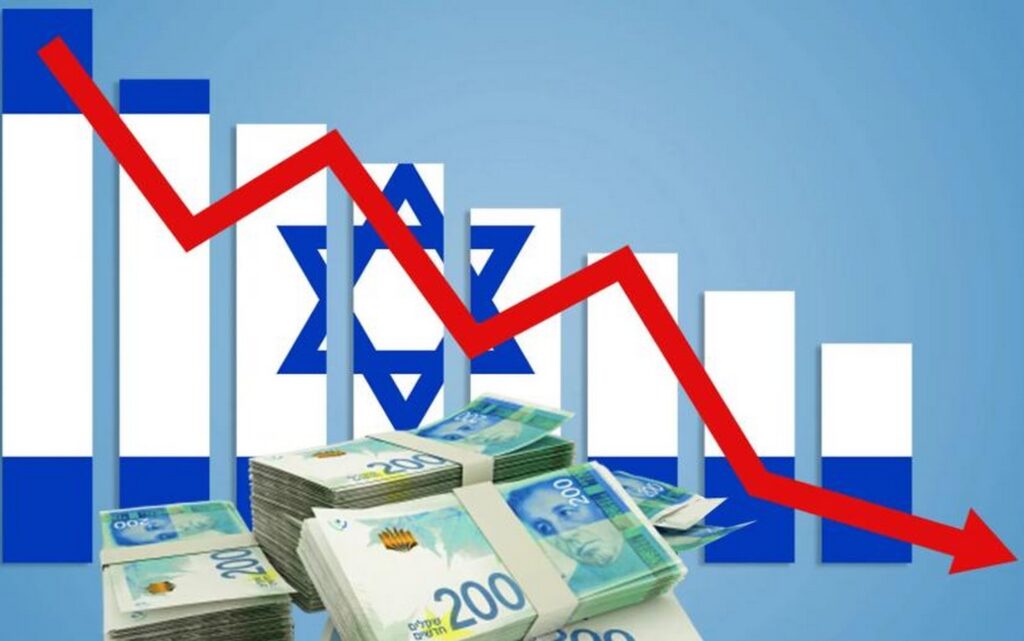
The Israeli Maariv newspaper, revealed on Wednesday that 46,000 Israeli companies have closed their doors since the outbreak of war on October 7, with the number expected to rise to 60,000 companies by the end of this year.
46,000 companies have been shut down since the start of the war, according to business information firm CofaceBdi, which has been providing business information for credit risk management for 35 years and analyzes and ranks all companies and institutions in the Israeli economy.
Yoel Amir, CEO of CofaceBdi, was quoted as saying, “This is a very high figure that encompasses many sectors”.
About 77% of the companies that have been shut down since the start of the war, which make up about 35,000 companies, are small companies and are the most vulnerable in the Israeli economy.
He pointed out that the sectors that suffered severe damage are the construction industry, and other industries that revolve around it, such as ceramics, air conditioning, aluminum and building materials.
“Among the sectors that have also been hit hard during the war are trade, which includes the manufacture of fashion, shoes, furniture and household appliances, and the service sector, including cafes, entertainment, entertainment and transportation,” Amir said.
Among them, according to Amir, “is the tourism industry, which is living in a situation where foreign tourism is almost non-existent, along with the decline in the national mood and tourist areas that have become combat zones, and of course also the agricultural sector, which is mostly located in the combat zones in the south and north, and suffers from a shortage of manpower”.
According to the data disclosed, the construction sector was affected by about 27%, the services sector by about 19%, the industry and agriculture sector by about 17%, and the trade sector by about 12%.
The high-tech industry and advanced technologies were hit by about 11% and the food and beverage industry by about 6%, according to the same source.
“The damage in the combat zones is more serious, but the damage to businesses is across the country, where almost no sector has been spared,” Amir said.
The CEO of CofaceBdi pointed out that the damage is very great in all respects for the Israeli economy, explaining that in the end, when companies close their doors and don’t have the ability to repay debts, there is also peripheral damage to customers, suppliers and companies that are part of their business system.
“Apart from companies closing their doors, there has been a sharp decline in corporate activity in various sectors since the beginning of the war,” he added.
Amir confirmed that in a recent poll conducted by his company, about 56% of Israel business managers said there had been a significant reduction in the scope of its activities since the start of the war.
“We estimate that by the end of 2024, around 60,000 businesses are expected to close in Israel… By comparison, in 2020, the year of the Covid crisis, about 74,000 businesses were closed”.
He noted that Israeli companies face very difficult challenges represented by labor shortages, declining sales, a high interest rate environment and high financing costs, transportation and logistics problems, lack of raw materials, lack of access to agricultural land in combat zones, as well as unavailability of customers participating in the fighting, flow difficulties, and increases in purchase costs.
In the wake of the Gaza war, most economic sectors in Israel are still suffering from the consequences of the ongoing war on the Strip since last October.