Trump opens the door to diplomacy with Iran by setting strict conditions for negotiations

US President Donald Trump said Friday he believes Iran wants a deal that would allow it to avoid a military strike that threatens to carry it out, while Tehran stressed that its missile capabilities are not negotiable.
Iranian officials have stepped up diplomatic engagement with parties that could help defuse the recent growing tension over Iran’s crackdown on protests that have killed thousands.
While Foreign Minister Abbas Araghchi visited Türkiye, which is trying to mediate between Washington and Tehran, Supreme National Security Council Secretary Ali Larijani was in Moscow where he met with Russian President Vladimir Putin, the Kremlin announced.
In recent weeks, the US president has stepped up his threats to strike Iran, as Washington steps up its military deployment in the Middle East and sends the aircraft carrier Abraham Lincoln to the region.
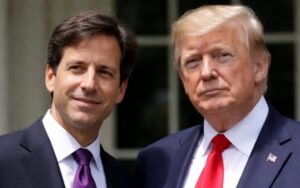
“I can say they want to make a deal to avoid the looming blow,” Trump said at the White House.
Asked if Iran’s deadline was a specific period, he replied, “Yes, I did,” adding that Tehran was “the only one who knows” that deadline.
“Let’s hope for an agreement… If that happens, it will be even better… If it doesn’t, we’ll see what happens”.
“I don’t want to talk about anything related to my military plans, but we have a very strong fleet in this area,” he said, noting that it was larger than the one that was deployed off Venezuela ahead of Maduro’s ouster.
Trump on Thursday expressed his hope to avoid military action against Iran, which is under Western pressure to strike a deal on its nuclear program, but warned it that time was running out.
Tehran, on the other hand, has also raised the level of its warnings, promising a swift and strong response to any US strike against it.
Iran threatened to retaliate by targeting bases and a US aircraft carrier in the region immediately.
Ali Shamkhani, an advisor to Supreme Leader Ali Khamenei, also threatened to launch attacks deep inside the Zionist entity.
“We’re not limiting the scope of the confrontation to the sea alone, and we have prepared for broader and more advanced scenarios,” Shamkhani said Friday, adding that Tehran knows the geography of the region better than its adversaries.
While Larijani was in Moscow, the Iranian foreign minister visited Ankara, where he met with his counterpart Hakan Fidan and President Recep Tayyip Erdogan.
Ankara, which has close ties to Tehran and Washington, has been seeking to mediate to avoid a US attack that could destabilize the region.
Earlier this week, Axios reported that US officials believe that any deal with Iran should specifically include removing all enriched uranium from Iran, capping its stockpile of long-range missiles, and changing Iran’s policy toward some militant groups in the region.
The Iranian foreign minister, announced his country’s readiness to resume nuclear negotiations if they are fair and equitable and on an equal footing, but stressed that “Iran’s missile and defense capabilities won’t be negotiable”.
From his part, Fidan urged Washington to resist Israeli pressure to strike Iran, warning of severe damage to the region.
Türkiye is seeking to avoid any escalation that could destabilize the region and cause a refugee crisis, knowing that it shares a 550-kilometer border with Iran.
Erdogan is working on a trilateral meeting between Washington, Tehran and Ankara.
Erdogan told his Iranian counterpart Masoud Pezeshkian in a phone call on Friday of his country’s readiness to help “de-escalate” with Washington, the Turkish presidential office said.
On the other hand, Pezshkian said Washington should stop threatening military intervention to give diplomacy a chance.
This comes in a highly tense context, in light of the deployment of a US fleet in the region, and after the European Union on Thursday added the Islamic Revolutionary Guard Corps (IRGC) to its list of terrorist organizations.
The United States on Friday announced sanctions on Iranian Interior Minister Eskandar Momeni and other officials over the crackdown on protests.
It also imposed sanctions on crypto trading platforms, saying they had dealt with funds linked to the Revolutionary Guards.
In response to the European Union’s designation of the Guards, the head of Iran’s judiciary, Gholamhossein Mohseni Ejei, said Friday: “There is no doubt that the aggressive action of the Europeans, who have labeled the IRGC as a terrorist organization, will not go unanswered… They will bear the consequences of their foolish act”.
Sarhan Afagan, director of the Iram Center for Iranian Studies in Ankara, said that reaching a settlement isn’t impossible, but it can only be achieved after long rounds of negotiations, and if Iran’s security concerns from the United States and Israel are seriously addressed”.
Before Türkiye, Gulf countries hosting US military bases called for de-escalation.
A senior Gulf official in contact with Washington said the United States was not revealing its intentions.
“We hope that anything that happens will lead to stability,” he said, speaking on condition of anonymity, adding that he hoped the Iranians would make the right choices”.
On Friday, the Iranian president made a phone call to UAE President Mohammed bin Zayed Al Nahyan, in which he assured him that any attack on Iran and the Iranian people will be met with an immediate and decisive response.