The Wall Street Journal: Washington moves largest air force to the Middle East since Iraq war

The Wall Street Journal reported that the United States has moved its largest air force to the Middle East since the occupation of Iraq in 2003, in preparation for a possible attack on Iran.
The WSJ reported in a report on Wednesday, citing US administration officials and former military personnel, that the United States has in recent days strengthened its air and naval units against Iran.
That would open up the option of an air war that could last weeks against Iran, rather than a one-off attack on nuclear facilities as happened in June 2025.
It pointed out that all briefings given to US President Donald Trump on military options in the event of an attack are aimed at inflicting maximum damage on the Iranian regime and its regional proxies.
Options include an approach aimed at assassinating Iranian political and military leaders, as well as launching airstrikes on nuclear facilities and ballistic missile sites.
It added that Iran has cards it could use, including a missile arsenal that can be directed at US bases in the region, in addition to its ability to close the Strait of Hormuz.
The volume of military reinforcements is smaller than what was deployed in 1991 and 2003 against Iraq.
The US air force in the region is now much smaller than it used to be, in line with the requirements and conditions of the current era.
Unlike in 1991, Saudi Arabia and the UAE have closed their airspace to any potential attacks, and most US fighter jets have been deployed to Jordan.
Flight tracking data showed F35, F15, F16, E3 and E11 jets to Muwaffaq al Salti Air Base in Jordan and Prince Sultan Air Base in Saudi Arabia.
The WSJ quoted a US Navy official as saying that the United States currently has 13 ships in the Middle East and Eastern Mediterranean to support a possible military operation by the Trump administration.
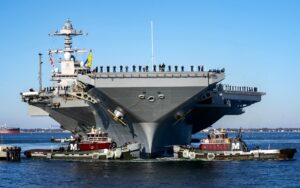
The aircraft carrier USS. Abraham Lincoln and 9 ballistic missile defense destroyers are currently in the area, while the aircraft carrier USS. Gerald R. Ford and 4 attack destroyers to the area.
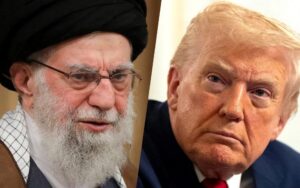
On Thursday, Trump said the United States wanted to reach a deal with Iran, but warned Tehran of the consequences of not doing so.
Tehran believes that Washington and Israel are creating pretexts for intervention and regime change in the country, and it promises to respond to any military attack, even if its limited, and insists on lifting Western economic sanctions imposed on it in exchange for restricting its nuclear program.
In return, the United States is demanding that Iran cease its uranium enrichment activities completely and transfer highly enriched uranium out of the country.
The administration has also sought to bring Iran’s missile program and support for militant groups in the region to the negotiating table, but Tehran has repeatedly stressed that it will not negotiate on any issues other than its nuclear program.