The Times of Israel: The silent role of Iraq’s Kurds in Israeli vuclear strikes
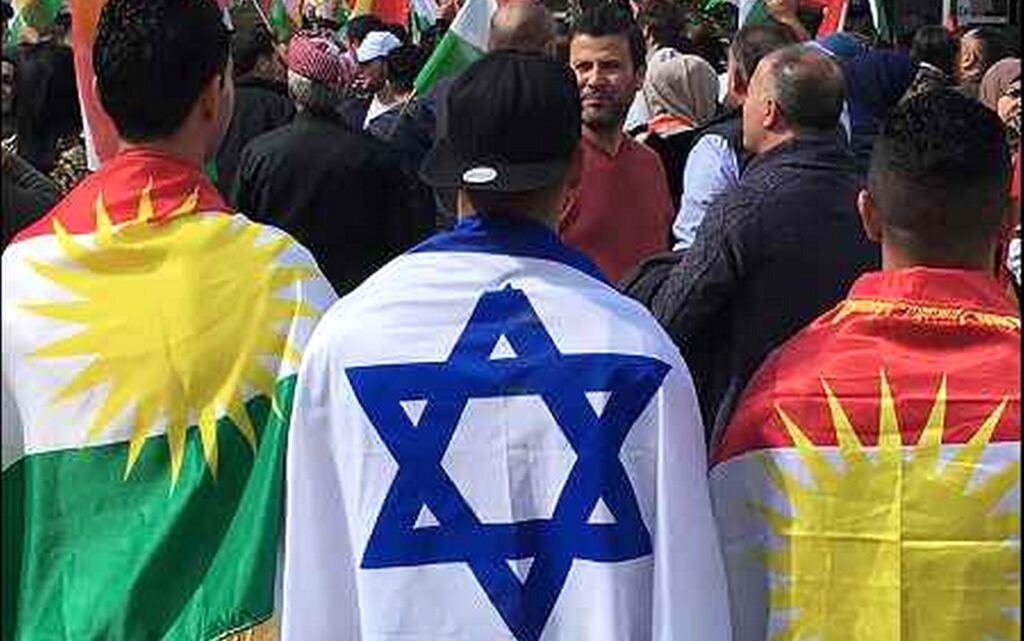
For decades, Israel and the Kurdistan Region of Iraq have danced in the shadows as natural allies against common enemies.
This isn’t a new friendship, as it goes back to the 1960s and 1970s, Mossad agents and Israeli military advisers infiltrated the Zagros Mountains to train Peshmerga forces led by Mullah Mustafa Barzani.
Weapons, intelligence, and funding all flowed within the framework of Israel’s so-called “parties’ doctrine,” a strategy aimed at building alliances with non-Arab countries and powers to besiege hostile regimes.
Reports from veterans and academic researchers describe how Israelis at Barzani’s headquarters between 1963 and 1975 built Iraq’s Kurdish intelligence service, known as Barastein, into a force that has become a terror force in the hearts of Israel’s current enemies, such as Iraq and Iran, and as a result, that relationship has never been broken.
When the Islamic State swept through northern Iraq, Kurdish oil tankers began arriving at Israeli ports, and in 2017 Israel became the only country in the world that openly declared its support for Kurdistan’s independence.
This was not a coincidence, but a strategic marriage imposed by necessity.
Tehran is well aware of this; For this reason, in March 2022, Iran fired missiles at Erbil, claiming that they targeted “Mossad bases”.
It was repeated in January 2024 when Iranian missiles rained down on the area, killing civilians, while the ayatollah’s regime boasted about striking spy centers.
The KRG denied the allegations, but the message was clear: Iran believes that Iraq’s Kurds are Israel’s partners.
Then came the summer of 2025, when Israel has launched strikes on Iran that were the deepest and farthest in its history, even destroying an Iranian refueling plane more than 2,000 kilometers from Jerusalem.
Baghdad rushed to the UN Security Council, accusing “50 Israeli warplanes” of crossing Iraqi airspace.
The regional flight warnings also confirmed what everyone was suspecting: Iraq’s airspace had turned into an Israeli airstrip towards Natanz and Fordow.
And where was the suffocation point?
Iraqi Kurdistan—the same area that Iran continues to target with missiles.
Of course, the KRG publicly condemned the Israeli strikes; This is the well-known scenario: deny everything, remain silent, and let history repeat itself.
But circumstantial evidence is piling up: a sudden reinforcement of US bases near Erbil, a convenient distraction of Kurdish radars, and wide-open air corridors at a moment when Israeli planes need them most.
Add to that decades of clandestine Israeli training for the Peshmerga and a consistent pattern of military cooperation, and the picture is clear enough.
Iraqi Kurdistan hasn’t only been sideless, but has played the role it has always played: Israel’s silent partner in breaking down Iran’s defenses.
Academics may argue about evidence, but the reality is clear to anyone who follows the scene: Without Iraqi Kurdistan, Israeli warplanes wouldn’t have been able to strike Iran with such force, speed, and depth.
Herein lies the bitter irony: while Iraqi Prime Minister Mohammed Shia al Sudani bows to Tehran’s dictates, while the Houthis carry out the orders of the Iranian Revolutionary Guard Corps (IRGC), and while Ali Khamenei shouts about “Zionist aggression” from his hideout (where he almost always resides for fear of being assassinated), Masrour Barzani is playing the long breath game.
Iraq’s Kurds—and their relatives in Türkiye, Syria, Iran, and Armenia—don’t need rhetorical bidding; they need to stay.
That means aligning itself with the only regional power willing to confront Iran directly: Israel.
The mullahs are firing missiles at Erbil because they know the truth: their enemies aren’t only flying over Iraqi Kurdistan, but they are quietly empowered by it.
Sudani, the Houthis, and Khamenei roar like lions but they act like sheep.
Barzani whispers—and Israel strikes… This is the balance of power in the Middle East today.