The Times: How is China progressing in the race for the fastest missile?
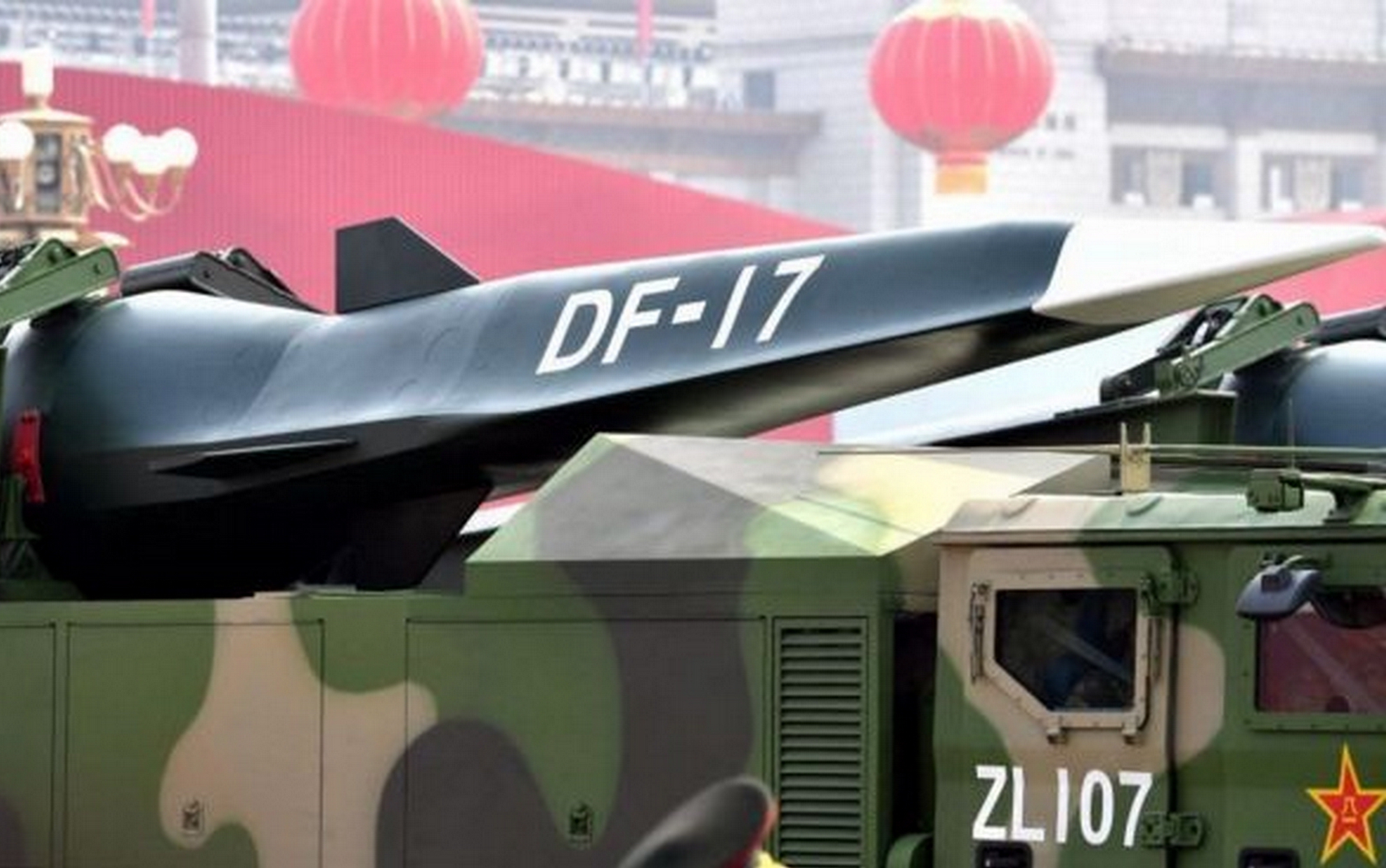
The Times posted a report by its correspondent Michael Evans entitled: “How is China progressing in the race for the fastest missile?”
Evans says that the hypersonic arms race between China, Russia and the United States “took a sudden and dramatic turn”, which led to fears of a dangerous lowering of the nuclear threshold.
Evans says that it is believed that China conducted a successful test in August, combining ballistic missile technology from the Cold War with new high-speed developments to demonstrate its ability to put a nuclear-armed hypersonic “glide vehicle” into orbit.
Western intelligence denied the launch was of a military nature, insisting it was a test of a new civilian spacecraft.
However, if the reports on the development prove correct, it will represent, according to the author, a dangerous escalation in the era of hypersonic weapons, and may give China an advantage over its competitors.
Hypersonic technology is the latest front in the arms race between the three countries, with billions of dollars being spent developing weapons that can reach speeds of 20,000 miles per hour.
The United States and Russia are focusing on the same two classes of hypersonic weapons.
The first is a hypersonic glide vehicle launched from a missile at the edge of Earth’s atmosphere and then shoots at its target as it glides back to Earth – making it difficult, if not impossible, according to the author, to be tracked by space-based or ground-based sensors…
Russia claims that its hypersonic Avangard missile, of unlimited range and capable of carrying a nuclear warhead, is already operational.
The second is a hypersonic cruise missile, launched by an aircraft, warship or submarine, which has a more limited range but reaches similar speeds with the help of a supersonic combustion engine.
Russia is developing such a nuclear-capable system, called “Zircon”.
The United States has a program aimed at developing a larger, longer-range hypersonic cruise missile, but without a nuclear capability.
China’s August test, according to an intelligence report published in the Financial Times, appears to have been aimed at a third system: the use of ballistic missiles to launch maneuverable gliding vehicles into a low orbit, where they could remain until they were guided to ground targets at supersonic speed.
“Instead of having a ballistic missile rise into space and land again, they, the Chinese aim to launch the nuclear warhead into a low orbit to stay in orbit for long time”, Ian Williams, a missile defense and nuclear weapons specialist at the Center for Strategic and International Studies in Washington told the Times”.
“China sees hypersonic weapons as a way to bypass US missile defenses,” he added.
In other words, they want to jeopardize US goals and make Washington hesitate to confront China, for example, if it moves against Taiwan.
He noted, “The United States, by comparison, does not see hypersonic missiles as nuclear weapons but as conventional systems that can eliminate time-sensitive targets.
For example, if North Korea is spotted preparing ballistic missiles to attack the United States, US political leaders may have two hours to decide to take preemptive action.
Using the Tomahawk, a 500mph land attack cruise missile, would be very slow”.
The writer quoted Mike White, who is responsible for hypersonic programs at the Pentagon, as saying recently that the goal is to have a missile that travels 500 miles in ten minutes.
Williams told the Times that Russia’s interest in hypersonic weapons has focused more on “signaling”, adding: “They claim that they sent some of these weapons, but in small numbers.
They make more of a show than a real missile threat”.
“I don’t think the Russians have mastered the science of that yet”, Williams said.
He added, “What Russia has of an advantage is the Zircon cruise missile, which is supersonic, and they see it as a way to counter NATO’s traditional superiority”.