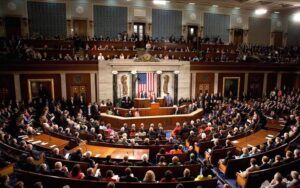
The Foreign Affairs Committee of the US House of Representatives: We expect actions from Sharaa
In a congressional hearing, the first of its kind since the fall of the Assad regime, Washington unveiled the contours of its policy toward the new Syria.
The message was clear and decisive: America is ready to give it a chance, but it won’t wait long.
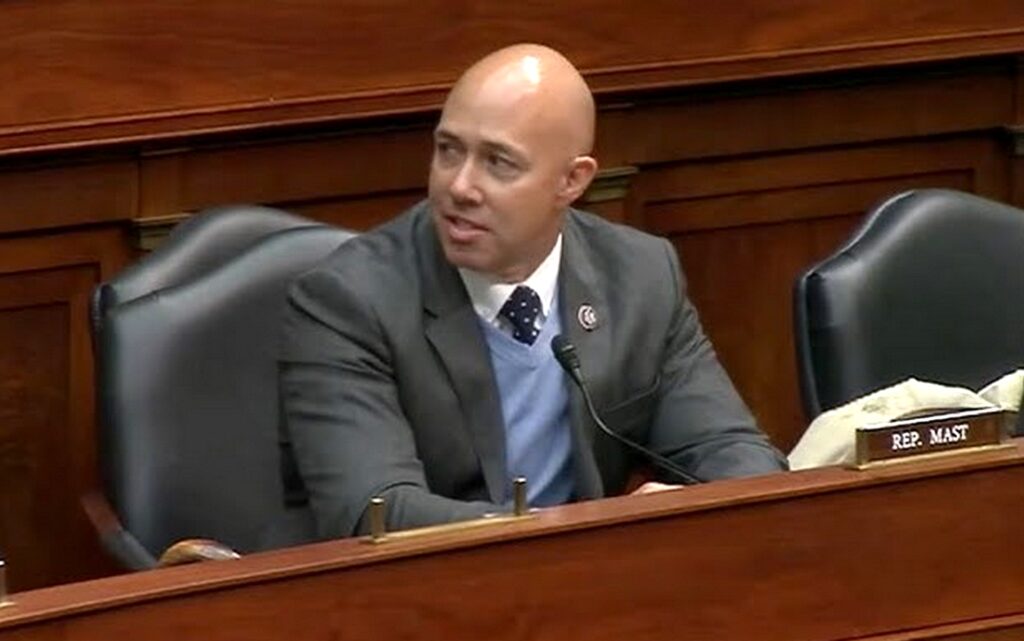
Republican Rep. Brian Mast, chairman of the House Foreign Affairs Committee, left no room for interpretation.
In an open hearing Tuesday evening, Mast said the administration was “demanding actions, not empty words” from Syrian President Ahmed al Sharaa.
“He doesn’t have a blank check from the United States,” he added.
From hostility to dialogue… The story of an encounter between an American soldier and a former al Qaeda fighter is remarkable in Mast testimony before the committee that he revealed unprecedented details about his personal meeting with al Sharaa last November.
The dialogue between the two men wasn’t ordinary; Mast, who was a US soldier, found himself face-to-face with a man who years earlier had been fighting for al Qaeda.
“I asked him directly: How did we go from hostility to dialogue?” Mast told his fellow MPs.
He added that al Sharaa’s response was clear: “He wants to turn the page on the past and work for a better future for Syria and its people”.
But this desire, according to Mast, is not enough; The past remains a legitimate concern. The Syrian president’s background as a “former al Qaeda fighter,” as the committee chairman descry bed it, remains a point of serious concern in Washington.
Sanctions under Caesar Act were canceled, but the conditions remained a quarter of an hour after the start of the session until the most important question fell: Why did you lift the sanctions if you don’t trust them?
The answer was accurate… The sanctions were lifted because their primary reason (Bashar al-Assad’s presence in power) no longer exists.
But the abolition was conditional on a number of commitments: protecting minorities, integrating them into state institutions, cooperating in the fight against terrorism, and ending the chaos of the factions.
Mike Lawler, a member of the House Finance Committee, was sterner: “We lifted the sanctions to give Sharaa a chance despite its links to terrorism”.
“Those conditions have not been met, and the trajectory is very worrying,” he said bitterly.
3,500 kilometers of Guam is separated from China, and 3,500 kilometers of questions in Syria don’t talk a lot about threats.
Not only about ISIS and its foreign fighters, but also about agreements with the SDF that have been repeated without implementation, about the Russian presence in Syria for reasons that are unclear, and about the fate of 7,000 terrorists detained in Syrian facilities.
Congress welcomed the agreement signed by al Sharaa with the SDF, but the chairman of the committee said these agreements had been repeated more than once without full implementation.
In other words: Washington is tired of promises.
Behind all this debate is a silent but decisive development; Donald Trump signed the US defense budget on December 19, 2025, including the repeal of the Caesar Act permanently.
Washington, then, extended her hand, but the hearing showed that the other hand is still tight on the reversible sanctions.
Caesar’s abolition wasn’t a gift, but a gamble… The last session was a statement of account.
A careful reading of the words of Mast, Lawler, and others reveals three implicit messages:
First, America won’t repeat the mistake of Afghanistan.
The chaotic withdrawal and overconfidence in the Taliban have cost it dearly… You don’t want a Syrian version of the same scene.
Second, counterterrorism is key… Any Syrian government that loses control of foreign fighters or complaces with ISIS will find sanctions coming back quickly.
Third: Minorities aren’t a negotiating card. Repeated pressure on the Kurds and the protection of Christians and Druze isn’t just a moral discourse, but a condition for continuing to support any political settlement.
Syria between opportunity and the trap Syria today is at a delicate stage.
Sanctions have been lifted, relations with Washington have entered a testing phase, and the Syrian president is called upon to prove that his transformation from an armed opponent to a head of state isn’t just a tactical change, but the hearing also revealed that Washington is internally divided.
Hardline Republicans consider any deal with Sharaa a normalization of terrorism, and the Trump administration is betting that interests can converge with former adversaries.
Betting on the Syrians now; The words Mast heard in his meeting with Sharaa will either turn into institutions, laws and procedures on the ground, or they will remain mere empty words in the record of a congressional session that no one will read a year from now.