Newsweek: Trump’s Iran options and the scenario of a “Third Gulf War”

The United States continues to mobilize in the Gulf region in anticipation of targeting Iran, at a time when talks between the two sides over Iran’s nuclear program are ongoing, and President Donald Trump has been threatening direct military action if the diplomatic track doesn’t yield the desired results.
In its predictions of Trump’s choices on Iran and the scenarios of what it called a third Gulf War, Newsweek magazine said that any attack on Iran by President Trump would go beyond the scale of the military operation that targeted Iran’s various nuclear facilities last summer.
President Trump has multiple options that could include new rounds of targeted military strikes, assassinations of senior Iranian leaders, or a long-term military campaign that could resemble a third Gulf War.
President Trump has repeatedly expressed a preference for a diplomatic solution and his pursuit of a nuclear deal that goes beyond the 2015 deal that curbed Iran’s nuclear program in exchange for sanctions relief.
The magazine noted that the gulf between Washington’s and Tehran’s positions remains, and quoted White House spokeswoman Karoline Leavitt as saying the two sides remain very far apart on key issues.
Mick Mulroy, a former deputy assistant secretary of defense during Trump’s first term, said the White House wants a deal that is more restrictive than the 2015 deal and is likely to include restrictions on Iran’s ballistic missile program.
According to the same official, if Iran rejects these conditions, Washington will take decisive military action against Iran’s nuclear facilities and ballistic missile production and launch sites, and will respond to any escalation by Iran.
Iran has the largest arsenal of missiles and drones in the region, and said this poses a significant threat in the event of conflict, as it was noted that Iran significantly expanded its missile arsenal in response to the Israeli attack last June.
According to Newsweek, Iran’s missiles have a maximum range of at least 2,000 kilometers, bringing the entire Middle East region and parts of Southeast Europe within its range.
Most of Trump’s remarks have focused on reaching an agreement with Iran on its nuclear program, but he has at times, along with other senior US officials, that Iran’s missile capabilities, among other areas, would also be subject to restrictions under a new deal.
Israeli Prime Minister Benjamin Netanyahu, who visited Trump last week at the White House, also focused on the issue of ballistic missiles.
Iranian officials, on the other hand, reject any talk of including ballistic missiles in a preliminary agreement, and emphasize their country’s right to enrich uranium at low levels.
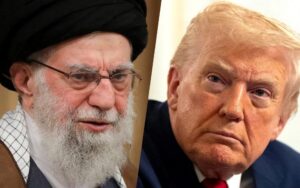
Despite seeking a diplomatic solution, Iranian officials warn that any US strike would lead to all-out war, with Supreme Leader Ali Khamenei threatening to directly sink US warships.
Richard Goldberg, the former director of Iran’s weapons of mass destruction at the White House National Security Council during the first Trump administration, doesn’t rule out that missile capabilities will be among Trump’s top goals if he decides to resort to military action against Iran.
Kenneth Pollack, a former White House National Security Council official, argues that the option of regime change in Iran is completely unlikely at this point and that nuclear and military objectives are Trump’s most likely option at this point.
Pollack told Newsweek that ballistic missile manufacturing facilities and nuclear sites that weren’t fully targeted in June, as well as the headquarters of the Revolutionary Guards and Basij forces, will be targeted given their role in maintaining regime control.
One potential target is a so-called ghost fleet of oil tankers that continue to export Iranian oil despite US sanctions, which it sees as a broader multi-port campaign.
There aren’t many indications that the US is planning any form of large-scale invasion, as happened during the 2003 invasion of Iraq, sometimes known as the Second Gulf War.
The Newsweek reported that that war was preceded by a large US buildup of troops and equipment, in neighboring countries such as Kuwait, to support the entry of about half a million US troops into Iraq during the first phase of the war.
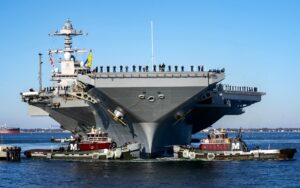
Although nothing of this kind has been mobilized in Iran’s vicinity today, the presence of two aircraft carriers, combat aircraft and other equipment is likely to be sufficient to support air operations for a long time.
Unlike previous US military interventions in the region since the first Gulf War, known as Operation Desert Storm, the current US administration may be leaning toward easy, cheap, and quick foreign adventures.
Pollack added that according to this perspective, the US military intervention will seek to disrupt Iran’s air defenses before bombing them and inflicting serious damage on the Iranian regime.
But this doesn’t necessarily mean, in Pollack’s view, that the US escalation will be limited to a single round, but rather that Trump’s main message to Tehran is that the pressure will continue until its negotiating offer improves and its ready to conclude the deal it wants.