New York Times: How realistic are fears of the end of the world order?
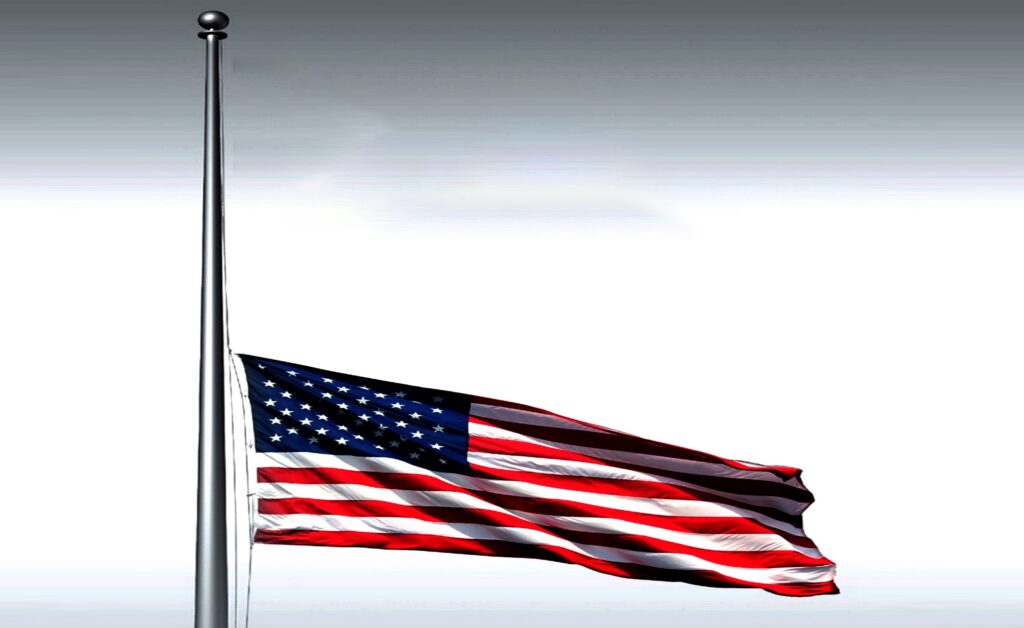
The New York Times published an article by Dr. Amitav Acharya, a professor of international relations, that argue the state of chaos after the end of the American system!
Dr. Acharya explained in his article that these concerns are based on Western misconceptions, which he summarizes in two points: the first is that the past seven decades haven’t been as good for all countries in the world as they have been for Western countries in particular; and the second is that the principles of the system themselves aren’t a Western invention.
The article explains the first point: Defenders of the current system argue that it has prevented major wars and maintained a stable and prosperous international order.
However, Dr. Acharya emphasizes that this peace has been limited to a few countries.
Although this system succeeded in bringing peace to the West, it contributed to chaos in non-Western countries, as occurred in the US interventions in Vietnam, Iraq, and Afghanistan.
As for the second point, the article emphasizes that the idea of cooperation between states long predates what the late American diplomat Henry Kissinger mentioned in his book “World Order” about the “Western Entente” that emerged after Napoleon’s defeat in 1815.
The article referred to an ancient diplomatic system dating back 3,000 years, known as the “Tell el-Amarna Letters,” which were diplomatic correspondence between Egyptian rulers, their representatives in the kingdoms of Canaan and Amur, and leaders of the neighboring kingdoms.
The article describes the Tal al Amarna system, the name of a city in Upper Egypt, as being based on the principles of equality and reciprocity among the great powers of the time.
It explains that the Concert of Europe system lasted for less than a century, compared to the Tal al Amarna system, which maintained peace for nearly twice that length of time, or nearly two centuries.
The article also pointed to the oldest agreement setting out the humanitarian rules of war, between Egypt and the Hittites in about 1269 BC, predating the 1949 Geneva Conventions.
Thus, recognizing the ancient roots of these concepts gives hope that they can survive in a world not dominated by America, according to Dr. Acharya, who previously wrote books on the decline of the West and the end of the American world order.
However, the article argues that the old order isn’t dead yet, and that the United States remains the most powerful country in the world thanks to its military might, the dominance of the dollar, and the massive American technological base.
However, its global order is unlikely to survive until the end of this century.
Dr. Acharya sees the economic changes as a reason for optimism, as “the realization that the American system isn’t the only possible system, and that for many countries it’s not even a good or just system, allows hope that its end may herald a more inclusive world”.
Dr. Acharya concluded his article by promising that a more just world can be achieved if it’s shaped by a global group of nations, not just the United States, China, or a handful of superpowers.