DW: Who commands the European skies? German-French dispute confuses the project of the century
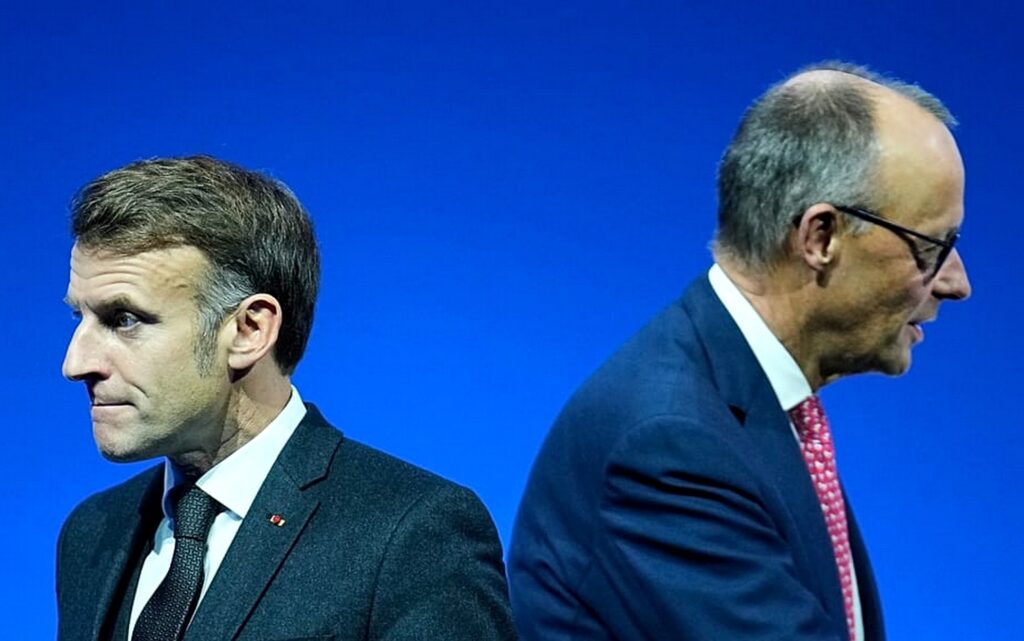
German Chancellor Friedrich Merz has expressed skepticism about the feasibility of implementing the European armament project known as the “Future Air Combat System” which Germany, France and Spain have been planning for a long time.
Merz said in remarks to the political podcast “Change of Power”: “We’ve a real problem in the requirements issue, and if we can’t solve it, we won’t be able to keep the project going”.
If implemented, it would be Europe’s largest and most expensive arms project, with a total cost estimated at hundreds of billions of Euros.
The air combat system is set to operate in coordination with unarmed and armed drones, and is therefore more than just a fighter jet.
The plan is for the new system to replace the Eurofighter jets used by the German military as well as the French Rafale fighter jets from 2040.
The project was announced to great applause in 2017 by French President Emmanuel Macron and German Chancellor Angela Merkel, and Spain joined in 2019.
According to Merz, the problem is that the French need a different fighter jet than the German military: “Specifically, the French need in the next generation of fighter jets an aircraft capable of carrying nuclear weapons and can be operated on aircraft carriers… That’s what we don’t need in the Bundesliga right now”.
Merz added that the question now is whether the project can be implemented with two planes, saying, “France wants to build only one plane and wants to guide it practically according to the specifications it needs, however, that’s not the specification we need”.
The adviser raised the option of building a new fighter jet with Spain and other countries.
The decision on this project has already been postponed twice and a decision is scheduled to be issued by the end of February.
Although the German Chancellor stressed that the dispute wasn’t political but technical, a report by the Guardian newspaper on the subject suggested that the roots of the problem are much deeper, especially in light of Russia’s moves for some time.
The Guardian report said that Europe has three competing fighter jets: the Eurofighter Typhoon, the French Rafale and the Swedish Gripen.
Successive CEOs of Airbus, Europe’s leading aerospace company, have warned that these projects need to be consolidated on the continent.
However, the collapse of the European Fighter Alliance will do the opposite, with the British-Italian-Japanese Tempest project and a possible alternative project to Gripen.
Recently, Russian threats have increased, and Donald Trump has told Europe that it’s time to bear the costs of its security, but for years, the manufacturers of the Franco-German plane have been unable to agree on who is responsible.
French airline Dassault insists on leading the combat part of the project.
The family business and its chief executive, Eric Trabier, have struggled to retain control despite opposition from Germany’s defence arm Airbus, the other major partner in the project.
A former senior French official, speaking on condition of anonymity, said the project appeared to have been put in place at a very high political level, without wider discussions at the Defense Ministry about whether the two countries’ needs were identical.
“We don’t take the same approach to war,” he added, adding that this is where the conflict between the German and French companies comes into play.
Even if the French and German governments manage to control their companies, the political will to do so appears to be fading, an indication of the widening defense gap between the two countries.
Earlier in February, German Foreign Minister Johann Fadiful noted that France needed to increase its spending on its military.
NATO member states pledged last year to spend 5% of their GDP on defense and security by 2035, but Fadiful said French efforts weren’t enough to achieve this so far.
Germany’s more assertive approach is due in part to the shifting balance of power.
When the French Air Defense System (FCAS) program began in 2018, its defense spending was modest.
Now, after the decision to rearm following Russia’s invasion of Ukraine, Berlin expects to spend 150 billion Euros by 2029, nearly double France’s budget, following a landmark deal struck last year to ease debt restrictions.