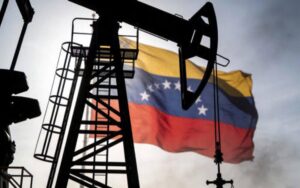
Czech Republic calls for closing Europe’s doors to Russian gas after Gazprom contract ends, and searching for alternatives
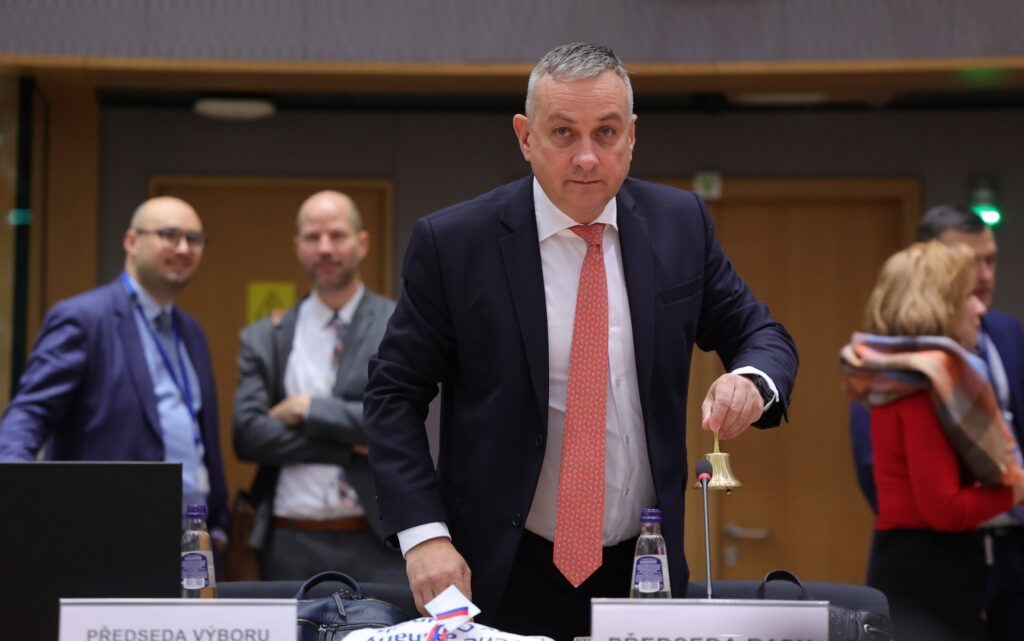
Czech Trade and Industry Minister Jozef Sikela has proposed in a letter to EU Energy Commissioner Kadri Simson and her counterparts in Budapest that Russian gas not be allowed into Europe after a gas transit agreement between Kremlin-controlled Gazprom and Ukraine expires at the end of the year.
Sikela, the Czech Republic’s candidate to become the next EU executive and a candidate to replace Simson, also sent the message to his counterparts in Austria, Hungary and Slovakia, which still rely on Russian gas imports, and Germany, whose direct connection was permanently cut off two years ago when the Nord Stream pipeline was sabotaged.
“Russia has repeatedly proven itself to be an unreliable trading partner, using energy supplies as a weapon to disrupt and destabilize the energy market and the economy in general,” Sikela said in a statement last Thursday.
“It’s clear that this behavior won’t change as long as its aggression against Ukraine continues”.
The Czech Trade and Industry Minister suggested that reverse gas flows through his country could be used to replace the 40-42 million cubic meters of Russian gas that flows daily through Ukraine, noting that alternative supplies could be LNG imports, and that the feasibility of his plan had been increased by Germany’s decision to raise controversial storage fees from the beginning of next year.
“If gas transit from Russia through Ukraine is stopped, alternative supplies must be found with alternative suppliers first and foremost,” he added.
“We need to avoid buying gas that is not officially Russian, but can be swapped for Russian gas en route, which undermines our efforts to reduce dependence on Russian supplies.,” he said.
Sikela said the EU had made significant progress in reducing its dependence on Russian gas, down to 8% last year before Putin launched his undeclared war on Ukraine in February 2022, but told Simson and fellow ministers that “we must nonetheless step up our efforts”.
While Hungary has been criticized by its EU partners for courting Moscow and striking new gas supply deals since the start of the war, Austria imported a record 98% of Russian gas in December, and Slovakia also remains heavily dependent on Russia.
The Austrian Federal Ministry for Climate Action, Environment, Energy, Mobility, Innovation and Technology said that it hadn’t yet received Sikela’s letter, so could not comment directly on its content.
“However, one thing is certain: gas supplies and energy dependence from Russia pose a significant economic and security risk, so it is essential for the security of our country to strengthen the independence of our energy supplies,” the ministry said in an emailed statement.
To this end, the Austrian Energy Ministry has been preparing for close coordination with the energy regulator e-Control since the beginning of the Russian war against Ukraine, noting that domestic gas consumption has fallen by almost a quarter during that period.
“Austria’s current available import capacity via Italy and Germany alone amounts to around 160 terawatt-hours per year, which is almost double Austria’s annual gas consumption,” the Austrian Energy Ministry said.