Trump praises Ahmed al Sharaa as other Republican lawmakers voice discontent
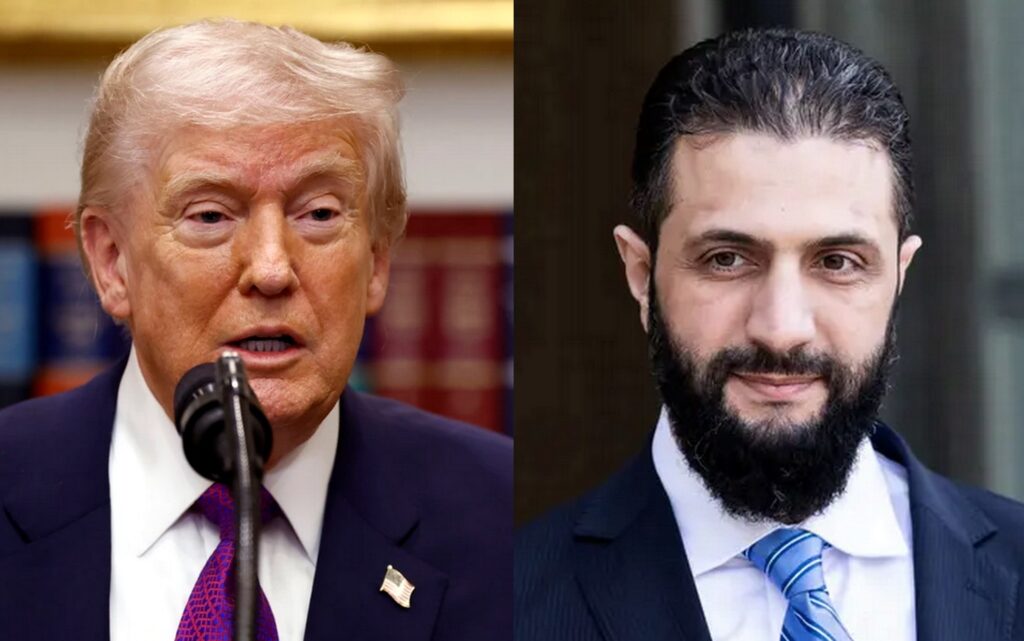
US President Donald Trump said he is satisfied with the performance of Syrian President Ahmed al Sharaa, describing his leadership as effective and focused on national unity.
“The president of Syria is doing a very good job… He’s working to unify the country, and we’re satisfied with the work he’s doing,” Trump told reporters, signaling a notably positive assessment of Damascus’ transitional leadership.
The remarks follow a reported phone call between the two presidents late last month, during which they discussed developments in Syria’s transitional phase, security stabilization efforts, and prospects for bilateral cooperation.
According to Syrian officials, al Sharaa reaffirmed Syria’s commitment to territorial integrity, sovereignty, and preservation of state institutions.
However, Trump’s endorsement stands in direct contrast to criticism voiced by members of his own party in Congress.
House Foreign Affairs Committee Chairman Brian Mast publicly expressed dissatisfaction with the performance of the new Syrian government, stating: “We aren’t satisfied with the progress made”.
Mast described some of the recent policies as steps backwards, signaling concern over the direction of reforms and governance.
Other Republican voices have similarly indicated frustration over what they view as insufficient progress in political restructuring, transparency, and institutional reform.
For example, Lindsey Graham, who is also a close friend of president Trump, emphasized that US engagement should remain conditional and tied to measurable benchmarks.
Graham publicly expressed skepticism regarding the Syrian transitional leadership, emphasizing concerns related to governance transparency, political inclusivity, and security sector reform.
Lawmakers from both parties have also reiterated calls to maintain sanctions pressure until concrete reforms are implemented.
Within the executive branch, officials in previous briefings had underscored that any normalization process would remain conditional and tied to measurable political and human rights benchmarks.
That framing appears inconsistent with the president’s unqualified praise, as analysts note that the gap between executive praise and legislative skepticism may complicate the coherence of US policy toward Syria, particularly as international actors monitor signals from Washington regarding normalization, sanctions relief, and long-term engagement.