The Washington Post: Trump is losing his compass on America’s real terrorist threat
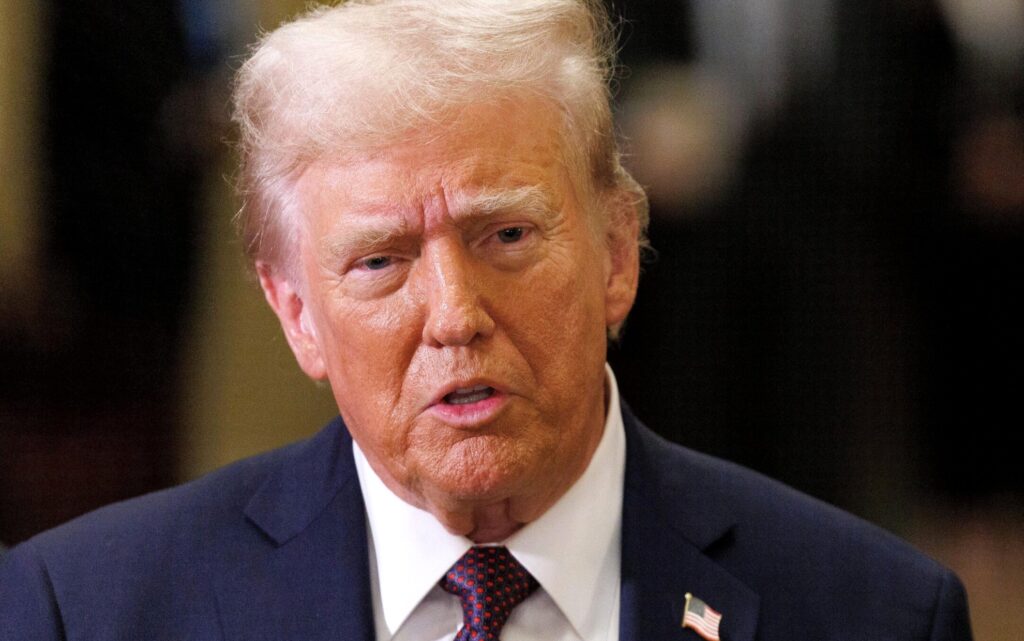
An article in the Washington Post warned that US President Donald Trump’s administration is deviating from the traditional counterterrorism and secondary agendas, replacing existential threats with political and ideological opponents.
Political and international affairs analyst Max Boot argues in his article that the Trump administration is misdiagnosing US national security priorities, redirecting limited resources toward what he calls pseudo-threats — such as drug cartels, Venezuela’s regime, and domestic leftist groups — at the expense of the real terrorist threat posed by transnational jihadist organizations, led by the Islamic State and al Qaeda.
Butt blames the administration for weakening counterterrorism tools through a range of policies, most notably diverting the resources of the Department of Homeland Security and the FBI toward immigration enforcement rather than pursuing terrorist networks, curtailing efforts to combat extremism and disinformation online, and pressuring social media platforms to ease content moderation, which gives extremist organizations more space to recruit and propagandize.
Shifting the resources of the Department of Homeland Security and the FBI toward immigration enforcement rather than pursuing terrorist networks, scaling back efforts to counter extremism and online disinformation, and pressuring social media platforms to ease content moderation are giving extremist organizations more room to recruit and propagandize.
The Trump administration unveiled a new US national security strategy published on December 5, announcing that the US role internationally will focus more on Latin America and the fight against immigration.
The new strategy, which the administration has been working on for some time, pledged to adjust the US global military presence “to deal with immediate threats to our part of the globe and away from fields whose relative importance to US national security has declined in recent years or decades,” according to the document.
The article points to a series of deadly attacks carried out by or inspired by the Islamic State in Australia, the United States, Europe and the Middle East in recent months, underscoring that despite losing the caliphate it sought to establish in Iraq and Syria, the group is still able to recruit new fighters, plan and launch attacks, especially through digital space.
He also points to the expansion of jihadist networks globally, warning that the number of classified Salafi-jihadi groups has increased dramatically since the September 11, 2001, attacks.
Attempts to shut down international media outlets that are key tools in countering jihadist propaganda, as well as sharp cuts in foreign aid that are weakening allied capabilities, particularly in fragile regions such as Syria, where the collapse of Islamic State detention camps could reproduce the threat more broadly.
The political analyst doesn’t stop at his criticism of policy, but also extends to the administration’s approach to allies, what he describes as contemptuous of international intelligence cooperation, as well as the appointment of inexperienced officials in sensitive counterterrorism sites.
Preoccupation with artificial ideological threats not only squanders resources, but leaves the United States more vulnerable to real danger, the article concludes, warning that ignoring the changing nature of the jihadist threat could be costly to US and international security.