Reuters: Sharaa’s government Syria thought it had obtained US and Israeli approval to deploy forces in Sweida
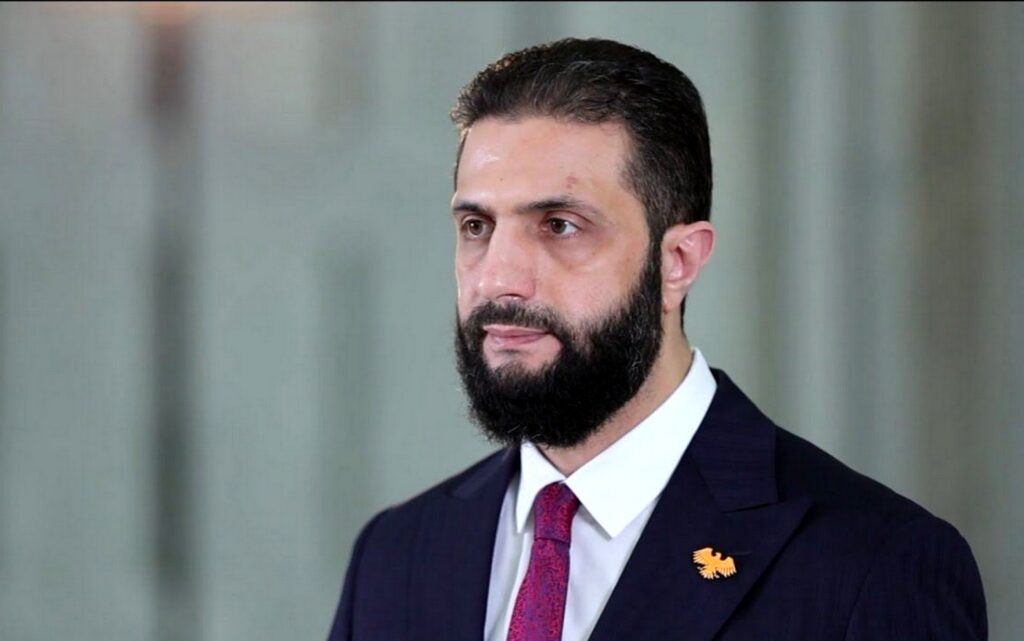
Eight sources familiar with the issue told Reuters that the Syrian government miscalculated how Israel would respond to the deployment of Syrian forces in the south of the country last week, encouraged by US messages that Syria should be run as a central state.
Sources said that Israel carried out strikes on Syrian forces and Damascus last Wednesday, in an escalation that surprised the Islamist-led government, after government forces were accused of killing dozens in the Druze-majority city of Sweida.
According to the sources, which include Syrian political and military officials, two diplomats, and regional security sources, Damascus believed it had received a green light from the United States and Israel to send its forces to the south, despite months of Israeli warnings against such a move.
The sources said this belief was based on public comments and private conversations by US Special Envoy to Syria Tom Barrack, as well as nascent security talks with Israel.
Barrack called for centrally governing Syria as a single state without autonomous regions.
There have been no previous reports of what Syria understood from the US and Israeli messages regarding the deployment of its forces in the south.
A US State Department spokesperson declined to comment on private diplomatic discussions but said the United States supports Syria’s territorial integrity.
“The Syrian government has an obligation to protect all Syrians, including minorities,” the spokesperson said, urging the Syrian government to hold perpetrators of violence accountable.
In response to Reuters’ questions, a senior Syrian Foreign Ministry official denied that Barrack’s remarks influenced the decision to deploy troops, which was made based on “purely national considerations” and aimed to “stop the bloodshed, protect civilians, and prevent the escalation of the civil war”.
Damascus sent troops and tanks to the Sweida province on Monday to halt fighting between Bedouin tribes and armed factions within the Druze community, a minority with followers in Syria, Lebanon, and Israel.
Syrian sources reported that forces entering the city of Sweida came under fire from armed Druze groups.
Two sources, including a senior Gulf official, said the ensuing violence, attributed to Syrian forces, including summary executions and humiliation of Druze civilians, prompted Israel to launch airstrikes on Syrian security forces, the Defense Ministry in Damascus, and the vicinity of the presidential palace.
Israeli Prime Minister Benjamin Netanyahu said Israel intervened to prevent Syrian forces from entering southern Syria, which Israel has publicly said should be a demilitarized zone, and to maintain its long-standing commitment to protecting the Druze.
Syrian transitional President Ahmed al Sharaa pledged to hold accountable those responsible for violations against the Druze.
He blamed “outlaw groups” seeking to inflame tensions for any crimes against civilians, however, he didn’t mention whether government forces were involved.
The United States and others quickly intervened to establish a ceasefire by Wednesday evening.
US Secretary of State Marco Rubio described the escalation as a “misunderstanding” between Israel and Syria.
A Syrian source and a Western source familiar with the issue said that Damascus believed that talks with Israel held days earlier in Baku had resulted in an understanding regarding the deployment of forces in southern Syria to bring Sweida under government control.
Israel said on Friday it had agreed to allow limited Syrian forces into Sweida over the next two days.
Shortly after, Syria announced it would deploy a dedicated force to end the sectarian clashes, which continued into Saturday morning.
A Syrian military official said that correspondence with the United States led Damascus to believe that it could deploy its forces without facing confrontation from Israel.
He added that US officials didn’t respond when informed of the plans to deploy troops, leading the Syrian leadership to believe there was tacit approval and that “Israel wouldn’t intervene”.
A diplomat based in Damascus said that the Syrian authorities were “overconfident” in their operation to control Sweida, “based on US messages that turned out not to reflect reality”.
US envoy Tom Barrack had said publicly and in private meetings in Damascus that Syria should be a “one state,” without autonomy for its Druze, Kurdish, and Alawite communities, who still largely distrust the new Islamist-led leadership.
This lack of trust has prompted the Druze and a large Kurdish community in northeastern Syria to resist the Syrian army’s deployment, demanding that their fighters be integrated into the army as independent units stationed only in their areas.
Ahmed al Sharaa appeared to have interpreted Barrack’s statements rejecting any federal system in Syria “to mean that the central government could impose its will on the Druze minority by force”.
The senior Gulf official said that Damascus had made a “huge mistake” in its handling of Sweida, saying that forces had committed abuses that included killing and humiliating Druze.
The Gulf official and another source stated that the nature of the violence had given Israel an opportunity to use force.
The Syrian Network for Human Rights, an independent monitoring group, said on Friday that the death toll from the violence had reached at least 321 people, including medical workers, women, and children.
It added that the violence included summary executions by all sides; A regional intelligence source said that Sharaa failed to control events on the ground due to the lack of a disciplined army and his reliance instead on a patchwork of armed groups, most of which have a hardline Islamist background.
During the sectarian violence that erupted in the Syrian coastal region in March, hundreds of members of the Alawite minority were killed by forces allied with Ahmed al Sharaa.
The senior Gulf official said there are “real fears that Syria is heading toward fragmentation into smaller states,” amid increasing bloodshed and growing distrust of the Sharaa government among minorities.
The Syrian Foreign Ministry official said that the goal of the Sweida operation was not revenge or escalation, but rather to preserve the country’s peace and unity.
The official, who spoke before Israel announced its approval of limited Syrian troop deployment to Sweida, added that Syrian forces are prepared to intervene again to end the sectarian violence there “whenever the appropriate conditions are met, including clear guarantees from the United States that Israel won’t intervene”.
Reuters reported in February that Israel initially pressured the United States to keep the country weak and decentralized after the fall of Bashar al Assad.
In May, US President Donald Trump met with Sharaa and announced that he would lift all US sanctions and urged Israel to engage with Damascus, but much of the Israeli political establishment remains skeptical of the new Syrian leadership.
A US State Department spokesperson said on Thursday that the United States “didn’t support” the Israeli strikes on Sweida last week.
The attacks came as a shock to some Americans in Syria; Hours before the Israeli bombardment of the Syrian capital on Wednesday, executives from three US-based energy companies arrived in Damascus for a day of meetings.
Jonathan Bass, chief executive of Argent LNG and a key organizer, told Reuters he had received sufficient assurances from Washington that the violence in Sweida wouldn’t escalate and reach Damascus.
The executives were in Damascus to present an energy project to the Syrian finance minister when the Israeli bombing occurred.