Financial Times: Why does the world need the G20?
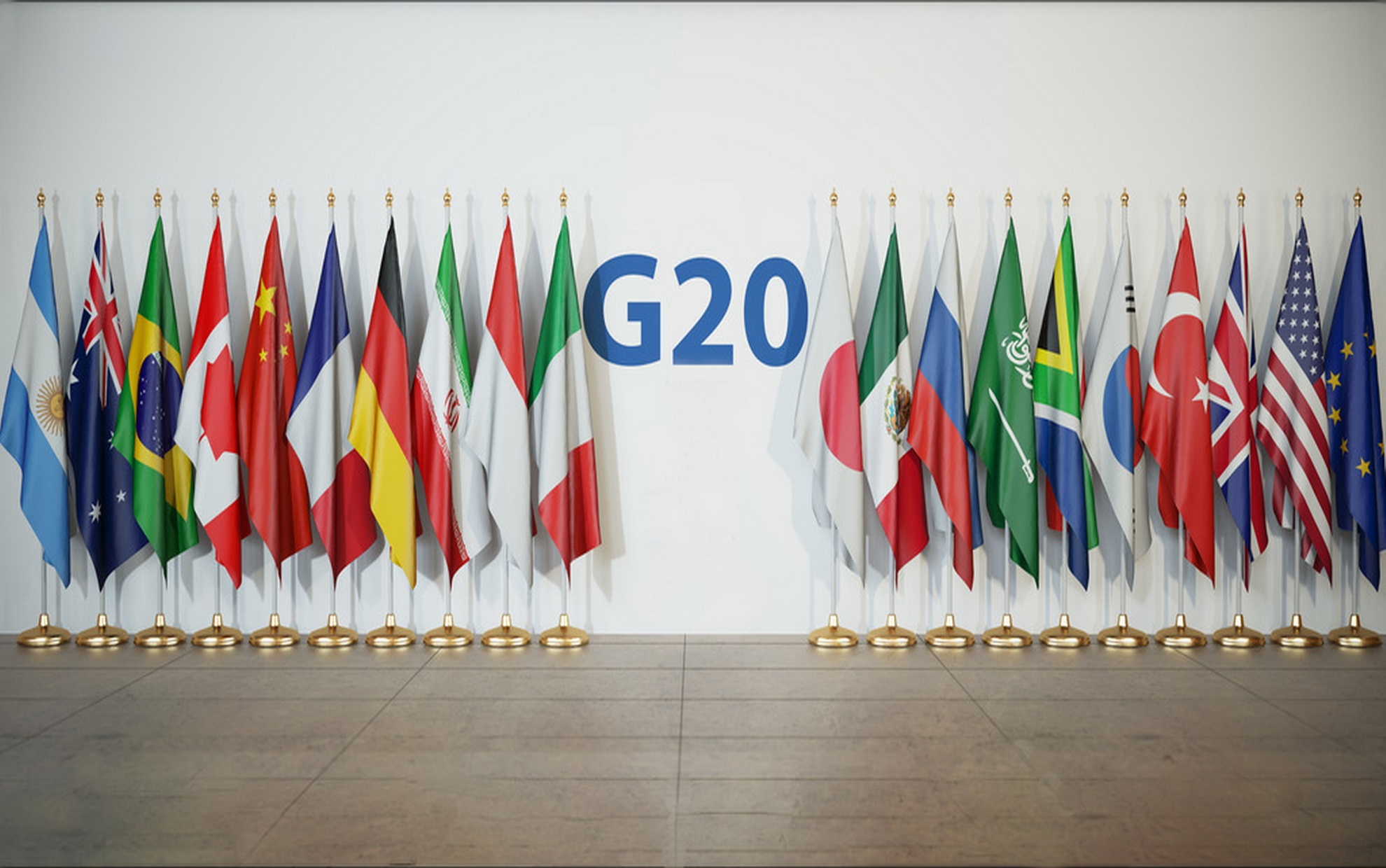
The Financial Times published an editorial about the G20 summit hosted by the Indian capital, Delhi, and how much the world needs that summit.
The Financial Times brought back memories of April 2009 and the G20 Summit, which marked a turning point in the global financial crisis.
When the leaders agreed to joint initiatives and measures worth approximately $1.1 billion in order to support trade and faltering economies.
The role of the group, made up of 19 countries plus the European Union, has been praised as a forum for economic cooperation that can replace the Western-dominated G8.
But the current reality prevents the G20 from continuing to play this desired role, in light of the state of global division and growing tensions between the United States and China, in addition to the Russian-Ukrainian war and the resulting depletion of the G20’s forces despite the growing need for them.
The Financial Times pointed out that Russian President Vladimir Putin failed to attend the summit in Delhi.
While this is Putin’s second consecutive absence from the G20 summit, Chinese President Xi Jinping is absent from that summit for the first time.
Not to mention the widening of the differences over the war in Ukraine, and what all of this portends about the failure of the summit – as never before – to agree on a joint final statement.
This doesn’t prevent us from saying that progress has been achieved at a number of levels, including the pursuit of the African Union to obtain membership in the G20, ensuring the expansion of the developing world’s participation in that group.
In addition, there is important work accomplished under the Indian presidency with regard to introducing reforms to multilateral development banks, financing activities to combat climate change, and addressing the debts of developing countries.
Regarding the reasons for the Chinese President’s absence from the Delhi summit, the newspaper pointed to border disputes between China and India, as well as Beijing’s dissatisfaction with India’s aspirations to establish itself as the leader of emerging economies, which is the same role that China aspires to.
However, this absence on the part of the Chinese President would open a great gateway for his US counterpart and for other leaders of Western countries to appear as committed to supporting the developing world – it is an opportunity that they won’t miss.
The Financial Times added, “In an era of conflict between new global powers, and in light of the existential threat posed by climate change, it’s in the world’s interest for the leaders of major countries – often economically hostile – to sit down for dialogue”.
The Financial Times concluded by saying, “The G20 has many flaws and shortcomings, but, especially in light of the functional paralysis that the United Nations suffers from, it is the best forum organized by the world”.