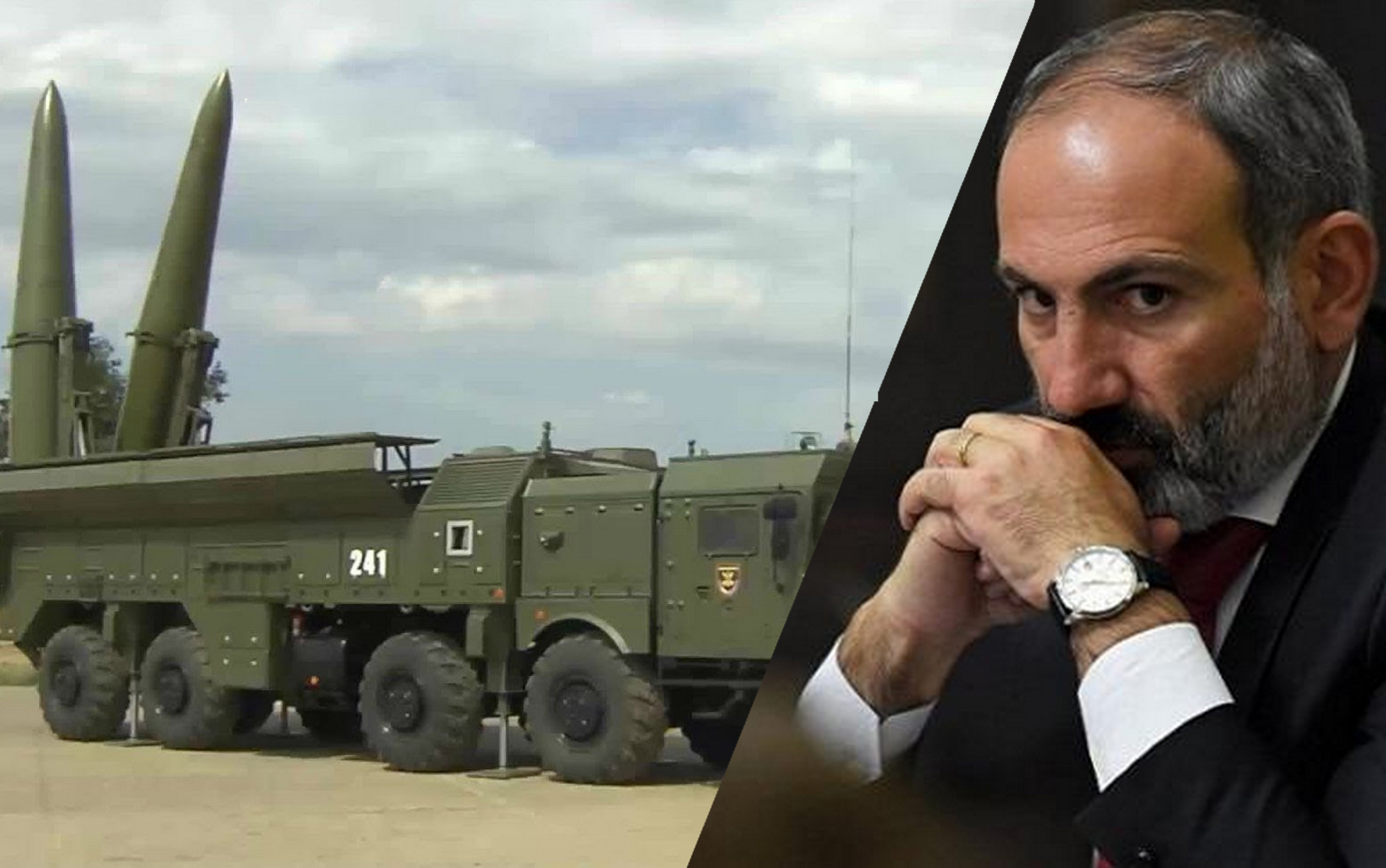
The Russian “Iskander” missile hit the Armenian government
By: Alexander Nazarov
In Armenia, a new wave of domestic political crisis began.
Armenia is a parliamentary republic, headed by the pro-Western Prime Minister Nikol Pashinyan, which is a contradiction in itself, given that Armenia is a military ally of Russia.
Pashinyan came to power as a result of a color revolution backed by the West in 2018, and since then, he has constantly tried to spoil relations with Russia, approaching the United States of America and the European Union, despite the fact that Russia is the only country capable and ready to guarantee Armenia’s security.
That suicidal situation, together with high and unjustified self-confidence, ended with a military disaster in the war with Azerbaijan in Nagorno Karabakh, saved only thanks to Russian pressure on Azerbaijan, at a time when the Armenians lost all the previously captured Azerbaijani lands around Nagorno Karabakh.
Despite protests immediately after the defeat in the war, the Pashinyan government managed to survive the first wave of the crisis, but the tension within society continued to boil.
During an interview with Pashinyan, on February 24, he blamed the former president of the republic, Serge Sargsyan, who bought the Russian Iskander ballistic missiles, of which only 10% or less exploded, according to Pashinyan.
However, that statement sparked mockery and public laughter from the Deputy Chief of the General Staff of Armenia, Tiran Khatchatrian, as well as the representative of the Russian army, who announced that he did not use a single “Iskander” missile in the last war.
It should be noted here that any use of “Iskandir” would have caused a direct war between Armenia and Azerbaijan, not with the Karabakh region.
Then Pashinyan dismissed the deputy chief of the General Staff, and then on the morning of February 25, the General Staff called Nikole Pashinyan to resign.
The army was backed by former president Robert Kocharyan and the police, while opposition parties pushed their supporters onto the streets and pitched tents outside Parliament.
At the same time, the intelligence services supported Nikole Pashinyan, who then tried to dismiss the Chief of the General Staff, Onik Gasparyan.
However, the decree on this must be signed by the incumbent president, Armen Sarkisian, who is taking a wait-and-see attitude so far.
Turkey described these events as an attempted coup.
Pashinyan called the Russian President, Vladimir Putin, but the latter refrained from publicly supporting the current Armenian government.
At the same time, Putin refrained from supporting any of the parties to the internal Armenian conflict, urging the parties to exercise restraint and solve the crisis by legal means.
Naturally, Washington opposed the Armenian army.
In general, the crisis in Armenia is part of the outgoing crisis of the old world order, as relations between the great powers intensify, and the opportunities for small countries to maneuver among themselves, seeking to sit on two horses at the same time, diminish.
Now is the time to take more specific positions, which will affect the country’s ability to survive.
Crises of the Armenian style are crises resulting from the contradiction between the economic and other vital interests of the country and the ruling elite’s submission to Washington and its demands, which are becoming increasingly difficult to implement day after day.
In Armenia, this is the contradiction between the impossibility of an Armenian state without the support of Russia, and the desire of a part of the Armenian elite to run towards the American camp, under pressure and coordination from Washington.
Russian President Putin can wait until the Armenians make their choice, and I think that the bitter lesson of defeat in the war will dispel many of the illusions of many Armenians regarding the West.
Similar crises will be faced by Arab countries very soon.
For example, the Kingdom of Saudi Arabia and other Gulf countries are closely linked politically to the United States, while China is the largest trading partner of these countries.
On which not only their economic prosperity depends, but their stability, and even the existence of these countries in the first place, and they will depend on them more and more every year.
Soon, most Arab countries will have to make a difficult choice between maintaining loyalty to Washington and facing the most difficult economic crises and then domestic politics, because at some point in the US-China confrontation, Washington will demand to cut ties with China.
It is time for Arab capitals to start thinking about what choice they should make.