The Independent Online: The United States is still involved in Middle East wars, so why was this absent from the presidential election debates?
The Independent Online published a report by Middle East correspondent Borzo Draghi entitled “The United States is still involved in Middle East wars, so why was this absent from the presidential election debates?”
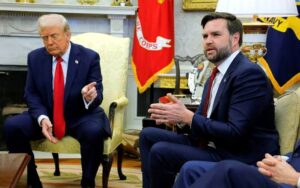
Draghi says that during the two presidential debates between the two candidates competing for the position of the President of the United States, namely the current President Donald Trump, and his rival, Joe Biden, the two parties exchanged accusations on many thorny issues, whether they were major important or minor issues, including efforts to address the Coronavirus epidemic, and the situation.
The economic issue, the migrant file, and others, but the Middle East issues are completely absent, except for simple hints.
Draghi explains that the Middle East, which came in the lowest order of priorities for the two candidates during the two debates, has not only continued to be a hot arena for international conflict, but is also witnessing increasing complexities and expanding.
While Biden and Trump discussed how to address the Chinese challenge, they did not discuss how to address Turkish expansionism and Ankara’s increasing ambitions in the east.
The Mediterranean and the ongoing conflict in northern Syria.
Draghi continues to compare Trump’s interest with Biden in the discussion about the manner of dealing with the North Korean nuclear program, neglecting the discussion about Washington’s position on the international efforts of the major powers regarding the Iranian nuclear file and the feasibility of the Trump administration’s withdrawal from the nuclear agreement with Tehran, as well as neglecting the conflict files in each of Afghanistan and Somalia, Yemen and Syria.
Draghi says, “People are bored with the endless armed conflicts in the Middle East, as this region has drained almost every American president who came to power over the past forty years, even if he intends in his heart to stay away from the Middle East vortex”.
He explained that former President Jimmy Carter found himself obliged “to confront the Iranian revolution in 1979, which almost cost the loss of the second presidential term, then President Ronald Reagan, who faced the bombings of the US embassy in Lebanon and then the Iran Contra scandal, which witnessed his aides being involved in selling weapons to Iran to support the assassination and murder squads in Central Africa”.
“The first Iraq war after Saddam Hussein stormed Kuwait consumed much of the George Bush administration’s effort, while the next President Bill Clinton found himself mired in a sea of disagreements and failed peace agreements between the Palestinians and the Israelis,” referring to the contribution of the September 11 attacks in shaping the nature of George’s presidency.
Bush the son and the wars that took place during them in Afghanistan and Iraq, then Barack Obama, who was involved in the Middle East as well, despite seeking to distance himself and focus on Asia, but the Arab Spring revolutions did not let him do that in addition to Iran’s nuclear file.
Draghi concluded, saying, “During the past few weeks, new unexpected challenges have appeared that will present themselves to the next president of the United States, including the war in the Caucasus between Azerbaijan and Armenia, in which the Russians, Iranians and Turks were involved, and it will affect the energy pipeline to Europe in addition to the major wars raging in the Middle East for years of Syria to Iraq and from Yemen to Afghanistan is what fuels intense conflicts and encourages the phenomenon of illegal immigration to the West.