The Guardian: The time for appeasement of the United States is over

The negative view of Europe today and its hostility is forcing Europeans, especially Britain, to take a tougher political approach, writes Polly Toynbee in The Guardian.
The new US threat is so strange that it leaves Europe, and especially Britain, in a state of disbelief.
For the first time, the United States declares itself an enemy of ours.
Europe is emerging as a major adversary in US national security strategy, while Russia is emerging as an ally.
Everything that seemed entrenched since World War II has been turned upside down: the land of freedom becomes a source of destruction for democratic values, while appeasement fails.
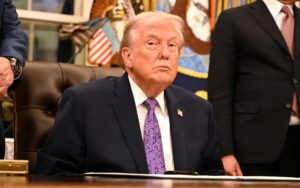
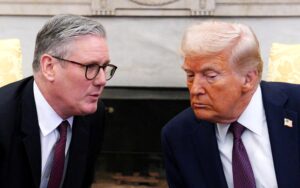
Donald Trump speaks clearly, he means what he says, and he hates everything European except the emerging national parties he wants to support.
His strategy warns that Europe will soon become a non-European majority, echoing the racist conspiracy theory known as the Great Replacement Theory.
Trump called the Europeans “weak,” “deteriorating,” “destroying their countries,” and had “really stupid” leaders, and responded to a question about whether they would remain allies, in an interview with Politico, with a hint of threat: “It depends”.
Notice this: The official US strategy says that the growing influence of European nationalist parties is cause for optimism.
Trump appears to support the EU’s ultra-nationalists, whom his strategy refers to as political allies.
Britain seems particularly vulnerable to this American friend-turned-enemy, but there is at least one simple political defense that requires immediate action.
The government is expected to publish the election bill next month, but so far it has made only weak proposals to protect our democracy from interference by hostile actors.
Unlike many States, we don’t impose a cap on political contributions.
Elon Musk was reported to be planning to support the Reform Party with £100 million, enough to buy a political party – although he denied that exact figure.
Although Musk is a foreigner, he can legally do so by paying donations from the profits of his companies in the UK.
He disagreed with Farage, but he may return to it, and other wealthy people may support the far right wherever the opportunity arises.
This week, the government published its anti-corruption strategy, developed by Margaret Hodge, an anti-corruption officer, in collaboration with David Lamy, to halt the UK’s sharp deterioration this year, falling from 11th to 20th place in Transparency International’s Corruption Perceptions Index.
The new strategy, which addresses tax evasion, money laundering and professionals who facilitate corruption – such as lawyers, accountants and public relations firms – has been welcomed by activists.
According to the National Crime Agency, more than £100 billion is laundered annually in Britain, not only through the corrupt world of barbershops, e-tobacco and counterfeit confectionery, but also at the highest levels.
The corrupt hide both their reputations and their money, using charitable and cultural institutions, private schools, universities, and football teams, in a frantic quest for funding without the slightest accountability.
But one aspect of the strategy has to do with political influence, with Interior Ministry polls showing that 73% of people are concerned about corrupt actors in the political system, and they have every right to do so.
The Financial Times revealed that a private German bank had given £300,000 to the Conservative Party before the last election, and since it was sourced to an illegal foreigner, it was returned.
But it shows how much many people want to influence our elections.
A £75,000 donation to Robert Jenrick came from a UK-based company that had taken out large loans from a company registered in the British Virgin Islands.
Jenrick said the donation was completely legal and correct, and that was the flaw in the law.
The Electoral Commission reported this month that a £9 million donation to the UK Reform Party was the largest ever made by a person alive.
Of all donations to Islah, 75% came from only three wealthy men.
The £9 million from one of them, a crypto investor, wasn’t in cryptocurrency, but it’s possible that future donations will be.
The government is considering the possibility of banning crypto donations, a shady sector that should be kept away from political donations altogether.
As for the political pressure bases and the restoration of the independence of the electoral commission, as the campaigns have demanded, we will wait and see whether the bill will be tougher than what has been proposed so far.
As it stands, the purge of political donations is a clear win for a party that does not enjoy the public’s trust.
Hodge has dragged them to the stage of reviewing the matter, at least, and they must do it now.
As FullFact, the electoral commission, and a coalition of democracy and anti-corruption organizations suggest, multiple reforms are needed: an annual campaign spending cap, rather than restricting it only in the run-up to the election, preventing large sums of money from being spent on data and social media in advance.
They are asking for a cap of £15,000 for individual donation, but any cap would be a good start.
It will take decisive action to restore public trust, but Labor can dispel public suspicions after the slight, albeit painful, moral embarrassment the government has suffered by accepting gifts and tickets.
Buying titles with money is illegal, but a Conservative donor who donates more than £3 million to the party could win a seat in the House of Lords.
Corporate and union donations should be stopped when such large sums of money circulating in the political arena are disgusting to the public.
The anger of the people must be boldly countered by making it clear that government support for politics is less evil than private corruption.
“We’ll protect democracy by strengthening the rules on donations to political parties,” says the Labor Party statement.
The threat to democracy is terrifying… Gone are the days of hesitation, the time of appeasing the United States, the time to pretend that Brexit can work, and the time to allow big money into politics.
For a government so unpopular, boldness is the only way forward.