The Guardian: The JNIM brings Mali to its knees

Armed groups of fighters from the Jama’at Nusrat al Islam wal-Muslimin (JNIM) (Support for Islam and Muslims) have cut off the main roads used by fuel trucks, disrupting supply lines to the capital Bamako and other areas in Mali.
This al Qaeda-linked group is gradually advancing towards Mali’s capital, Bamako, with attacks increasing in recent weeks, including on army-backed convoys.
If the city falls, the West African nation will be on its way to becoming an Islamic republic that enforces strict interpretations of Islamic law.
This would amount to the realization of a jihadist mandate following in the footsteps of Taliban-ruled Afghanistan, or Syria where former rebel Ahmed al Sharaa, formerly known by his nom de guerre Abu Muhammad al Julani, became head of state.
In areas under its control, the Nusrat al Islam wal-Muslimin group already imposes dress codes and punishments through courts that don’t adhere to fair trial standards, according to a 2024 Human Rights Watch report.
On Tuesday, the US State Department issued its second warning in a week to its citizens in Mali, urging all Americans to leave immediately using commercial flights, citing infrastructure problems and the unpredictable security situation in Bamako.
On Wednesday, Australia, Germany and Italy also urged their citizens to leave as soon as possible.
Observers inside and outside Mali say things could deteriorate rapidly, and that the US warnings are the latest indication that the country is on the verge of collapse, or perhaps heading for a third successful coup in five years, and a sixth since independence from France in September 1960.
A former finance minister, now living in exile, told the Guardian on condition of anonymity: “I don’t want to sound too dramatic, but the country is collapsing before our eyes… I wouldn’t be surprised if there was another coup in the next few days”.
The former official added: “Before December 31, there will be a coup in the Sahel region… Mali will be first, and then we will see the same domino effect that we saw between 2020 and 2023, with these countries falling one after another”.
Mali has been facing a fuel shortage for two weeks due to a blockade targeting trucks coming from neighboring countries such as Ivory Coast, Mauritania and Senegal, by the Jama’at Nusrat al Islam wal-Muslimin group.
Drivers and soldiers have been kidnapped or killed, and in some cases both have happened.
Landlocked Mali relies heavily on imports to sustain its struggling economy.
With fuel trucks out of service, life has ground to a halt in much of Bamako.
Long queues at petrol stations are now a common sight, and many parts of the city are without electricity.
Shops and markets have also closed, and many people are staying home due to the lack of transportation and high food prices.
Schools have also been temporarily closed until November 9.
Analysts such as Ulf Lassing, head of the Sahel program at the German Konrad Adenauer Foundation based in Bamako, say next week could be crucial to the life of the current military council.
He adds: “I think next week will be very difficult, because then the current stocks that everyone depends on will run out… It’s difficult to find a way out of this situation… It’s difficult… Just imagine how they can resupply the capital with sufficient quantities”.
Several analysts who spoke to The Guardian declined to comment on the matter, citing the regime’s sensitivity to comments deemed unsupportive of it.
No one is protesting against the government yet, because people believe that if this government falls, the one that follows will be an Islamic government, so that might strengthen the regime’s resolve a little, Lassing said.
In June 2020, civil society organizations, religious groups, and political parties formed a protest coalition known as the June 5 Movement or the Rally of Patriotic Forces (M5-RFP), which led widespread protests against democratically elected President Ibrahim Boubacar Keita, on charges of corruption and deteriorating security.
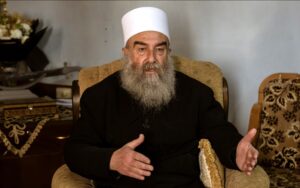
One of the most prominent figures in this movement was Mahmoud Dicko, an influential and controversial imam who first rose to national prominence through his role in the 1991 coup against then-President Moussa Traoré.
This man’s publicizing of the religious card played a pivotal role in forcing Keita’s government to collapse.
During a mediation meeting between the Economic Community of West African States (ECOWAS) and the M5-RFP, a surprising statement came from Keita.
The former minister said: “I was present at the meeting when (Keita) told the ECOWAS leaders that Imam Dicko wanted Mali to become an Islamic state that applies Sharia law, and when he said that, anger erupted”.
Within two months, soldiers led by the young Colonel Assimi Goita seized control of the government, replacing parliament with a transitional national council.
A second coup within a year saw Goïta sworn in as president.
But the military council’s promises have largely not been fulfilled.
The National Transitional Council, headed by Colonel Malick Diaw, set elections for February 2022, but the council has repeatedly postponed them.
Meanwhile, the death toll from the insurgency has risen sharply, with the total since 2012 exceeding 17,700, with more than two-thirds of that number occurring after 2020, according to data from the Africa Centre for Strategic Studies.
The Jama’at Nusrat al Islam wal-Muslimin (JNIM) is expanding its operations to include Benin and Nigeria on the west coast of Africa, and has strengthened its financial resources through significant ransoms paid for the release of hostages it holds, including Emirati citizens.
Human rights organizations have also accused the Malian army, in cooperation with Wagner mercenaries and militias loyal to the military council, which include hunter militias, of committing widespread abuses.
The military council’s isolation appears almost complete.
It has signed military aid agreements with the regimes of Burkina Faso and Niger, but these are still pending.
After cutting ties with ECOWAS, Mali was also unable to benefit from its military resources.
In recent years, some foreign diplomatic missions have reduced their presence in the country, coinciding with the military council’s expulsion of staff from other missions amid deteriorating relations with the West.
Consequently, reports have emerged of growing frustration within the military, suggesting internal tensions among the five officers who carried out the initial coup.
Two of these officers, Malick Diaw and Defense Minister Sadio Camara, have been mentioned as potential successors to Goïta.
Deko, who has been living in exile in Algeria since 2023 after a falling out with the government and the loss of his diplomatic passport, is expected to return.
An informed source says that some members of the Jama’at Nusrat al Islam wal-Muslimin are requesting Dicko’s return so that they can negotiate with him instead of the Malian government, adding that their ultimate goal is to transform Mali into an Islamic state, and they are very close to achieving that.