Forum: Contrary to expectations… sanctions against Russia ended up strengthening BRICS

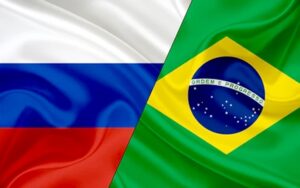
After 10 years of sanctions, which from 2022 were intensified by the West, with the beginning of the war with Ukraine, the situation ended up favoring the Russian economy, and therefore, giving more strength to the group, created in 2006, formed by emerging countries that are part of the bloc.
There are several packages of economic sanctions that have been applied against Russia.
These sanctions range from the departure of global brands from the country to the discontinuation of flights by major US and European airlines to the country.
Several car manufacturers have left the country, as have designer brands and multinational food companies such as McDonald’s and Burger King, among others.
With the sanctions, Russians can no longer use cards from brands such as MasterCard and Visa, and are prevented from accessing basic streaming services such as Netflix and Spotify, for example.
BRICS helped reorient oil exports
But Russia saw that increasing its partnership with BRICS member countries would be a lifeline to overcome the economic isolation imposed by the West.
One example of this is the increase in oil exports to an important member of the group, Brazil.
According to a report by the Sputnik Agency, reproduced by Brasil 247, published last July, Brazil practically doubled its imports of petroleum products from Russia in annual terms, reaching 1.06 million tons.
The data was obtained by Sputnik based on a survey by the Brazilian Institute of Geography and Statistics (IBGE).
According to IBGE, in June, Russia supplied Brazil with 1.06 million tons of petroleum derivatives, or 70% more than the volumes in June 2023.
At the same time, the value of supplies also increased by 90%, reaching US$683.5 million (R$3.71 billion).
Thus, Russia remained Brazil’s main supplier of petroleum derivatives. A total of US$582 million (R$3.16 billion) in diesel and US$101 million (R$548.36 million) in gasoline were exported to the country.
But it is not only Russia that has increased its oil exports to Brazil.
India as well, has moved up to third place, increasing its shipments to Brazil by 260% year-on-year, and by 2,700% compared to May 2024, to US$146.7 million (R$796.48 million).
In addition to Brazil, the volume of Russian oil exports has increased considerably to other BRICS member countries, such as China and India.
At the end of 2023, Russian Deputy Prime Minister Alexander Novak stated that 90% of Russian oil exports that year were destined for China and India.
Of the total, exports to Europe fell in 2022 from about 45% to approximately 5%.
The statements were made in an interview with the Rossiya-24 television channel, according to Reuters.
According to Novak, Russia’s oil and energy complex developed successfully in 2023 and that the restrictions “only accelerated the process of reorientation” of Russian exports of the commodity.
In search of independence from the dollar
Today, BRICS, in addition to the initial members South Africa, Brazil, China, India and Russia, has new members that were integrated in January 2024: Egypt, Ethiopia, Saudi Arabia, the United Arab Emirates and Iran.
Thus, the group now represents more than 40% of the world’s population, with a GDP that reaches 31.5% of the world’s economy, surpassing the 30.8% of the G7 (Germany, Canada, the United States, France, Italy, Japan and the United Kingdom, in addition to the European Union).
These are figures that have not yet been updated, as they do not include data on the new members.
The Meeting of Foreign Ministers of BRICS and invited countries took place on June 10-11 in the Russian city of Nizhny Novgorod.
On the occasion, the respective foreign ministers of the bloc’s leading countries indicated that multipolarity in the economic field is an almost inexorable path, at least in relation to Asian and Eurasian development.
The culmination of the meeting was the release of a 54-point joint declaration.
According to political scientist, researcher and professor of International Relations Bruno Beaklini, in summary, the meeting emphasized the need for member countries to seek direct benefits for countries that export primary commodities; economic development — following the principle that prosperity brings stability, and greater decision-making power for each member or associate state.
“According to Western imperial logic, these positions are very far from the projection of power by the United States… The direct effect is de-dollarization, that is, the progressive, partial and even total reduction of the use of the US dollar as legal tender and global reserve of value,” he assessed in an article published in the Middle East Monitor on June 15, as per the link .
Cultural cooperation
It is clear that BRICS seeks to consolidate itself based on its economic potential; thus, the group projects itself as a geopolitical alternative to a world order led by the United States that is already decadent and exhausted, acting as a legitimate representative of the Global South.
But this new order also seeks cultural autonomy, in the face of the imposition of Western values.
This is evident in former BRICS members, such as Russia, China and India, and now Iran, in addition to Saudi Arabia.
In July 2023, the South African city of Mpumalanga hosted the 8th Meeting of BRICS Ministers of Culture. The theme of the meeting was “BRICS and Africa – Partnership for Mutually Accelerated Growth, Sustainable Development and Inclusive Multilateralism”.
A Declaration on Culture signed by all participating ministers was released at the meeting, which emphasized the need to deepen intergovernmental exchange on cultural and creative industry policies; strengthen the articulation of cultural industry resources, platforms and projects; expand cooperation in the cultural market; exchange skills and explore the establishment of a cooperation mechanism between the BRICS for cultural industries; Brazil will host the meeting in 2025.
The growth of BRICS is the decentralization of economic flow in the West
In April, the International Monetary Fund (IMF) announced that Russia’s economy is expected to grow by 3.2% in 2024, which is more than the US, European countries and even most nations in the Global South.
For Brazil, for example, the IMF predicts growth of 2.2% this year.
On average, in 2023, Brazil, China, India, Russia and South Africa grew by 3.92%, while the United States, Germany, France, the United Kingdom, Italy, Canada and Japan had an average growth rate of no more than 1.04%.
New BRICS members such as Iran also appear to have overcome Western sanctions.
According to a report published on July 14 by the Brazil-Iran Chamber of Commerce and Industry, the World Bank (WB), in its latest report, predicted that Iran’s economy will grow 3.2% in 2024 and the inflation rate will fall to 35.3%.
According to the international organization’s estimate, Iran’s economy experienced 5% growth and 40.7% inflation in 2023.
The bank predicted that Iran’s non-oil sector growth, which was 3.8% last year, will reach 3.0% in the current year.
Bank promotes sustainable economic development of participants
One of the arms for promoting the economies that make up the BRICS is its bank, called the New Development Bank (NDB), which is currently chaired by former Brazilian President Dilma Rousseff. Between August 29 and 31, the 9th NDB Meeting will take place in Cape Town, South Africa.
This year’s theme, “Investing in a Sustainable Future,” highlights the Bank’s commitment to addressing global challenges through sustainable development.
According to a report from the NDB on its website, “the meeting will serve as a critical platform for discussions on how the NDB can finance infrastructure and sustainable projects in emerging markets and developing countries with greater effectiveness and excellence.
Leaders, decision-makers and business professionals will come together to discuss how to promote investments for a sustainable future,” says the statement.
The Program will feature presentations on cutting-edge financial systems for sustainable development, perspectives on sustainable investments, as well as thought-provoking panel discussions and keynote speeches by prominent figures.
Participants will discuss and examine cooperative initiatives that address pressing social and environmental problems and best practices in cultivating new engines for sustainable growth.
Preparatory meeting for the BRICS Conference still in August
As part of the successive preparatory meetings for the BRICS conference, which will take place in the Russian city of Kazan, next October, ministerial sessions will be held for several ministers from the group’s member states, which will take place in Russia, in the capital Moscow, starting next Tuesday, 27/08, with a set of preparatory meetings, in person and online.
The Original article here.