
EU issues an updating report regarding Syria after Assad regime fall
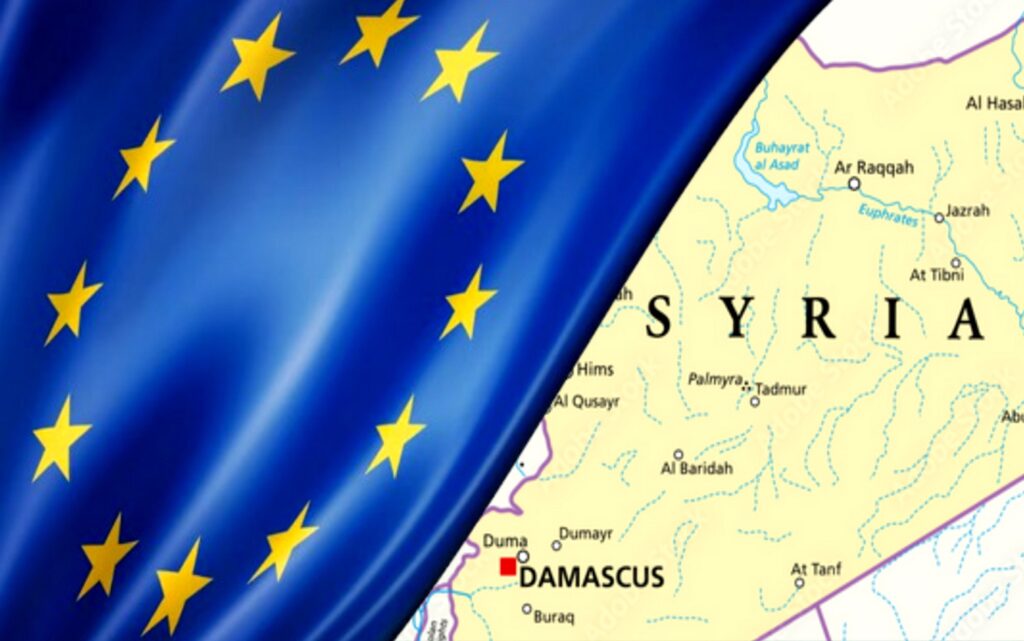
The European Union for Asylum (EU) has released a comprehensive report on the situation in Syria for 2025, revealing a complex picture that combines political transformations after the fall of the Assad regime, continued insecurity and deteriorating humanitarian conditions, as well as changes in the criteria for assessing asylum claims for Syrians within the bloc.
The report is the first of its kind since the fall the Assad regime last December, noting that the control of Damascus came through a large-scale offensive led by opposition factions and Hay’at Tahrir al Sham, followed by a transitional government headed by Ahmed al Sharaa, which hastened to dissolve the former regime’s institutions and approve an interim constitutional document for five years.
But the EU believes that the new structures remain fragile, and that security and military institutions are disintegrating, with the continued influence of armed factions within the state apparatus.
The report also pointed to a complex map of influence, with the new government controlling most provinces, the SDF retaining large areas in the northeast, the Druze factions administering Suwayda, while ISIS pockets are active in the desert and Deir Ezzor.
The report documented widespread violations by various parties: arbitrary arrests and summary executions by government forces, abuses against Kurds from the Syrian National Army factions, continued arrests and recruitment of children by the SDF, in addition to lightning attacks carried out by ISIS.
It also monitored intensive Israeli military activity in the south, in addition to the continuation of the Turkish and US roles in the north.
On the refugee issue, the report indicated that about one million refugees have returned since the end of 2024, mostly from Türkiye, Lebanon and Jordan, in addition to 1.3 million internally displaced people who have returned to their areas.
However, he stressed that this return doesn’t mean stability, as returnees face severe challenges, most notably the lack of services, extreme poverty, difficulty in obtaining housing and documents, as well as the collapse of health and education infrastructure.
According to the European Union, 90% of Syrians live below the poverty line, and 16.5 million people are in need of humanitarian assistance, the highest since the conflict began.
Damascus alone can be considered a relatively home refuge, while the rest of the provinces remain unsafe due to the proliferation of armed factions and deteriorating economic and security conditions.


