New York Times: Trump rejects Iranian offer to halt uranium activities for five years
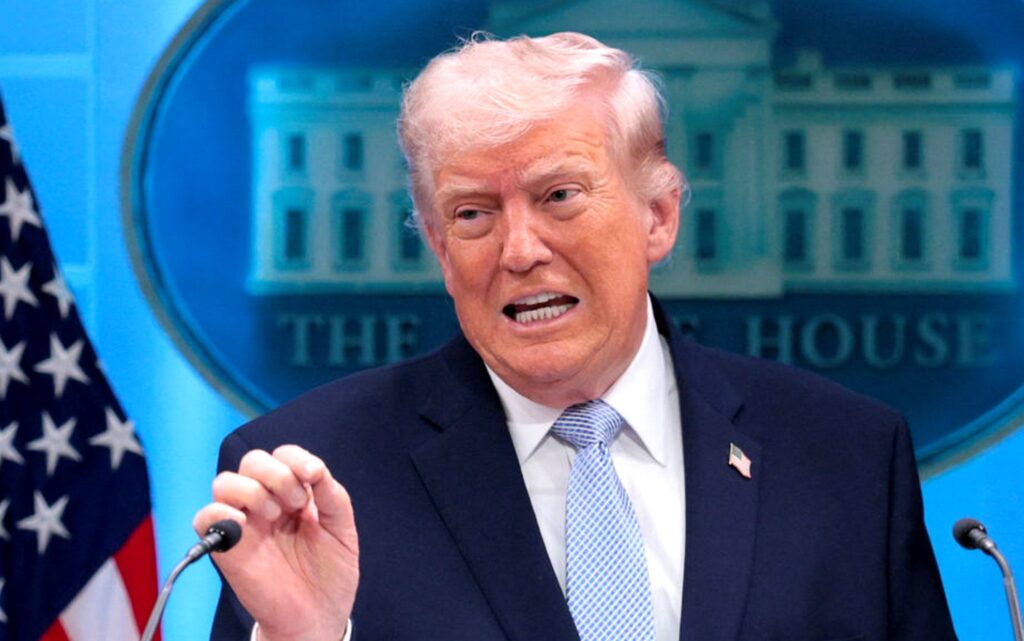
The New York Times reported that US President Donald Trump rejected an Iranian offer to suspend uranium enrichment activities for 5 years, in response to Washington’s demand during negotiations in Pakistan to freeze these activities for 20 years.
The New York Times newspaper reported on Tuesday, citing two Iranian officials and one American official, that the Washington delegation, headed by Vice President J D Vance, asked Iran to freeze its uranium enrichment activities for 20 years, in addition to transferring the enriched uranium out of the country.
Iran, in turn, made a formal offer on Monday to temporarily suspend enrichment activities for five years, but Trump rejected this offer, and Tehran also rejected the request to transfer the enriched uranium out of the country, but offered instead to reduce the enrichment levels in its current stockpile.
The New York Times reported that officials from Iran and the United States are considering the possibility of holding a second round of negotiations.
Meanwhile, Saudi Arabia is pressuring the administration of US President Donald Trump to lift the blockade on Iranian ports and return to the negotiating table.
On Monday, the US Navy began blockading all maritime traffic entering and leaving Iranian ports, including those on the Arabian Gulf and the Gulf of Oman, which Tehran considered piracy.
Washington and Tehran are exchanging accusations of responsibility for failing to reach an agreement during negotiations in Islamabad to end the war that the United States and Israel launched against Iran on February 28.
According to Saudi officials, Riyadh fears Tehran might target other international trade routes, such as the Bab al Mandab Strait (via the Yemeni Houthi group), in response to the US blockade of Iranian ports.
On March 2, Tehran announced restrictions on navigation in the Strait of Hormuz, which is vital for the passage of oil exports, including those from Saudi Arabia, with the exception of countries not involved in the aggression against Iran.
Therefore, Riyadh is pressuring the US administration to end this blockade and return to negotiations.
Pakistani mediation is seeking to hold a new round of negotiations before the end of a two-week truce announced by the United States and Iran on April 8.
According to Saudi energy officials, the kingdom had received a pledge from the Houthis not to attack ships passing through Bab al Mandab.
These sources added that Riyadh informed Washington that the situation was still unclear, and that the Houthis might respond in a more aggressive manner.
The Strait of Bab al Mandab is located between Yemen in Asia and Djibouti and Eritrea in Africa and is in the middle of the five continents.
It’s a strategic maritime passage that represents one side of the triangle of strategic crossings for transporting energy and food after the Strait of Hormuz and the Suez Canal.
On the other hand, the White House Deputy Press Secretary Anna Kelly said the Trump administration is in close contact with its Gulf allies and is working to ensure that Iran doesn’t exert pressure on the United States or other countries.
Arab countries, including Saudi Arabia, have been subjected to missile and drone attacks launched by Iran against what it said were US sites and interests, but some of them hit civilian facilities and left civilians dead and wounded.
On Tuesday and Monday, Saudi Foreign Minister Faisal bin Farhan held telephone talks with his UAE, Qatari, Kuwaiti and Egyptian counterparts regarding the consolidation of the US-Iranian ceasefire, as part of efforts to enhance regional and international security and stability.