Ahmed al Sharaa: We were close to normalization with Israel but they backed down at the last minute
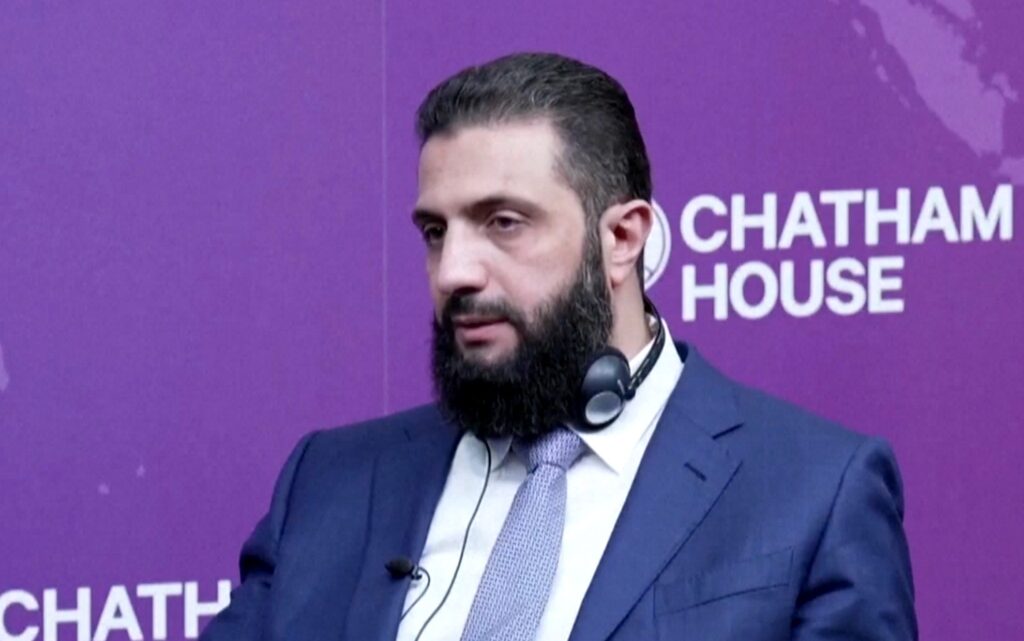
During his visit to the UK, the Syrian president Ahmed al Sharaa said that his government had reached advanced stages in efforts to normalize relations with Israel, but that the latter changed its position at the last minute.
These statements came during his participation in an event organized by Chatham House in the British capital, London, where he pointed out that Damascus has sought to open direct and indirect channels of communication with the Israeli side with the aim of reducing tension and establishing political understandings.
“We tried direct and indirect dialogue and negotiations, and we got good results, but Israel changed its position at the last minute,” he said, without revealing further details on why these efforts had stalled.
In a related context, press reports reported that the United States rejected an Israeli request to maintain some of the sanctions imposed on Syria, despite its pledge to provide compensation of an unannounced nature.
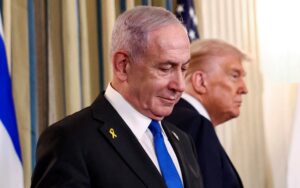
The Israel Broadcasting Corporation reported that aides to Israeli Prime Minister Benjamin Netanyahu asked President Donald Trump’s administration to keep part of the sanctions in place, with the aim of using them as leverage in any future negotiations, but this request was rejected, according to the same source.
Since the overthrow of a coalition of armed factions against the Assad regime on December 8, 2024, after a nearly 14-year conflict, Israeli forces have advanced into the buffer zone in the occupied Golan heights, which was established under the 1974 Disengagement Agreement.
Israel has also carried out hundreds of strikes on sites inside Syria, and has repeatedly announced ground operations and the arrest of people it said it suspected of carrying out terrorist activities in southern Syria.
On the other hand, Sharaa criticized Iran’s influence in Syria, stressing that Tehran’s intervention was a key factor in enabling the former Assad regime to tighten its grip on Syrians.
He explained that his country’s reservation isn’t related to Iran as a state, but to its regional role within Damascus and its direct intervention in Syrian affairs.
Syria has adopted a policy of restraint in managing its relations with Tehran, he said, noting that the expansion of the regional conflict has cast a shadow over various countries in the region, causing a state of turmoil and instability.
Regarding the regional scene, Sharaa said Iran is facing problems related to its missile and nuclear programs and its attempts to influence other countries, adding that Syria prefers negotiated solutions rather than engaging in wars that may further complicate regional situations.
He stressed that his country seeks to avoid being dragged into the ongoing conflicts, saying, “Unless Syria is targeted by any party, it will remain outside any conflict,” stressing the rejection of turning Syrian territory into an arena of confrontation.
The current regional situation is volatile and volatile in the absence of wise minds to manage the pace of de-escalation, he said, noting that the ongoing conflicts have led to significant human losses and economic disruptions, as well as impacts on global energy supplies.
As for Hezballah, Sharaa reiterated Syria’s commitment to protecting its borders and preventing arms smuggling, noting that his country has paid a heavy price as a result of the group’s presence in Lebanon and the overlapping conflict on the border.
Regarding his vision for foreign relations, Ahmed al aharaa explained that Syria aspires to build balanced relations with various regional and international parties, including Lebanon, Iraq, Türkiye and Saudi Arabia, in addition to international powers such as Britain, France, Germany and the United States, considering that Damascus is qualified to build a network of strategic relations that contributes to enhancing stability.
In this context, he pointed out that Damascus seeks to avoid getting involved in tensions that extend to neighboring countries, including Lebanon and Iraq, where confrontations linked to armed factions and sporadic escalations are active.
Syria has deployed thousands of troops on its western border with Lebanon and the east of the country with Iraq, as part of measures the Ministry of Defense said aimed at protecting and controlling the border in light of rising regional tensions.
Finally, the Syrian president concluded his remarks by stressing that his country has fought enough wars and isn’t ready to enter into new confrontations, stressing that the priority at the current stage is to achieve stability and avoid sliding into further conflicts.