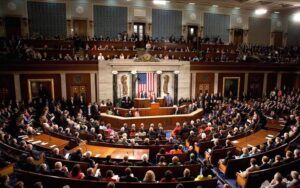
A statement of the US House of Representatives members is threatening sanctions against Syria again if the conditions aren’t met
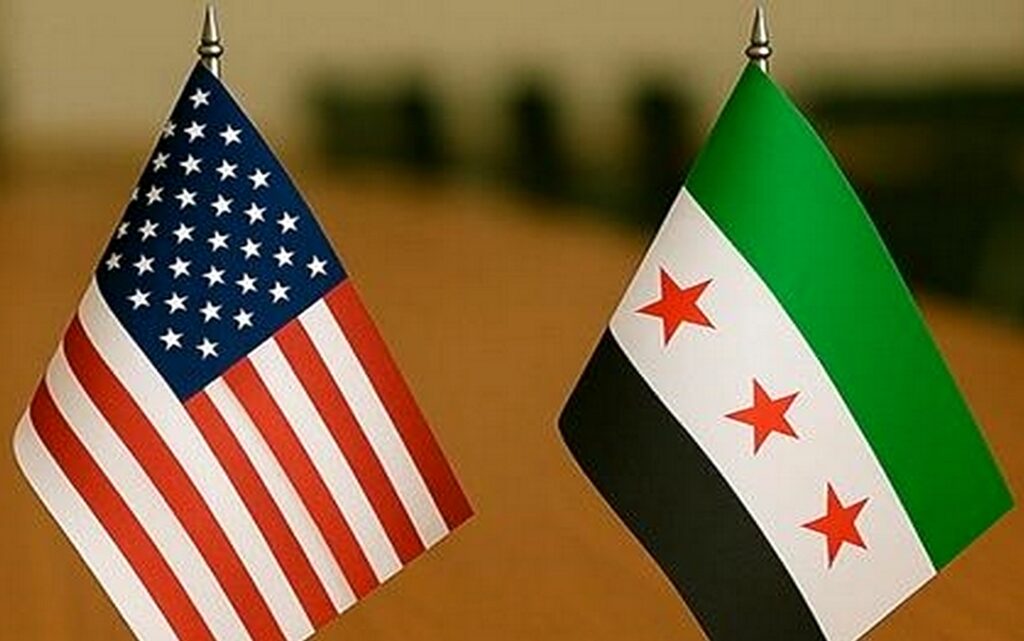
Despite US President Donald Trump’s historic signing of the decision to repeal the Caesar Act, the echoes of the political battle continue to reverberate in the corridors of Washington.
As Damascus breathes a sigh of relief economically, a move by 134 Republican lawmakers is calling for safety measures and tighter controls, threatening to reimpose sanctions if the Syrian government fails to abide by the conditions of protection for minorities and human rights.
Political experts believe that this parliamentary move is nothing more than “political resentment” from US law makers who have lost their legislative battle.
In a special statement, Mohammed Alaa Ghanem, head of political affairs at the Syrian American Council, confirmed that the article signed by Trump and became law didn’t include any provisions that allow for the automatic return of sanctions, which means that the Caesar Act in its old form has officially turned its page.
However, observers believe that this statement carries messages of political pressure that may disrupt the path of Syrian recovery and create a state of apprehension among international investors.
In a related context, Hisham Nashwati, founder of the Syria Road to Freedom organization, warned against attempts by regional parties, such as Russia, Iran, and Israel to implicate the Syrian government in human rights violations that may be used as a pretext to reactivate sanctions.
Nashwati noted that recent attacks, such as the attack on US soldiers in Palmyra, are clearly aimed at poisoning the emerging relationship between Damascus and Washington and sabotaging the stabilization process.
Freedom from Caesar’s shackles is the “kiss of life” for Syrian financial institutions.
After the lift of the sanction, Syria will achieve an important gain, with the most prominent gains are:
- International banking linkage: Syrian banks return to the global financial system, which is a prerequisite for the flow of investments.
- Attracting foreign investment: Syria is transforming from a repellent environment that international companies fear to enter, to an open arena for reconstruction, energy, and technology.
- Trade openness: Breaking the economic isolation imposed since 2019.
Despite the optimism, economists stress that direct US openness may remain at its bottom line for now, given that the country is still in the process of fully regaining stability.
Damascus, which has described the repeal of the law as a “victory for diplomacy,” now faces the challenge of balancing attracting foreign investment and protecting national interests in the most sensitive economic phase in decades.