China: a possible third term for the Chinese leader Xi
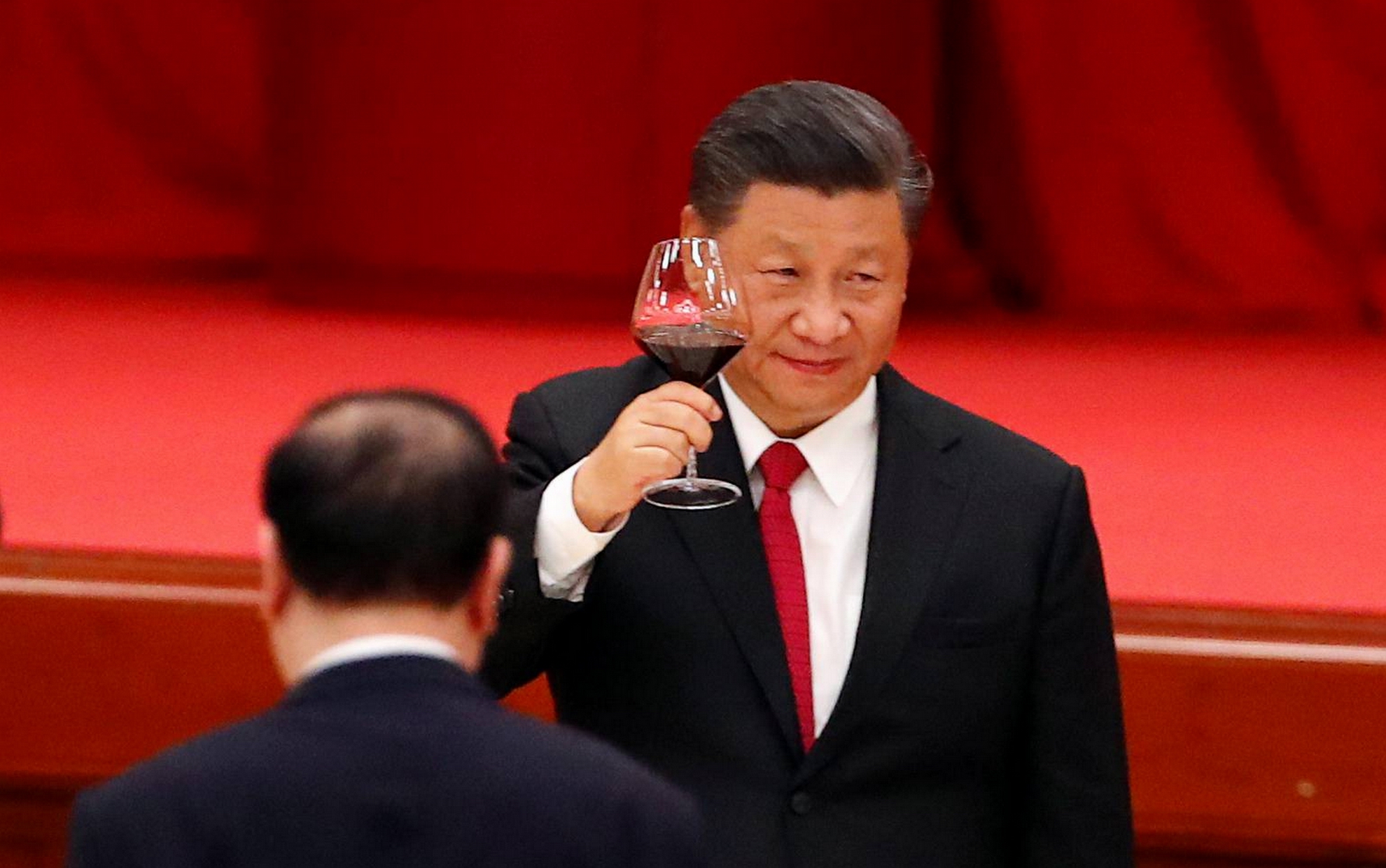
It is believed that China’s leader Xi Jinping will propose a third term at the Communist party meeting this week in Beijing.
According to a news report, Xi Jinping, the president of the ruling Communist Party, issued a resolution at the party’s annual meeting that highlighted the party’s achievements.
Scholars say the statement will also cement Xi’s status as an equal to Mao Zedong and Deng Xiaoping, who oversaw key economic reforms during their time in office.
China removed term limits on the presidency in 2018, potentially keeping Xi in power for the rest of his life.
The Chinese leader is expected to be reappointed party leader through a highly opaque process at next year’s full party congress, an event held every five years.
At week’s meeting of the arround 200 members of the Central Committee is due to last through Thursday, with a communique to be issued following the final session.
Xi has already revealed his thinking through his public pronouncements and the statement on party history is not expected to produce any surprises, said Yang Yang, a professor at the School of Political Science and Public Administration under the China University of Political Science and Law.
The document will essentially summarize China’s emergence from foreign domination, its economic climb and emergence as a world power, Yang said.
“It will emphasize a new era for the governance of the Communist Party under Xi’s leadership and that will lay a foundation for Xi to match Mao and Deng and lay a foundation for Xi to continue to govern for the next term,” Yang said.
The Chinese Communist party issued two previous evaluations of its history.
In 1945, as the party was moving toward seizing power four years later from Chiang Kai-shek’s Nationalists.
And in 1981 as former leader Deng Xiaoping led an assessment of Mao’s tumultuous 1966-76 Cultural Revolution.
In both cases, the party sought to smooth over schisms and restore unity within its ranks.
A decade after taking over the leadership, Xi faces no apparent rivals within the party and has consolidated power by overseeing a stable economy, an assertive foreign policy, a major upgrading of the military and an ongoing crackdown on corruption that has ensnared both serving and retired high-level officials.
At the same time, religious groups and human rights activists have been harshly repressed, with more than a million members of Muslim minority groups subjected to mass detentions and political indoctrination.
Free speech and opposition politics have also been severely curtailed in the semi-autonomous southern city of Hong Kong and military threats stepped up against self-governing Taiwan.
China says the measures are necessary for stability and national sovereignty.